World
Deal near or power play? Iran challenges Trump’s narrative on nuclear talks
Iran pushes back on US president's remarks, insisting nuclear matters are not currently under negotiation
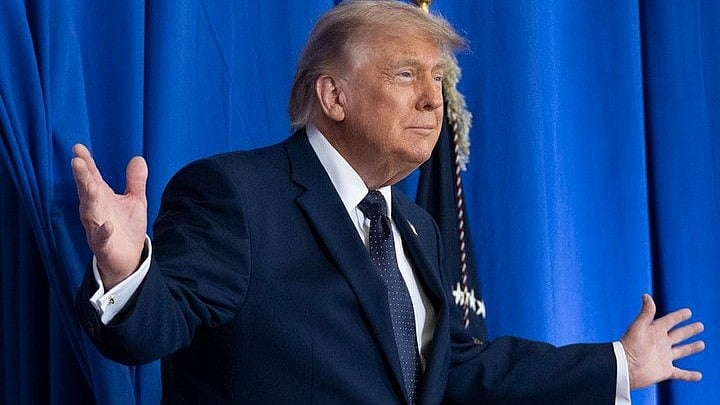
US President Donald Trump says Washington is close to securing a nuclear agreement with Iran, but Tehran's continued control over the Strait of Hormuz and its rejection of key US claims are raising fresh questions about how much leverage the White House actually holds.
In an interview with Fox News, Trump insisted negotiations were moving in the United States' favour and said preventing Iran from obtaining a nuclear weapon remained his administration's top priority.
"We're close to a very good deal, and if we can make it good, otherwise we just start up with the Department of War, as we call it," Trump said.
Trump claimed Iran had agreed not only to refrain from developing a nuclear weapon but also from acquiring one.
"The one guarantee that I have to have is that there will be no nuclear weapons. They've agreed to that."
He said the language was strengthened after he raised concerns that Tehran could obtain a weapon from another source.
"They originally said we will not develop a nuclear weapon. I said, well, what happens if you buy a nuclear weapon?"
Despite describing Iranian negotiators as "very tough", Trump expressed confidence that Washington was steadily getting what it wanted.
Yet even as the US president projected optimism, Iran appeared to be sending a different message.
Trump recently announced that a US naval blockade on Iran "will now be lifted" and demanded that the Strait of Hormuz be opened to unrestricted shipping.
"The Strait has to be opened immediately, and has to be free, no tolls."
But Iranian media reported that Iranian vessels continue to receive warnings from US Central Command, suggesting restrictions remain in place despite Trump's declaration.
At the same time, Tehran has pushed back against Trump's assertion that nuclear issues are central to the current phase of negotiations, insisting such matters are not presently under discussion.
Iran's Khatam al-Anbiya Central Headquarters further underlined its authority over the Strait of Hormuz, declaring that all vessels must travel through routes designated by Iran and obtain permission from the Islamic Revolutionary Guard Corps Navy.
The IRGC said 20 vessels passed through the strategic waterway over the past 24 hours under Iranian supervision, reinforcing Tehran's message that it remains firmly in control of one of the world's most critical shipping lanes.
The contrasting narratives highlight a central challenge for the White House: while Trump is portraying the talks as a diplomatic success in the making, Iran continues to publicly reject key elements of the US position and assert its influence in the Gulf.
For now, Washington speaks of a breakthrough. Tehran is acting as though it still holds significant cards.
With IANS inputs
Join our official telegram channel (@nationalherald) and stay updated with the latest headlines