World
Donald Trump rejects Iran’s peace proposal as ‘totally unacceptable’
US president accuses Tehran of deceiving Washington and its allies for decades
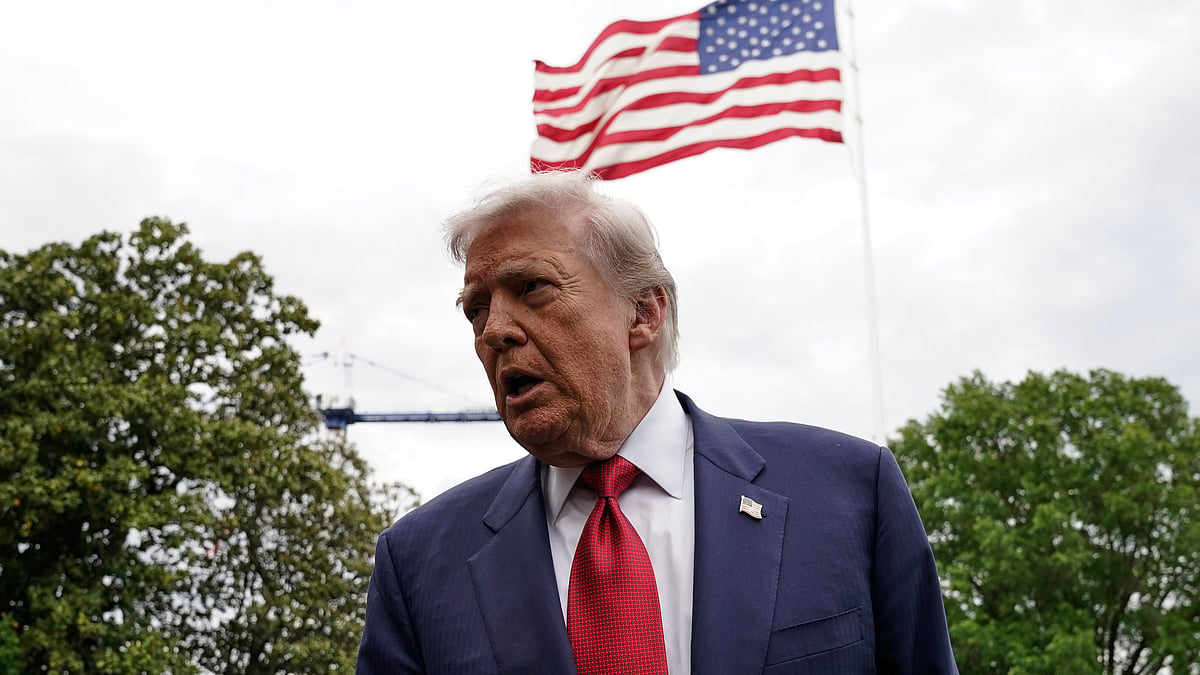
US President Donald Trump on Sunday sharply rejected Iran’s latest proposal to end months of hostilities in the Gulf, calling Tehran’s response “totally unacceptable” and raising fresh fears of renewed military escalation in the region.
The proposal was delivered amid fragile diplomatic efforts to permanently end the conflict that erupted on 28 February, when fighting between the United States, Israel and Iran disrupted shipping lanes through the Strait of Hormuz — a critical artery for global oil trade — triggering fuel shortages and energy market volatility across several countries.
“I have just read the response from Iran’s so-called ‘Representatives.’ I don’t like it — TOTALLY UNACCEPTABLE!” Trump wrote on his Truth Social platform, without disclosing details of Tehran’s proposal.
Speaking later to Axios, Trump doubled down on his criticism but declined to elaborate on the contents of the Iranian message.
“I don’t like their letter. It’s inappropriate. I don’t like their response,” he said.
The US president also accused Tehran of deceiving Washington and its allies for decades.
“They have been tapping along many nations for 47 years,” Trump said, adding in a separate post that Iran had been “playing games” with the United States for nearly half a century. “They will be laughing no longer!” he warned.
Iran, however, defended its position and accused Washington of undermining diplomacy through threats and pressure tactics. A spokesperson for Iran’s foreign ministry said Tehran remained committed to negotiations but would not accept what it described as “coercive demands” over its nuclear programme.
“We are serious about reaching a fair and balanced agreement, but Iran will not surrender its sovereign right to peaceful nuclear activities,” the spokesperson said, while warning that continued military threats and sanctions would only deepen regional instability.
The Iranian official also reiterated Tehran’s support for freedom of navigation in the Strait of Hormuz, while cautioning against what it called “provocative military posturing” by the United States and its allies in the Gulf.
The remarks come at a delicate moment in negotiations aimed at converting the April 8 ceasefire into a lasting peace agreement. While large-scale attacks have remained paused since the truce took effect, talks between Washington and Tehran have repeatedly stalled over Iran’s nuclear programme and the future of sanctions.
According to officials familiar with the negotiations, the United States is demanding an explicit Iranian commitment to halt uranium enrichment in exchange for sweeping sanctions relief and the release of billions of dollars in frozen Iranian assets.
The talks are also tied to restoring free passage through the Strait of Hormuz, through which nearly one-fifth of global crude oil supplies pass daily.
Trump’s rejection of the proposal was quickly followed by calls from prominent Republican leaders for a tougher approach toward Tehran.
Republican senator Lindsey Graham urged the President to consider military action, arguing that diplomacy had failed to alter Iran’s behaviour.
“I appreciate President Trump’s earnest efforts to seek a diplomatic solution to change the behaviour of the Iranian terrorist regime,” Graham wrote on X.
“However, between their constant attacks on international shipping, the persistent attacks on our West Asian allies and now a totally unacceptable response to America’s diplomatic proposal, it is in my view, time to consider changing course,” he added.
Graham also referenced “Project Freedom Plus” — the short-lived US naval mission launched to escort commercial vessels through the Strait of Hormuz before it was abruptly suspended less than 48 hours later.
“Project Freedom Plus sounds pretty good right about now,” the senator remarked.
Trump also confirmed that he spoke with Israeli Prime Minister Benjamin Netanyahu on Sunday regarding Iran and the stalled negotiations.
“It was a very nice call. We have a good relationship,” Trump said, though he stressed that negotiations with Tehran remained “my situation, not everybody else’s.”
The latest exchange has intensified concerns that the fragile ceasefire could collapse if diplomacy fails, potentially reigniting conflict in one of the world’s most strategically vital regions.
With PTI inputs
Join our official telegram channel (@nationalherald) and stay updated with the latest headlines