World
Trump says people leaking sensitive military info should be shot
US president says leaked details about B-2 bomber schedules forced him to delay the mission by two days
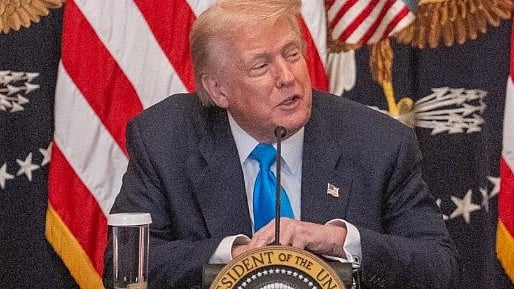
US President Donald Trump accuses media disclosures of compromising a classified military operation targeting Iranian nuclear facilities
Trump says leaked details about B-2 bomber schedules forced him to delay the mission by two days
Trump provides no evidence identifying the alleged leaker, as his remarks renew debate over national security and press reporting
US President Donald Trump has called for people who leak sensitive military information to be shot, accusing those responsible for disclosing operational details of American strikes against Iran of jeopardising a highly classified mission targeting Iranian nuclear facilities.
Speaking at an election rally in Bullhead City, Arizona, Trump alleged that information about the departure and arrival times of US bombers had reached the media before a planned operation. He claimed the disclosures compromised operational security and forced him to change the timing of the mission.
“But they leaked. Leakers should be -- in my opinion, leakers should be shot. They should be shot,” Trump told supporters.
The remarks came as Trump defended his administration’s handling of the military operation and reiterated the need for severe punishment for people who disclose classified information during an active military campaign.
Trump said details of the planned mission had appeared in reports by The New York Times and CNN, including information about the schedule for B-2 stealth bombers departing from Missouri.
He argued that publishing such information could alert an adversary to an impending military operation and undermine the element of surprise.
The president called for lengthy prison sentences for those responsible for the alleged leak, reiterating his view that the offence warranted the harshest possible response.
“They ought to go to jail and be shot. For the rest of their life, they should be in jail,” Trump said.
However, Trump did not identify the person allegedly responsible for disclosing the information, provide evidence establishing the identity of a leaker or confirm whether investigators had identified any suspects.
His remarks did not establish whether the media reports contained classified information or whether the disclosures had directly compromised the operation.
Recounting the events surrounding the operation, Trump said he consulted senior military officials after learning that details of the planned mission had appeared in the media.
He said he discussed the situation with General Razin Caine before deciding to postpone the raid and alter its timing.
According to Trump, the decision came despite objections from pilots who had prepared for the assignment and were unhappy that the mission had been called off.
“I said let's change the time. So, I called off the raid. And you know who the unhappiest people were? The pilots. They were miserable,” he said.
Trump claimed that the operation was eventually conducted two days later, using the same departure time that had initially been disclosed.
He argued that the decision helped catch Iranian forces off guard, despite his allegation that they had been anticipating the American bombers' arrival.
The President said Iranian forces had been waiting for the aircraft but failed to detect them during the eventual operation.
These details reflect Trump's account of the events. His remarks alone did not independently establish the circumstances surrounding the alleged leak, the decision to postpone the mission or the subsequent operation.
Trump used the rally to argue that disclosing military operational details can endanger American personnel and undermine national security, particularly when forces are preparing to strike another country.
He invoked past military practices to reinforce his call for severe punishment.
“In the old days, we used to shoot leakers, you know, when -- when they leak what time you're going to attack a country,” he said.
He added that people who disclose such information should face particularly strong consequences.
“No, leakers should be dealt with very, very strongly. They're real -- to me, they're -- they're the scum of the earth,” Trump said.
His comments went beyond a call for prosecution, explicitly advocating the shooting of people responsible for unauthorised disclosures. He did not outline any legal process or policy proposal through which such a punishment could be imposed.
The United States has federal laws governing the unauthorised disclosure, retention and transmission of national defence information. The Espionage Act is among the principal statutes used in cases involving the unlawful handling or disclosure of such material.
Potential criminal liability depends on the specific conduct, the information involved and the applicable legal provisions. Trump's remarks did not establish that any individual had committed an offence in connection with the alleged leak.
The president also did not announce any new legislation or formal executive action in response to the disclosures.
Trump delivered the remarks at a rally in Bullhead City as Republicans seek to strengthen their position ahead of the 2 November congressional midterm elections.
The speech combined his defence of the Iran operation with criticism of media reporting and demands for tougher action against people who disclose sensitive government information.
His comments placed renewed focus on the tension between protecting classified military operations and reporting on government actions, particularly during an active conflict.
While Trump maintained that the alleged leak had threatened the mission, he did not name a suspect or provide independently verifiable evidence identifying who was responsible.
With IANS inputs
Join our official telegram channel (@nationalherald) and stay updated with the latest headlines