World
Trump vows control over Iran’s leadership as US troop death toll rises
We will allow nobody to interfere in our domestic affairs. This is up to Iranian people to elect their new leader, says Abbas Araghchi
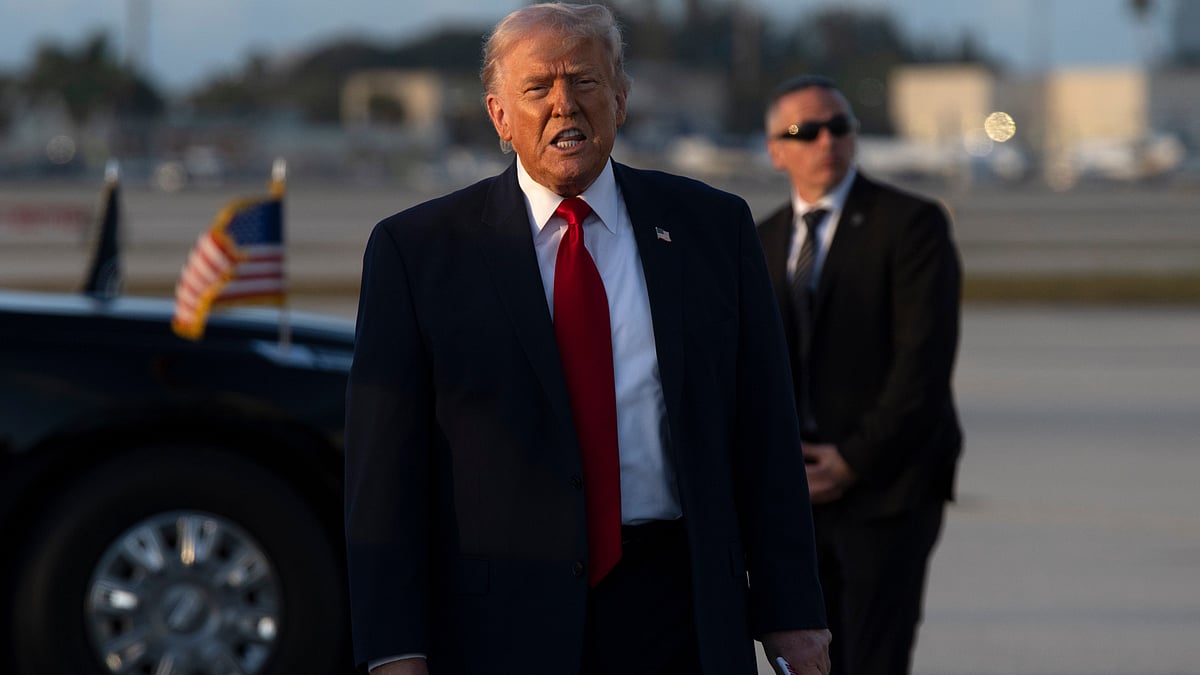
In a fresh display of brinkmanship amid the widening Middle East war, Donald Trump, the president of the United States, has again asserted that Washington would exert influence over the choice of Iran’s next supreme leader, warning that any figure chosen without American approval “is not going to last long”, the Al Jazeera reported.
Trump made the remarks on Sunday in an interview with ABC News, hours before Iranian state media reported that the powerful Assembly of Experts had selected Mojtaba Khamenei, son of the late Ali Khamenei, as the country’s new supreme leader.
The elder Khamenei was killed in the opening hours of the war that erupted after joint strikes by the United States and Israel on Iranian targets on 28 February, a dramatic escalation that has since plunged the region into one of its most volatile confrontations in decades.
Trump did not immediately respond directly to Mojtaba Khamenei’s appointment, but earlier comments left little doubt about his position.
“He’s going to have to get approval from us,” Trump said, referring to whoever assumes Iran’s highest office. “If he doesn’t get approval from us, he’s not going to last long.”
The US president added that he was determined to ensure that future American administrations would not have to revisit the same conflict years down the line.
“I don’t want people to have to go back in five years and have to do the same thing again,” he said, alluding to concerns about Iran’s nuclear programme. “Or worse — let them have a nuclear weapon.”
Iranian leaders, however, have swiftly rejected any suggestion that Washington could shape their political future. Officials in Tehran insisted that the selection of the country’s supreme leader is an entirely domestic matter.
Abbas Araghchi, Iran’s foreign minister, reiterated that stance on Sunday.
“We will allow nobody to interfere in our domestic affairs,” he said. “This is up to the Iranian people to elect their new leader.”
Araghchi noted that Iranians had already chosen the Assembly of Experts, the clerical body responsible for appointing the supreme leader, underscoring that the process remained firmly within the country’s constitutional framework.
Analysts say the selection of Mojtaba Khamenei — long viewed as a powerful figure behind the scenes — could be interpreted as a message of defiance to Washington.
Speaking to Al Jazeera, Barbara Slavin, a fellow at the Stimson Center in Washington, described the decision as a direct challenge to Trump.
“It’s a real finger in the eye to Donald Trump,” she said, noting that the US president had previously made clear he would not accept Mojtaba Khamenei as Iran’s leader.
Slavin added that the development could deepen scepticism among the American public about the war itself.
“It’s going to increase the sense in the United States that this war was a mistake,” she said, pointing to opinion polls showing growing unease among Americans about the conflict.
The announcement of Iran’s new leader came as the human cost of the war continued to mount. The United States Central Command (CENTCOM) confirmed that a seventh American soldier had died from injuries sustained during an attack on US troops in Saudi Arabia on March 1.
The soldier, whose identity has not been released, succumbed to his wounds on Saturday.
Across the region, casualties have continued to rise. Officials say the death toll in Iran has climbed to 1,332, while at least 11 people have been killed across the Gulf and another 11 in Israel as the violence spreads beyond its initial flashpoints.
Meanwhile, the battlefield itself has widened. In recent days, US and Israeli forces have targeted oil storage and refining facilities in Tehran for the first time, striking at the heart of Iran’s energy infrastructure. Iran, for its part, has launched retaliatory attacks across the Gulf.
One such strike involved a drone attack that caused material damage to a desalination plant in Bahrain, raising fears that critical civilian infrastructure could increasingly become part of the conflict.
Reports have also emerged that the US and Israel have considered a special ground operation aimed at securing Iran’s stockpile of enriched uranium.
According to Bloomberg and Axios, the possibility of such a mission has been discussed at senior levels. Yechiel Leiter, Israel’s ambassador to the United States, acknowledged the idea during an appearance on Face the Nation.
“Securing the nuclear fuel is on our radar screen, and we’re going to take care of it,” he said.
As the war intensifies, the Trump administration has also been working to reassure markets and voters worried about rising energy prices.
Speaking to Fox News, White House spokesperson Karoline Leavitt described the spike in oil prices as a “short-term disruption”, insisting that the administration was already taking steps to stabilise supplies.
She pointed to Washington’s renewed access to the oil industry of Venezuela, following the controversial January detention of Venezuelan leader Nicolás Maduro, as one potential source of additional supply.
Energy analysts, however, caution that Venezuela’s oil sector would require years of investment to restore significant output, casting doubt on its ability to offset immediate shortages.
US energy secretary Chris Wright echoed the administration’s efforts to calm markets, arguing that any economic fallout from the war would likely be temporary.
Speaking on Face the Nation, Wright said there was no energy shortage across the Western Hemisphere and emphasised that the United States still holds roughly 400 million gallons of oil in its strategic reserves.
“We’re more than happy to use that if it’s needed,” he said.
Trump himself has offered mixed signals about the duration of the conflict. While he suggested earlier that operations against Iran could last four to five weeks, he has also said the war has “no time limit”.
For now, as diplomacy stalls and military operations expand, the Middle East appears poised at what regional leaders have warned could become a dangerous turning point — one where the struggle for power in Tehran, the ambitions of Washington and the wider strategic balance of the region collide with potentially far-reaching consequences.
Join our official telegram channel (@nationalherald) and stay updated with the latest headlines