World
Germany suffers shock defeat as UN elects five new security council members
Austria, Kyrgyzstan, Portugal, Trinidad and Tobago, and Zimbabwe win UNSC seats; India pledges close cooperation
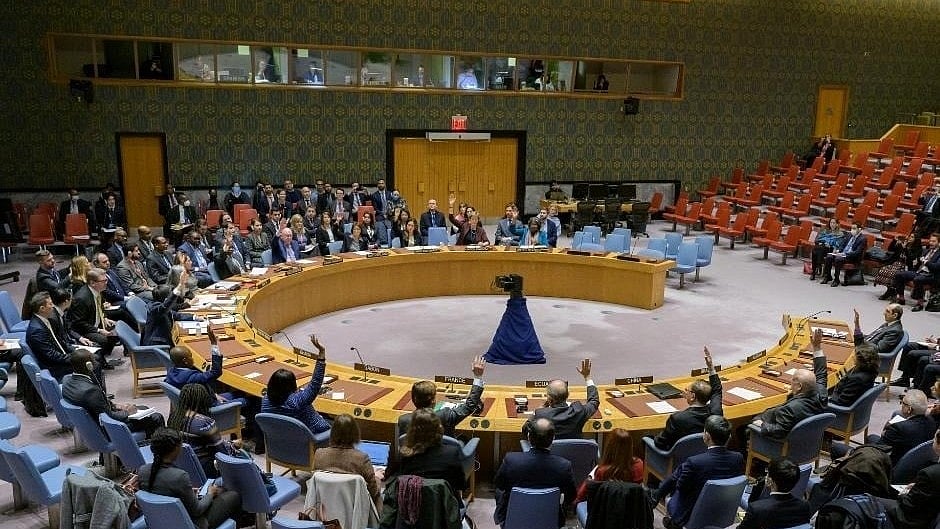
Austria, Kyrgyzstan, Portugal, Trinidad and Tobago and Zimbabwe have been elected as non-permanent members of the United Nations Security Council (UNSC) for the 2027-28 term, while Germany suffered an unexpected setback after failing to secure a seat in a closely contested election.
The five countries were elected by the 193-member UN General Assembly through a secret ballot and will begin their two-year tenure on January 1, 2027. They will replace Denmark, Greece, Pakistan, Panama and Somalia, whose terms expire at the end of 2026.
India congratulated the newly elected members and expressed its willingness to work closely with them during their tenure on the Council.
India's Permanent Representative to the United Nations, Ambassador Harish Parvathaneni, extended his greetings in a message on social media, saying India looked forward to cooperating with the new members and wished them success during their term.
The election produced one of its biggest surprises in the Western European and Other States Group, where Germany failed to secure one of the two available seats. Portugal received 134 votes and Austria 131 votes, while Germany managed 104 votes, falling short despite an active diplomatic campaign.
The results were announced by President of the UN General Assembly Annalena Baerbock.
Reacting to the outcome, German Foreign Minister Johann Wadephul described the result as a major disappointment, acknowledging that Germany had entered the race later than its competitors and faced a difficult challenge from the outset.
He also suggested that Germany's firm support for Ukraine and its long-standing commitment to Israel may have influenced voting patterns among some UN member states.
According to Wadephul, Germany would continue to stand by its positions on international issues despite the electoral setback, including its backing for Ukraine and its commitment to Israel's security, while continuing to engage critically on specific policy matters.
In the African and Asia-Pacific category, Zimbabwe secured an overwhelming 182 votes, while Kyrgyzstan won 142 votes to claim the second seat. Kyrgyzstan's election is particularly significant as it will serve on the Security Council for the first time in its history.
The Central Asian nation emerged victorious after four rounds of voting, eventually defeating the Philippines by 142 votes to 49.
In the Latin American and Caribbean group, Trinidad and Tobago secured its place on the Council with 181 votes.
The 15-member Security Council consists of five permanent members with veto powers — China, France, Russia, the United Kingdom and the United States — and ten non-permanent members elected for two-year terms.
When the newly elected countries assume office in January 2027, they will join the five permanent members as well as Bahrain, Colombia, the Democratic Republic of Congo, Latvia and Liberia, which will continue serving on the Council until the end of 2027.
India last served as a non-permanent member of the Security Council during 2021-22 and has already announced its candidature for a seat for the 2028-29 term.
With PTI inputs
Join our official telegram channel (@nationalherald) and stay updated with the latest headlines