World
Hormuz, Bab-al-Mandeb under pressure: India's oil supplies face a growing West Asia risk
Traffic through Hormuz has fallen to single digits, Houthi attacks have put Bab-el-Mandeb under renewed security pressure
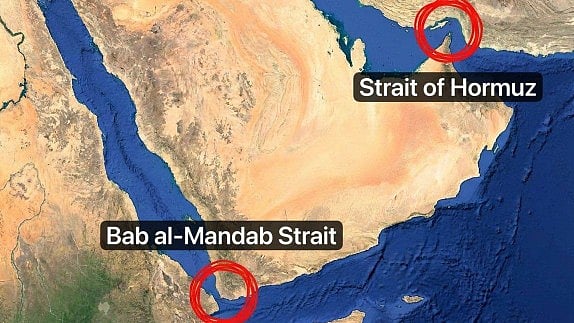
India's oil supplies from West Asia are facing growing risks as traffic through the Strait of Hormuz remains severely depressed, the Bab-el-Mandeb shipping route comes under renewed security pressure and a key Saudi Arabian pipeline that bypassed Hormuz has been shut following drone attacks.
The immediate threat is not yet a complete halt in crude supplies to India. The bigger concern is whether alternative cargoes, routes and existing inventories can continue to compensate if the disruption across the region persists, potentially pushing up crude, freight and insurance costs.
Only four vessels crossed the Strait of Hormuz on Tuesday, down from seven a day earlier and well below the 10-day average of 18, according to Reuters. None of the four vessels was a very large crude carrier or an LNG tanker.
The Strait of Hormuz is particularly important because it is the principal maritime route for oil and gas leaving the Persian Gulf. Before the current conflict, it carried about one-fifth of the world's oil and liquefied natural gas supply, according to Reuters.
The Bab-el-Mandeb presents a different but connected risk. The waterway, between the Horn of Africa and the Arabian Peninsula, links the Red Sea with the Gulf of Aden and the Arabian Sea and is a major maritime route connecting West Asia with Asian and European markets.
Twenty-two vessels crossed Bab-el-Mandeb on Tuesday, compared with 24 a day earlier. The route has come under renewed pressure following Houthi attacks on Saudi assets.
Saudi bypass also disrupted
The pressure on Hormuz has been compounded by the shutdown of Saudi Arabia's East-West oil pipeline after drone attacks damaged the infrastructure.
The pipeline normally carries crude from Saudi Arabia's eastern oil fields and terminals to Yanbu on the Red Sea, allowing shipments to reach international markets without travelling through Hormuz. Its importance has increased as shipping through the strait has come under pressure.
With the pipeline shut, Saudi Aramco has been exploring alternative arrangements to move crude to overseas buyers. Reuters reported that Aramco offered additional cargoes to Asian refiners through ship-to-ship transfers off Oman's Sohar port, outside the Strait of Hormuz.
At the same time, Saudi Arabia has increased crude loadings from the Ras Tanura and Juaymah terminals inside the Gulf. But those terminals remain on the Gulf side of Hormuz and therefore do not constitute a complete bypass of the strait.
The disruption has already affected some scheduled shipments. At least one Asian buyer with September cargoes due to load at Yanbu was told by Aramco that shipments would be delayed and rescheduled, while some European customers were informed that certain September-loading cargoes would be cancelled. Yanbu loadings had also been suspended, according to Reuters.
Why Bab-el-Mandeb matters for India
India faces an additional vulnerability because disruption at Bab-el-Mandeb can affect commercial shipping beyond the immediate movement of crude.
India has expressed concern over attacks on Saudi territory and the wider escalation in the Red Sea. External Affairs Ministry spokesperson Randhir Jaiswal said such attacks threaten regional stability and freedom of navigation through Bab-el-Mandeb.
India is also monitoring the safety of commercial vessels and Indian seafarers operating in the region.
Jaiswal said a Panama-flagged vessel attacked off the coast of Oman had 14 Indian nationals on board. Thirteen had been rescued while one remained missing as of 15 September.
The government's concern is therefore not limited to oil availability. Any prolonged threat to major maritime routes could affect the movement of energy supplies and other commercial cargo, while raising the cost and complexity of shipping.
The cost of keeping oil moving
India is still receiving energy supplies from West Asia, but continued availability does not necessarily mean that supplies will remain as cheap or as easy to transport.
Longer or more complicated shipping routes can increase freight and insurance costs. A reduction in the number of vessels willing or able to operate through affected waters can further raise transportation costs, while refiners across Asia may compete for alternative cargoes.
That could increase India's import bill even if crude remains physically available.
Saudi Arabia's East-West pipeline had provided an important alternative to shipping crude through Hormuz. Its shutdown therefore removes part of the flexibility available to regional producers at a time when Hormuz traffic remains extremely low and Bab-el-Mandeb faces renewed security concerns.
India's buffer may not cover a prolonged disruption
The government has said Indian refiners have diversified their crude procurement and have access to supplies that do not depend on Hormuz. The Petroleum Ministry has also pointed to existing stocks of crude and key petroleum products, including petrol, diesel and aviation turbine fuel, as a buffer against short-term disruption.
India has established a 24-hour control room to monitor fuel supplies and stocks across the country.
These measures provide some protection against an immediate supply shock, but the source notes that they cannot fully insulate Indian refiners from higher global crude prices, freight rates and insurance costs if the disruption continues.
The emerging risk is therefore less about India suddenly running out of oil and more about a narrowing margin for disruption.
With three critical elements of the regional supply chain under pressure — exceptionally low traffic through Hormuz, renewed security threats around Bab-el-Mandeb and the shutdown of Saudi Arabia's East-West pipeline — prolonged disruption could make West Asian energy supplies more expensive and more difficult to move.
For India, the key question is whether alternative routes, cargoes and inventories can continue to absorb the pressure if the disruption lasts longer.
Join our official telegram channel (@nationalherald) and stay updated with the latest headlines