World
Iran vows fierce retaliation as US strikes escalate conflict
A strike hit a home during a wedding in Sirik, killing at least four, including a child, and injuring more than 50
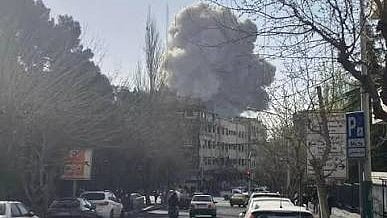
Iran has vowed to answer the latest wave of US strikes with force, as the conflict between Tehran and Washington enters another dangerous chapter, marked by missile launches, air-raid alarms and reports of civilian casualties across Iran.
Iran’s Islamic Revolutionary Guard Corps (IRGC) said it had launched what it described as a “heavy” ballistic missile attack on Prince Hassan airbase and a US Marine base in Jordan, portraying the strikes as retaliation for earlier American attacks that Tehran says killed civilians. The claim comes amid a rapidly widening confrontation in which Iran has sought to demonstrate that it retains the ability to strike American-linked targets beyond its borders, the Al Jazeera reported.
In his first message since the latest exchange of attacks began, supreme leader Mojtaba Khamenei struck a defiant tone, warning Washington that Iran’s armed forces had “unforgettable lessons” in store for the United States. His remarks underscored Tehran’s determination to frame the escalating hostilities not simply as a military confrontation, but as a struggle in which Iran intends to impose a heavy price on its adversary.
Inside Iran, the soundscape of the conflict has been equally stark. Iranian state media reported multiple explosions across southern parts of the country, including Asaluyeh, Jiroft, Bandar Abbas, Qeshm Island, Konarak, Chabahar, Jask, Sirik and Lavan. The reports painted a picture of a nation whose strategic coastal and energy-producing regions have once again been drawn into the crosshairs of a rapidly intensifying military confrontation.
Among the most painful accounts came from Sirik, where the Iranian Red Crescent said a strike hit a home during a wedding celebration. At least four people, including a child, were reported killed, while more than 50 others were injured. The incident has added a deeply human dimension to the mounting violence, with a moment of celebration transformed into scenes of grief and devastation.
The latest Iranian response followed a wave of US strikes on 1 September. US Central Command (CENTCOM) said its forces had targeted Iranian positions after what Washington described as attempted Iranian attacks on commercial shipping and American service members.
Across the Gulf, the confrontation has also triggered heightened military activity. Kuwait said its air defences were actively responding to drone attacks, while Bahrain reported that its air-defence systems had intercepted and destroyed incoming Iranian drones.
For Tehran, however, the message emerging from the latest exchange is one of defiance. As explosions echo across parts of southern Iran and the country mourns civilians caught in the violence, its leadership is presenting the confrontation as a battle in which Iran will not retreat quietly. The rhetoric from the IRGC and the Supreme Leader suggests that, for now, the language of retaliation is becoming as powerful as the missiles themselves.
Join our official telegram channel (@nationalherald) and stay updated with the latest headlines