World
Iran warns of retaliation after missile strike on Haifa
The warning came as an Iranian missile struck a residential building, killing at least two people and injuring four others
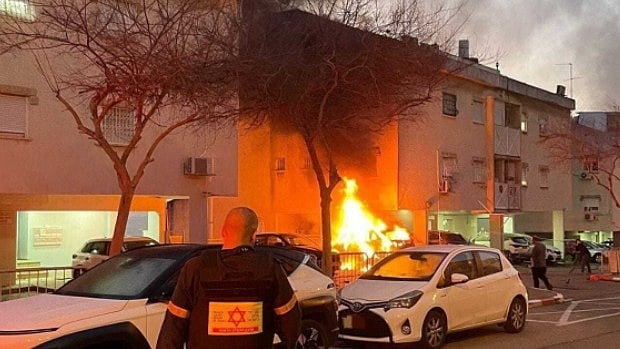
Tensions in the West Asia have intensified sharply after Iran warned of retaliatory action in response to an ultimatum issued by US President Donald Trump over the reopening of the Strait of Hormuz.
The warning came as an Iranian missile struck a residential building in Haifa, killing at least two people and injuring four others, with two more still missing. Search and rescue teams worked through the night and into Monday morning to locate those unaccounted for in the heavily damaged structure, Al Jazeera reported.
Emergency responders confirmed that a single, high-impact missile hit the building, destroying a large section and leaving the remaining structure unstable, complicating rescue operations and raising fears of further collapse.
Separately, Channel 12 reported that more than 10 sites across Haifa were struck during the latest wave of attacks. While damage to buildings, streets and vehicles — including a car set ablaze — was reported, no additional casualties were immediately confirmed in those incidents.
Haifa has frequently been a target due to its strategic importance and proximity to potential launch points, including areas in neighbouring Lebanon where Hezbollah operates. The city lies within range of both Iranian missiles and cross-border rocket fire, placing it on the front line of the conflict.
During the ongoing rescue efforts, further missile alerts were triggered amid fears of additional incoming strikes from Iran, although those warnings were later lifted. Earlier in the day, three separate missile barrages were detected heading towards central Israel, with most intercepted by air defence systems and others landing in open areas.
The missile strike on Haifa formed part of four salvoes launched by Iran on Sunday. Another projectile struck a major industrial and chemical complex near Beersheba in southern Israel, heightening concerns about the vulnerability of critical infrastructure.
Officials have warned that any further escalation could place key industrial sites, including petrochemical facilities, at increased risk, potentially widening the scope and impact of the conflict.
As diplomatic tensions mount, the situation remains volatile, with fears growing that continued exchanges could lead to a broader and more destructive regional confrontation.
Join our official telegram channel (@nationalherald) and stay updated with the latest headlines