World
Iran will never have nuclear weapon, says Marco Rubio
US secretary of state accuses Iran of building missiles and drones to deter attacks, claiming US strikes have severely weakened its military
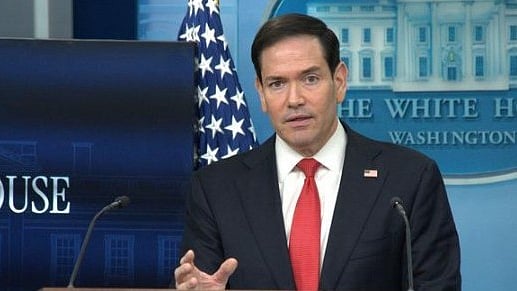
Marco Rubio says Iran will never be allowed to acquire nuclear weapons under Trump
He accuses Iran of building missiles and drones to deter attacks, claiming US strikes have severely weakened its military
Rubio says Iran’s economy is in “freefall” and claims oil flows through the Strait of Hormuz have nearly recovered to pre-conflict levels
US secretary of state Marco Rubio on Wednesday said Iran would never be allowed to acquire a nuclear weapon under President Donald Trump, as he accused Tehran of building a large missile and drone arsenal to deter any military action against its nuclear programme.
Speaking at a joint press conference with Greek foreign minister Giorgos Gerapetritis in Athens, Rubio said Washington's position on Iran's nuclear ambitions remained unchanged, amid questions over whether the US could accept limited uranium enrichment as part of a future agreement.
“Iran cannot have a nuclear weapon, simple, period and end of story,” Rubio said.
Rubio declined to specify what level of nuclear activity Washington might accept in any negotiations with Tehran, but stressed that any agreement would have to ensure Iran could not develop a nuclear weapon.
“Anything they agree to that would be acceptable to the United States has to be something that ensures that Iran will never have a nuclear weapon,” he said.
Rubio was responding to questions about vice-president J.D. Vance's remarks that Iran would need to take meaningful steps regarding its uranium enrichment programme.
The secretary of state alleged that Iran had spent years building up its conventional military capabilities to make any attack on its nuclear facilities prohibitively costly.
He said Tehran had accumulated missiles and drones with the aim of threatening devastating retaliation against countries seeking to prevent it from developing nuclear weapons.
Rubio said the Trump administration had significantly weakened those capabilities.
“He destroyed their drone program, their drone manufacturing capability,” Rubio said, referring to Trump.
“He destroyed their missile capability. He severely eroded both of those capabilities in terms of current launchers. He destroyed their navy. He destroyed their air force.”
The claims about the extent of the damage to Iran's military infrastructure and capabilities were not independently substantiated during the press conference.
Rubio nevertheless argued that Iran's military position had deteriorated significantly and that Tehran could no longer depend on its conventional forces to deter attacks on its nuclear facilities.
“They will never have a nuclear weapon, period, not as long as President Trump is in office,” he said.
Rubio also painted a bleak picture of Iran's economy, attributing its financial difficulties to the country's leadership and the impact of international sanctions.
“Their economy is in total and complete freefall,” he said, predicting further economic pressure on Tehran.
Rubio accused the Iranian leadership of diverting resources to armed groups across the region instead of investing in domestic infrastructure and public welfare.
He specifically cited Hezbollah, Hamas, the Houthis and Iran-aligned militias in Iraq as groups that Tehran supports financially.
Rubio also addressed the strategic Strait of Hormuz, saying the waterway remained open and that oil flows through the route had recovered to close to pre-conflict levels.
“There's almost as much oil flowing out now as there was before this conflict began,” he said.
His comments came during talks with Greece that also covered maritime security, energy supplies and the wider impact of instability in the Middle East.
Rubio's remarks underscore Washington's continued focus on preventing Iran from acquiring nuclear weapons while maintaining pressure on Tehran over its military capabilities, regional activities and economic policies.
With IANS inputs
Join our official telegram channel (@nationalherald) and stay updated with the latest headlines