World
Israel rejects Trump’s 15-point Gaza plan, deepening tensions with US
For Palestinians, Netanyahu’s rejection has raised fresh doubts over whether the roadmap can lead Gaza out of the cycle of destruction
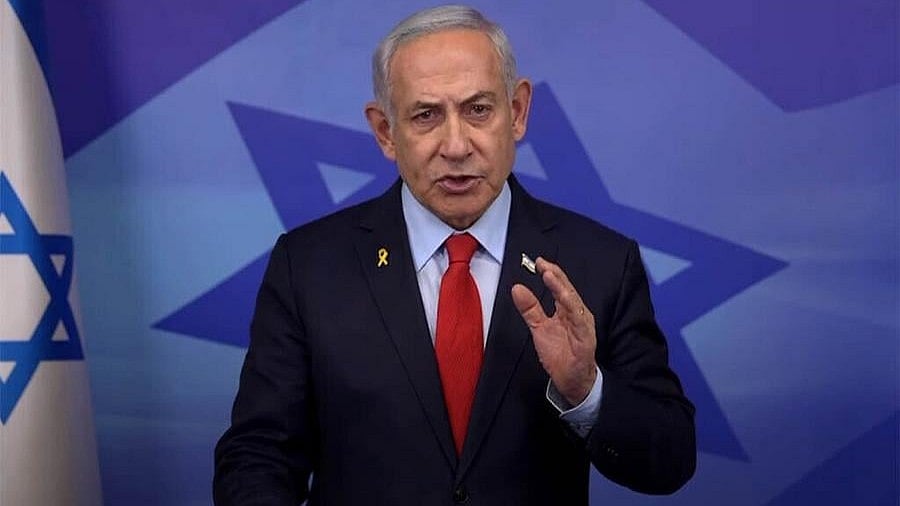
Israeli Prime Minister Benjamin Netanyahu has flatly rejected US President Donald Trump’s 15-point Gaza plan, insisting that Israeli forces will remain in place until Hamas is fully and “genuinely” disarmed — a hardline stance that could further complicate Washington-led efforts to broker a lasting de-escalation in the region, Al Jazeera reported.
“Israel rejects the 15-point document,” Netanyahu told his cabinet on Sunday, referring to the proposal endorsed by Hamas last month.
He said the Israeli army would not begin any withdrawal until Hamas had surrendered its weapons and would continue to “thwart threats” against Israeli troops and civilians.
Netanyahu acknowledged that Israel was in discussions with Washington over the issue, but made clear that his government would not accept every American proposal.
“They have ideas, some of which are acceptable to us and some are not acceptable to us,” he said, adding that Israel knew how to “stand firm” on its demands.
The White House did not immediately respond.
Hamas, however, said it remained committed to implementing the plan in full. In a statement posted on Telegram, the Palestinian group urged mediators and guarantor countries to shoulder their responsibilities and prevent any “violations or breaches” that could derail the process.
Trump announced the agreement on 30 July, describing it as a “historic” step towards peace. The deal calls for the complete disarmament of Hamas and other armed groups in Gaza and was brokered through the US-led Board of Peace, inaugurated in February 2026 and comprising roughly 40 countries, including Israel and several Arab states. No Palestinian representatives are part of the board, which has Trump as its chair for life.
But Netanyahu’s latest declaration appears to redraw the boundaries of the agreement.
Speaking to his cabinet, he vowed that “as long as I am prime minister, no Palestinian state will arise” and insisted that Israel would demand “real disarmament, not fictitious disarmament”.
Under the 15-point roadmap, the initial focus would be on Hamas’s heavy weapons, military production facilities, weapons depots and extensive network of tunnels. Netanyahu, however, said Israel wanted the removal of all weaponry, including lighter arms.
The disagreement threatens to place the US-backed process on increasingly shaky ground.
For Palestinians, Netanyahu’s rejection has raised fresh doubts over whether the roadmap can lead Gaza out of the cycle of destruction.
The latest standoff comes as violence continues to shadow the so-called ceasefire. Israel has carried out near-daily deadly attacks across Gaza despite the truce with Hamas agreed last October, according to Palestinian officials.
At least one child was injured by Israeli army gunfire in the Al-Najjar neighbourhood of Khan Younis on Sunday, the Palestinian Wafa news agency reported.
Since the ceasefire began in mid-October last year, at least 1,258 people have been killed and 4,139 wounded, while more than 800 bodies have been recovered from the rubble, according to Gaza’s health ministry. Since October 2023, the overall death toll in Gaza has reached at least 73,386, with 174,250 people wounded, the ministry said.
Violence spills into the West Bank
While Gaza remains at the heart of the diplomatic deadlock, the occupied West Bank is also witnessing a steady drumbeat of violence.
Israeli forces and settlers continue to carry out near-daily attacks across the territory as Netanyahu’s party courts the settler vote ahead of Israel’s general elections, due in less than three months.
Israeli forces ransacked homes after storming several villages in the Nablus governorate and towns east of Bethlehem, Wafa reported.
Israeli settlers and soldiers also attacked Palestinians in Tubas, al-Mughayyir, Masafer Yatta and Wadi al-Rakhim, while farmland was levelled, the Al Jazeera reported.
Tensions also reached the heart of occupied East Jerusalem, where Israeli worshippers, accompanied by police, entered the Al-Aqsa Mosque compound.
The site is Islam’s third-holiest place and is revered by Muslims as the location from which Prophet Muhammad is believed to have ascended to heaven. It is also Judaism’s holiest site, known as the Temple Mount, where the ancient Temple of Jerusalem once stood.
Elsewhere, Israeli settlers protected by military forces stormed Beit Ur al-Tahta, west of Ramallah, while another group entered the al-Batin area near Jaljulia, north of Ramallah, Wafa reported.
Settlers carried out further raids across the Ramallah and el-Bireh governorates and attacked Palestinian property near Bethlehem.
In Deir Sharaf, west of Nablus, olive trees were cut down and water tanks damaged, while Palestinian farmers in Al-Mughayyir, northeast of Ramallah, were attacked by settlers under military protection.
Meanwhile, Israeli ministers and members of parliament attended an event marking the establishment of Emek Dotan, a new settlement in Arrabeh, southwestern Jenin.
As Gaza’s diplomatic roadmap strains under competing demands and violence continues to spread across the West Bank, the prospect of a wider regional de-escalation appears increasingly distant.
Join our official telegram channel (@nationalherald) and stay updated with the latest headlines