World
Supreme Leader Mojtaba Khamenei's prolonged absence now presents a challenge for Iran's leadership
Iran's new supreme leader is remaining out of public view months after being injured in the strikes that killed his father
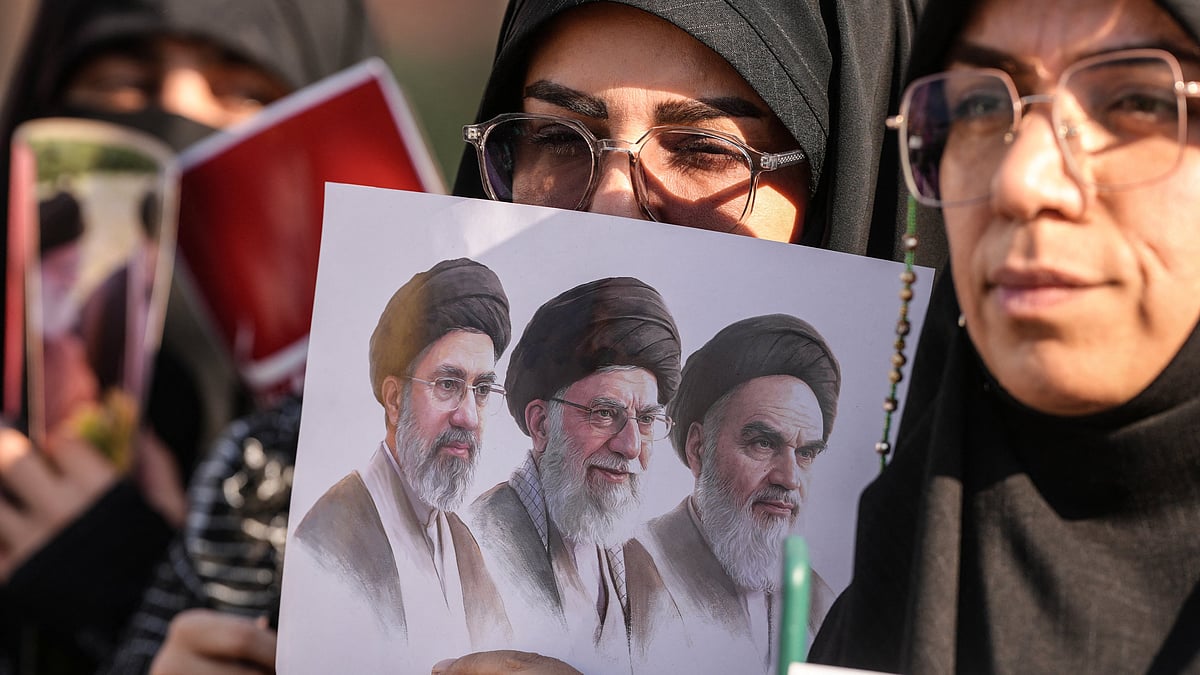
The prolonged absence of Iran's Supreme Leader Ayatollah Mojtaba Khamenei from public view is becoming a growing concern for the Islamic Republic as the country navigates renewed hostilities with the United States, economic pressure and political uncertainty.
Mojtaba Khamenei has not been seen publicly since being appointed supreme leader on 8 March, a week after his father, Ayatollah Ali Khamenei, was killed in US and Israeli airstrikes.
His absence was particularly conspicuous during his father's burial ceremonies on Thursday. He neither attended the main events nor issued a written or recorded message, leaving Iranians with few clues about his health, leadership style or plans for the country.
Senior Iranian sources have said Mojtaba suffered facial disfigurement and other injuries in the strike that killed his father. They say he has continued to make decisions but has not recovered sufficiently to appear publicly.
With hostilities between Iran and the US reigniting this week, questions surrounding his health and ability to exercise authority are gaining urgency.
"I understand that, from a security standpoint, he should not appear in public. But the country is going through a very difficult time," Taghi, a 47-year-old shop owner in Isfahan, said.
"There is a need for the Supreme Leader to be seen. Even if he has been injured, people need to see that there is a leader and that he is running the country."
Absence from funeral fuels speculation
The carefully choreographed burial of Ali Khamenei further highlighted Mojtaba's absence. His three brothers conducted prayers over their father's coffin at Iran's holiest shrine.
Although the three are senior clerics, none is considered a major political figure.
Ali Khomeini, a grandson of Ayatollah Ruhollah Khomeini, the founder of Iran's 1979 Islamic Revolution, is expected to speak on Mojtaba's behalf at a mourning ceremony on Friday, underscoring the role of family ties in projecting continuity within Iran's clerical establishment.
There had been speculation that Mojtaba would use his father's burial to make his first public appearance as supreme leader or at least release a recorded message or new photographs.
None emerged.
Senior sources have attributed the absence of any new image or voice recording since his appointment to health and security concerns.
The security threat is significant. Ali Khamenei was killed in the opening US and Israeli strikes of a war launched amid diplomatic efforts to resolve longstanding disputes with Tehran.
However, Mojtaba's position as Iran's ultimate political, strategic and religious authority also places pressure on him to demonstrate that he is physically and politically capable of leading the country.
The last official update on his health came from President Masoud Pezeshkian in May, when he said he had met the supreme leader and that his condition was improving.
The Islamic Revolutionary Guard Corps (IRGC) appears to retain firm control over the country, but questions are growing over how long the leader of Iran's theocratic system can remain invisible.
"How do you have a charismatic succession when the successor isn't there? It's going to be a problem for them even if they ride it out for the time being. It's not sustainable in the long run," Ali Ansari, professor of modern history at the University of St Andrews in Scotland, said.
Iranians questioning leader's absence
Mojtaba's continued absence is also beginning to trouble some Iranians. More than 20 people contacted by Reuters in recent weeks expressed concern over the issue while discussing the country's political situation.
"The supreme leader's absence, now that the war is over, will lead to growing uncertainty and disorder in the country, especially after the burial of the late leader," Mohammadreza, a 51-year-old teacher in Tehran, said.
The office of Iran's supreme leader carries a unique religious and political significance. The Islamic Republic's official ideology regards the officeholder as the earthly representative of Shi'ite Islam's 12th imam, who is believed to have disappeared in the ninth century.
Mojtaba, however, is taking charge without the political stature enjoyed by his predecessors.
Ayatollah Ruhollah Khomeini was the charismatic leader of the 1979 revolution and one of Iran's most prominent religious scholars.
Ali Khamenei initially lacked Khomeini's religious authority when he became supreme leader but consolidated power during his 37 years in office. With the support of the Revolutionary Guards, he gradually established control over almost every major aspect of Iran's political system.
Mojtaba also lacks strong religious credentials and, unlike his father, was not a prominent political figure in his own right before becoming supreme leader.
Instead, he managed his father's sprawling office and its network of political contacts while building close ties with the Revolutionary Guards.
His political views, leadership abilities and approach to governing Iran remain largely unknown. However, his relationship with the Guards suggests the powerful military organisation is likely to remain central to his rule.
Iran is meanwhile confronting renewed conflict, crippling international sanctions and the possibility of further domestic unrest following protests that were violently suppressed in January.
At a moment of profound uncertainty for the Islamic Republic, its most powerful leader is remaining largely a mystery — and his prolonged absence from public view is increasingly becoming a political liability.
Join our official telegram channel (@nationalherald) and stay updated with the latest headlines