World
Nepal SC hearing plea to restore House of Reps amid fallout of Gen Z protests
Leaders who went silent as protests forced Oli out now resurface, even as court weighs legality of interim Karki government
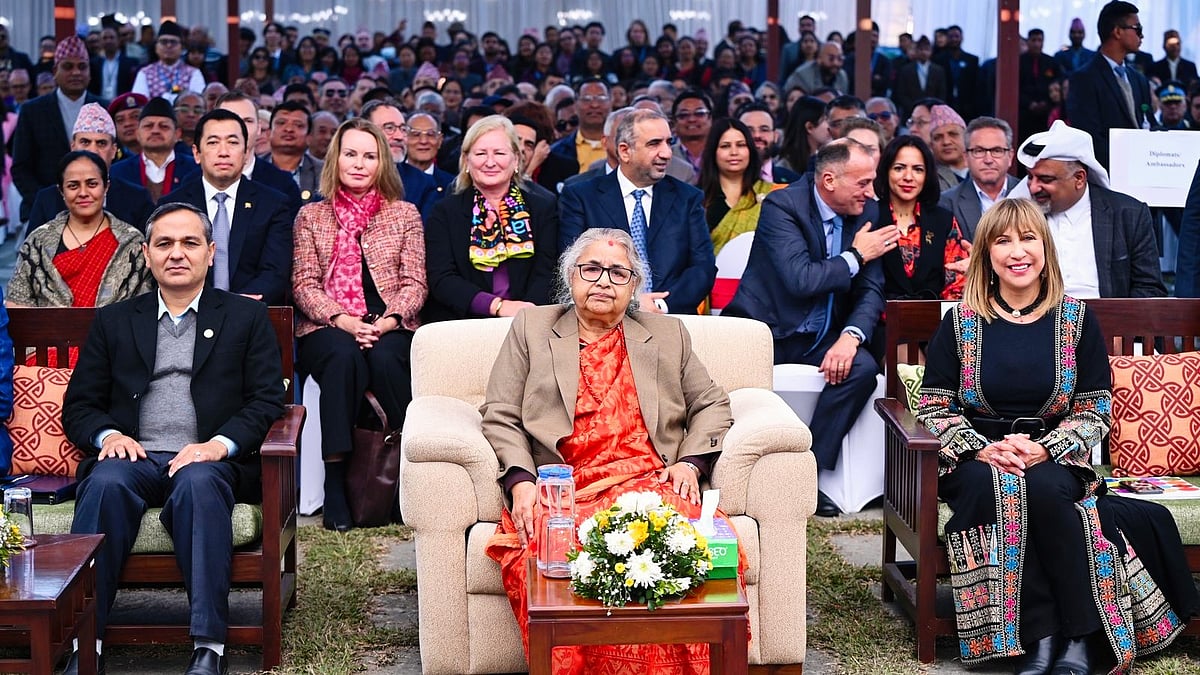
Nepal’s Supreme Court on Wednesday issued a show-cause notice to the government in response to a writ petition seeking restoration of the dissolved House of Representatives (HoR) and the invalidation of the interim government led by Prime Minister Sushila Karki — a political reset born directly out of weeks of street unrest that upended Kathmandu’s power equations.
The President’s office, Prime Minister Karki and the council of ministers have been named as respondents in the petition, which was filed nine days ago by eight former HoR members of the Nepali Congress. The petitioners have argued that the interim government lacks constitutional legitimacy and have demanded the formation of a new government led by the Nepali Congress, the largest party in the now-dissolved House.
Karki was sworn in as prime minister on 12 September, just three days after then premier K.P. Sharma Oli resigned under pressure from massive Gen Z-led protests that paralysed parts of Kathmandu and other cities. The demonstrations, driven by anger over governance failures, unemployment and corruption, marked one of the most sustained youth-led mobilisations Nepal has seen in years.
As the protests intensified, several senior political leaders — across party lines — were conspicuously absent from public view, retreating from media engagement and street-facing politics as the unrest unfolded. With the protests now ebbing and the conflict shifting decisively into courtrooms and constitutional forums, many of those same leaders have begun re-emerging, signalling attempts to reclaim political ground through legal and institutional routes rather than the streets.
Soon after Karki took oath, President Ramchandra Paudel dissolved the House of Representatives and announced fresh elections for 5 March 2026 — a move that has itself become the central point of legal and political contestation.
At the time of dissolution, the 275-member HoR comprised 88 members from the Nepali Congress, 79 from Oli’s Communist Party of Nepal–Unified Marxist–Leninist (CPN-UML), 32 from the CPN-Maoist Centre and 21 from the Rashtriya Swotantra Party.
The petitioners have argued that the Nepali Congress, as the single largest party with 88 members, had a clear constitutional claim to form the government under Article 76(3) of Nepal’s Constitution. Instead, they contend, the appointment of Karki and the subsequent dissolution of the House amounted to a constitutional bypass.
The writ, filed by Nepali Congress leaders including Shyam Ghimire, the party’s chief whip in the dissolved House, explicitly describes the Karki-led interim government as “unconstitutional” and seeks its annulment.
A constitutional bench comprising Chief Justice Prakash Man Singh Raut, Justice Sapana Malla and other judges heard the matter on Wednesday and issued a show-cause notice to the government, marking the judiciary’s formal entry into what has become Nepal’s most consequential political standoff since the protests.
Notably, demands for restoration of the HoR are no longer confined to the Nepali Congress. Oli’s CPN-UML — whose leader was forced out by the protests but has since begun reasserting himself politically — has also called for the House to be reinstated, underscoring how parties that briefly vanished from public engagement during the unrest are now converging around constitutional remedies.
As Nepal’s political crisis migrates from the streets to the Supreme Court, the case has become a litmus test for how post-protest power is redistributed — and whether leaders sidelined by popular anger can re-enter the political arena through legal revival rather than electoral reckoning.
With PTI inputs
Join our official telegram channel (@nationalherald) and stay updated with the latest headlines