World
Nicolas Maduro’s seizure fuels fears of wider conflict with Iran
Analysts warn US action in Venezuela may embolden hardliners and push the Middle East closer to war
The United States’ seizure of Venezuelan President Nicolas Maduro has sent shockwaves far beyond Latin America, with analysts warning that the move could increase the risk of a wider conflict with Iran amid already heightened tensions in the Middle East.
Hours after Washington announced that Maduro had been forcibly removed and taken to the US, Israeli opposition politician Yair Lapid issued a pointed message to Tehran, urging Iran’s leadership to “pay close attention to what is happening in Venezuela”. His remarks came less than a week after US President Donald Trump met Israeli Prime Minister Benjamin Netanyahu and renewed threats of fresh military strikes against Iran.
While Washington’s disputes with Caracas and Tehran stem from different political and strategic contexts, experts were quoted by Al Jazeera as saying the dramatic action against Maduro has reinforced fears that the Trump administration is increasingly open to regime-change operations.
“A new lawlessness makes everything less stable and war more likely,” said Jamal Abdi, president of the National Iranian American Council. He warned that the Venezuela operation could either embolden US allies, including Israel, or push Iran to take steps that might trigger military confrontation, such as strengthening its deterrence or pre-empting potential strikes.
Negar Mortazavi, a senior fellow at the Center for International Policy, said the episode had further dimmed prospects for diplomacy. “What I hear from Tehran is that there is no appetite for talks with an administration that signals it wants total surrender,” she said, adding that the US, Israel and Iran now appear to be on a path towards possible conflict.
The abduction of Maduro followed months of escalating rhetoric from Trump, whose administration has accused the Venezuelan leader of running a drug trafficking network and repeatedly highlighted Venezuela’s vast oil reserves. US officials, including Secretary of State Marco Rubio, have also stressed Maduro’s close ties with Iran, accusing Caracas of helping Iran and its allies expand their footprint in the Western Hemisphere.
Iran and Venezuela, both under heavy US sanctions, have strengthened economic and political cooperation in recent years, with bilateral trade running into billions of dollars. With Maduro removed, Iran’s already limited circle of regional allies has narrowed further, following the fall of Syria’s Bashar al-Assad and the weakening of Hezbollah in Lebanon.
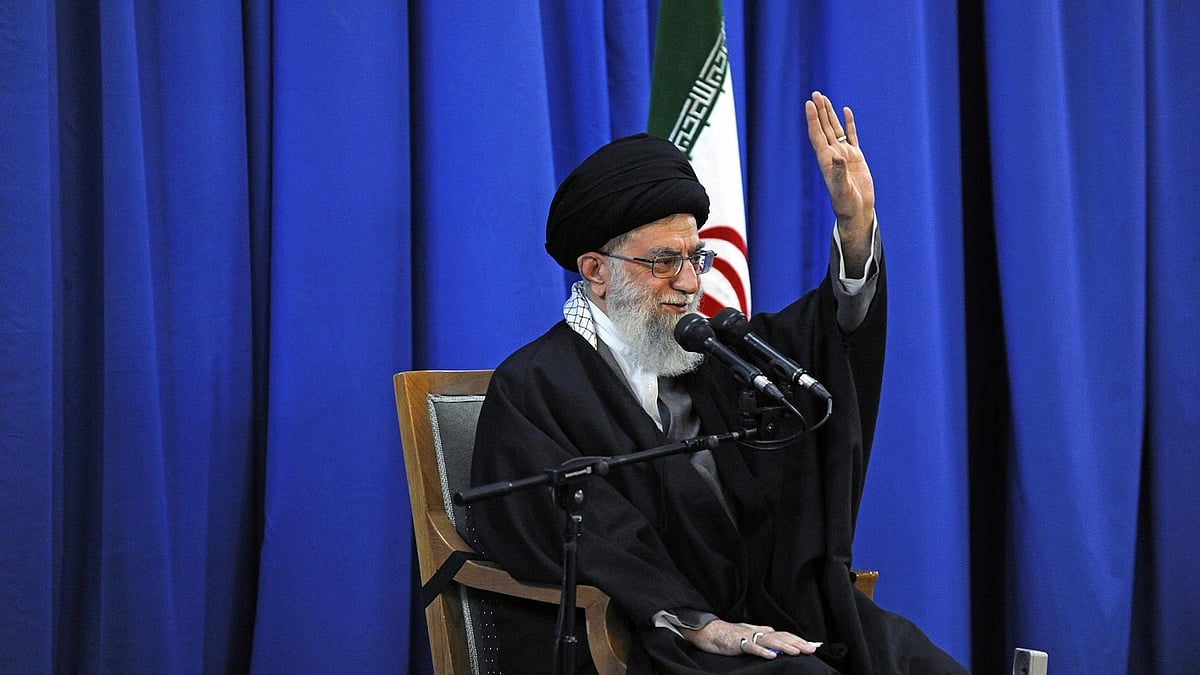
Tehran swiftly condemned the US action, calling it an act of unlawful aggression and urging the United Nations to intervene. Iran’s foreign ministry said the operation violated international law and threatened global peace and security. Supreme Leader Ayatollah Ali Khamenei struck a defiant tone, declaring that Iran would not submit to its enemies.
Trump, however, has framed the operation as a warning to all of Washington’s rivals. Rubio said the episode demonstrated that when Trump promises action, “he means it”. The US president has since reiterated threats against Iran, warning that Washington would strike again if Tehran rebuilt its nuclear or missile programmes, and even suggesting intervention if Iranian authorities crack down on protesters.
The US and Israel jointly bombed Iran’s key nuclear facilities earlier this year during a brief but intense conflict that killed senior Iranian commanders and scientists, as well as hundreds of civilians. Despite the damage, Iran’s political system survived, retaliating with large-scale missile attacks on Israel before a ceasefire was agreed.
Some analysts believe regime change in Iran remains an underlying objective for Israel, with Trump appearing increasingly receptive to that goal. Abdi noted that Israeli forces had already attempted to assassinate senior Iranian leaders, including President Masoud Pezeshkian, during the June conflict. However, he cautioned that a Venezuela-style operation in Iran would be far riskier, given Tehran’s ability to retaliate against US interests.
Meanwhile, Maduro’s removal has not yet led to a collapse of the Venezuelan government. Vice President Delcy Rodriguez, now acting president, has insisted Maduro remains the country’s legitimate leader and accused the US, and possibly Israel, of orchestrating the attack. Trump has responded with fresh threats, warning Rodriguez of severe consequences if she resists US demands.
Observers say Washington may now face a prolonged and complex involvement in Venezuela. Mortazavi argued that while Trump favours swift shows of force rather than prolonged wars, “running” Venezuela could prove far more complicated than anticipated.
Some critics, including US lawmakers, have suggested that control over Venezuela’s oil could cushion global energy markets in the event of a conflict with Iran, particularly if Tehran seeks to disrupt shipping through the Strait of Hormuz. Analysts, however, caution that such calculations assume a smooth US takeover in Venezuela, an outcome far from guaranteed.
For now, the dramatic events in Caracas have heightened global unease. What began as a confrontation in Latin America may, analysts warn, have set a precedent with dangerous implications for an already volatile Middle East.
Join our official telegram channel (@nationalherald) and stay updated with the latest headlines