World
Oil prices surge after Donald Trump announces naval blockade targeting Iran
Markets react nervously as tensions escalate in the Strait of Hormuz following breakdown of ceasefire talks
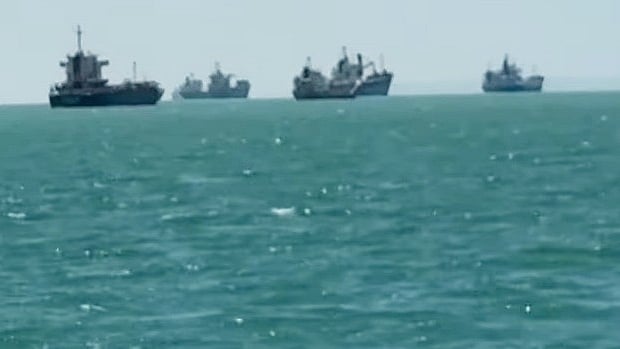
Global oil prices climbed sharply after Donald Trump announced plans for a US naval blockade aimed at restricting Iranian shipping, heightening concerns over supply disruptions in a key energy corridor.
The international benchmark Brent crude rose by more than 8 per cent on Sunday, pushing prices above $103 a barrel. Al Jazeera reported that this marks a return to triple-digit territory after recent volatility, with prices having exceeded $111 earlier in the week.
The move followed Trump’s declaration that US naval forces would prevent vessels from entering or leaving the Strait of Hormuz, a crucial passage for global energy shipments. The announcement came after ceasefire negotiations between Washington and Tehran broke down over the weekend.
However, US Central Command later clarified that the operation would be more limited in scope, targeting only ships travelling to and from Iran, while allowing other maritime traffic to continue. The revised plan is set to come into force on Monday at 10 am Eastern Time.
Oil markets have been highly volatile in recent weeks amid escalating tensions. Prices had surged to nearly $119 a barrel last month after joint US-Israeli strikes on Iran triggered retaliatory measures from Tehran, including restrictions on movement through the strait. A subsequent ceasefire agreement had briefly eased pressures, sending prices below $92 last week.
Although the truce remains formally in place until 22 April, shipping activity in the region has yet to recover. Iran has permitted only a limited number of vessels to pass through the waterway under strict controls. According to maritime intelligence firm Windward, just 17 ships transited the strait on Saturday, a sharp drop from the usual daily average of around 130 before the conflict.
Financial markets in Asia reacted negatively to the renewed uncertainty. Japan’s Nikkei 225 fell by 0.9 per cent in early trading, while South Korea’s KOSPI declined by more than 1 per cent.
US stock futures also pointed lower, with contracts linked to the S&P 500 down approximately 0.8 per cent, reflecting investor unease over the potential economic fallout of escalating geopolitical tensions.
Join our official telegram channel (@nationalherald) and stay updated with the latest headlines