World
Oil shock and war tensions mount as Strait of Hormuz standoff deepens
Global energy tensions rise as US moves to form a coalition to reopen Strait of Hormuz amid war and economic uncertainty
A gathering storm grips global energy markets as the United States advances plans for an international coalition to reopen the strategic lifeline of the Strait of Hormuz, even as war, diplomacy, and economic uncertainty converge across a volatile West Asian theatre.
Two months into a conflict ignited by US-Israeli strikes on Iran, the narrow maritime artery — through which nearly a fifth of the world’s oil and gas flows — remains shuttered. Tehran’s blockade, imposed in retaliation for a US naval squeeze on its own exports, has sent shockwaves through global markets, fuelling fears of prolonged supply disruptions and a looming economic slowdown.
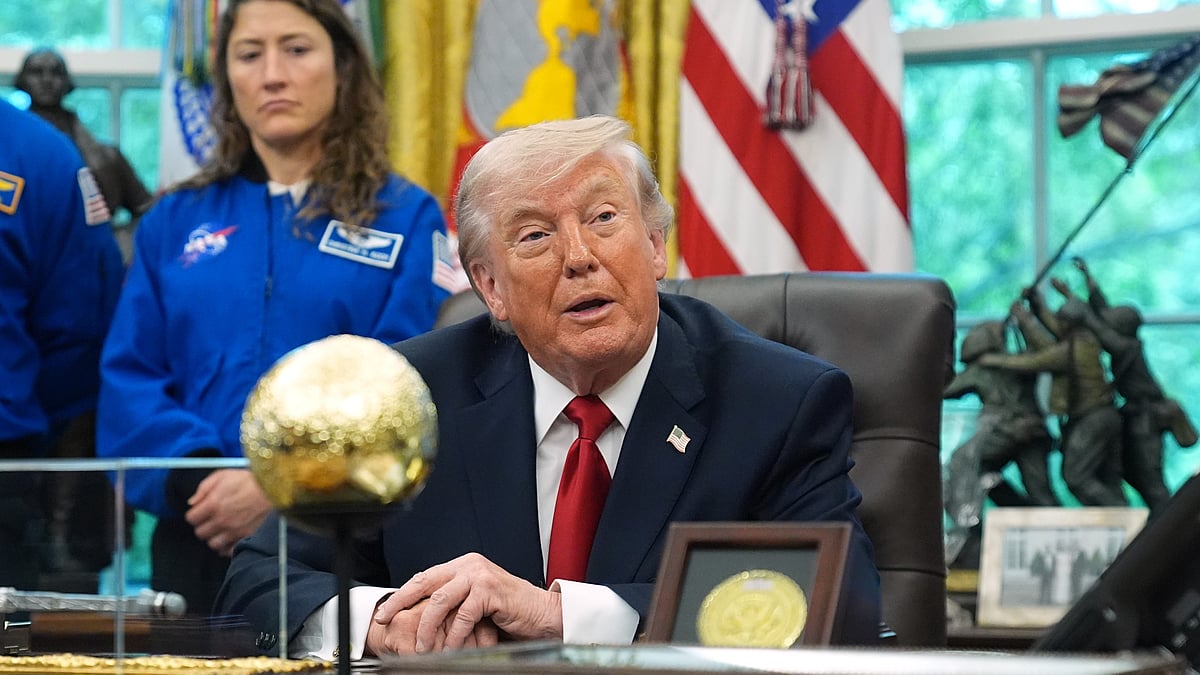
At the centre of the unfolding drama is US President Donald Trump, who is set to review fresh military options, including a possible new wave of strikes intended to pressure Iran into concessions on its nuclear programme. Reports suggest parallel contingency plans may even involve seizing parts of the strait to restore commercial navigation — an audacious move that could risk further escalation.
The rising tensions have already found a stark reflection in global oil prices. Brent crude surged past $126 a barrel, its highest level since the early days of the Russian invasion of Ukraine, and has more than doubled since the conflict erupted on 28 February. The surge has intensified inflationary pressures worldwide, pushing fuel costs into politically sensitive territory.
Even as a fragile ceasefire — brokered on 8 April — nominally holds, the diplomatic path forward appears fraught. Iran has proposed deferring discussions on its nuclear ambitions until hostilities formally end and maritime routes are restored. Washington, however, insists the nuclear issue must be addressed upfront, leaving negotiations at an impasse.
In a bid to chart a post-conflict order, the US has quietly invited partner nations to join a proposed maritime coalition — dubbed the Maritime Freedom Construct — designed to safeguard navigation in the strait. While countries such as France and United Kingdom have engaged in preliminary talks, they remain wary of direct involvement until active hostilities cease.
Amid this high-stakes standoff, Pakistan has emerged as a cautious intermediary, facilitating backchannel exchanges in an effort to prevent further escalation. Iranian officials, however, have sought time to respond to US “observations” on their proposal, signalling the delicate and uncertain nature of the dialogue.
On the ground, the toll of the conflict continues to mount. The war has already cost the US an estimated $25 billion, while Iran’s economy reels under pressure — its currency plunging to record lows and inflation soaring beyond 65 per cent. Human rights concerns have also deepened, with reports of mass arrests and executions tied to national security charges.
Tehran has warned of “unprecedented military action” should the US persist with its blockade, while senior Iranian leaders accuse Washington of attempting to fracture national unity and force capitulation through economic strangulation.
As military calculations, economic stakes, and diplomatic manoeuvres intertwine, the Strait of Hormuz has become more than a chokepoint — it is now the fulcrum upon which the fate of regional stability and global energy security precariously rests.
With agency inputs
Join our official telegram channel (@nationalherald) and stay updated with the latest headlines