World
Pakistan says ‘patience exhausted’, strikes Taliban targets in Afghanistan
Strikes come in response to recent Afghan attacks on Pakistani military positions, signaling a dangerous spiral of tit-for-tat violence
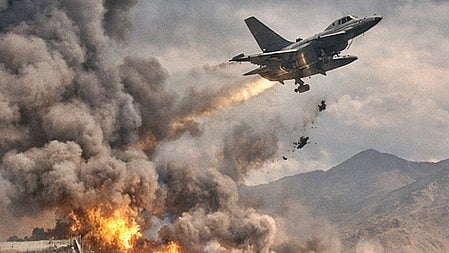
Tensions between Pakistan and Afghanistan erupted into open confrontation on Friday, as Pakistani warplanes rained bombs over Kabul and other Afghan cities in a dramatic escalation along the porous border shared by the two nations, the Al Jazeera reported.
The strikes came in response to recent Afghan attacks on Pakistani military positions, signaling a dangerous spiral of tit-for-tat violence.
Pakistani defence minister Khawaja Asif declared that Islamabad’s patience with the Taliban authorities in Kabul had finally run dry. “Our cup of patience has overflowed,” he warned. “What we are witnessing now is open war.”
Al Jazeera reported that the first bombing raid struck the Afghan capital at 1:50 am local time (21:20 GMT), followed closely by a second strike. Afghan anti-aircraft guns roared to life in response, unleashing a flurry of defensive fire after both raids.
A source within the Afghan government confirmed that Kabul had been hit, while Pakistani warplanes also targeted a military base in Kandahar province. Pakistani information minister Attaullah Tarar asserted that 133 Taliban fighters had been killed in the strikes, which targeted positions in Kabul, Kandahar, and Paktia. He added that nine Taliban positions had been captured and 27 destroyed, with attacks continuing unabated.
The Afghan government struck back. Spokesperson Zabihullah Mujahid said Afghan forces had launched retaliatory attacks on Pakistani bases in Kandahar and Helmand provinces following Islamabad’s offensive. Afghan military sources reported 10 Pakistani soldiers killed and 13 outposts captured in the counter-strikes, part of a cycle of violence that began with Pakistani attacks on Afghan positions along the border on Sunday.
The two neighbors’ relations have steadily deteriorated since October, when clashes along the 2,611km (1,622-mile) frontier left more than 70 people dead. Pakistan accuses Kabul of harboring armed groups, including the Pakistan Taliban — a distinct movement with ideological ties to the Afghan Taliban — that have launched attacks on Pakistani soil.
Asif framed Pakistan’s actions as the bitter fruit of prolonged restraint. “We tried every avenue — direct diplomacy, engagement through friendly countries, full-fledged negotiation — but the Taliban became a proxy for India,” he said. “For decades, Pakistan has hosted millions of Afghan refugees, providing them with livelihoods and shelter. But now, enough is enough. This is open war.”
The international community, alarmed by the escalating crisis, has called for urgent de-escalation. UN secretary-general António Guterres urged both sides to honor international humanitarian law and to protect civilians, commending ongoing mediation efforts by member states.
Meanwhile, Zalmay Khalilzad, former US ambassador to Afghanistan, warned that the spiraling cycle of attacks was a “terrible dynamic that must stop.” He urged a diplomatic accord in which neither nation allows its territory to be used to threaten the other, monitored by a trusted third party such as Turkiye, as a far wiser alternative to the ongoing cycle of bloodshed.
Join our official telegram channel (@nationalherald) and stay updated with the latest headlines