World
Pope Leo urges a two-state solution to end the Israel–Palestine conflict
Leo says his private talks with Turkish President Erdoğan focus heavily on the wars in Gaza and Ukraine
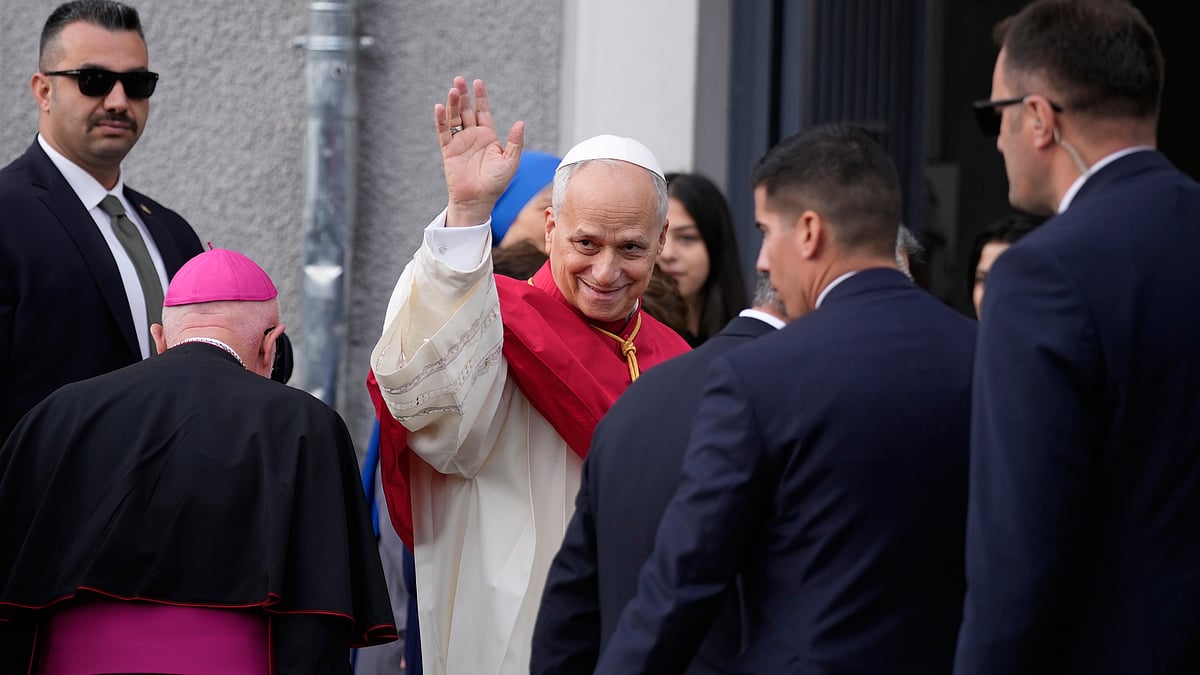
Pope Leo XIV has once again thrown the full moral weight of the Vatican behind a two-state solution, calling it the “only path” capable of delivering justice to both Israelis and Palestinians, the Al Jazeera reported.
His remarks came as he journeyed from Türkiye to Lebanon on Sunday, completing the second and final leg of his first international tour as pontiff.
Speaking to reporters aboard the papal plane, Leo revealed that his private discussions with Turkish President Recep Tayyip Erdoğan touched deeply on the wars tearing through Gaza and Ukraine. He noted that Türkiye holds an “important role” in ending both conflicts, a diplomatic bridge in a time of fractured alliances, the Al Jazeera reported.
On Gaza, the pope reaffirmed the Holy See’s enduring stance: that true peace can only come through the creation of a Palestinian state encompassing East Jerusalem, the occupied West Bank, and Gaza — an aspiration recognised for decades by the international community.
“We know that at this moment Israel does not accept this solution,” Leo said gently, “but we see it as the only way to resolve the conflict they are living in. We are friends with Israel as well, and we try to be a mediating voice that brings both sides closer to a just peace.”
Notably, the pontiff avoided direct condemnation of Israel’s war on Gaza during his time in Türkiye, choosing instead the language of cautious diplomacy.
Israel offered no immediate response. Prime Minister Benjamin Netanyahu has long rejected the notion of a Palestinian state, insisting it would embolden Hamas and threaten Israel’s security. Earlier this month, he declared that his government’s opposition “has not changed one bit”, brushing aside any foreign or domestic pressure with characteristic defiance.
Upon landing in Beirut, Leo was greeted with the warmth of a nation seeking solace. His schedule is dense with symbolism: meetings with Lebanon’s President Joseph Aoun — the Arab world’s only Christian head of state — an address to diplomats and officials, a grand mass in central Beirut, and visits to several cities across the country.
Crowds gathered along the roadsides to welcome him, Al Jazeera’s Ali Hashem reported, as the Lebanese army and security forces reinforced key points around the capital. His convoy will traverse Beirut’s southern suburbs, an area scarred by last year’s Israeli air strikes. Even Hezbollah’s Imam al-Mahdi Scouts plan to offer a ceremonial greeting as he passes.
Lebanon’s religious mosaic — where Christians make up roughly 30 percent of the population and Muslims form the majority — has received his arrival with rare unity. Druze leader Sheikh Sami Abi al-Muna hailed the trip, saying Lebanon “needs the glimmer of hope” the pope brings.
Leo’s pilgrimage carries both pastoral tenderness and political gravity. He will pray at the Beirut port, the site of the 2020 explosion that took 200 lives and left billions of dollars in destruction. He will celebrate an open-air mass on the waterfront and visit one of Lebanon’s few psychiatric hospitals, where staff and patients await him with palpable excitement.
His route, however, will not extend to the country’s embattled south, still shaken by near-daily Israeli strikes despite a US-brokered ceasefire late last year. “He is coming to bless us and for the sake of peace,” said Beirut resident Farah Saadeh. “We hope nothing will happen after he leaves.”
Ahead of his arrival, Hezbollah urged the pontiff to speak out against the “injustice and aggression” facing Lebanon — a clear reference to Israel’s continued military pressure.
In a region worn by war, factionalism, and grief, Leo’s visit unfolds like a momentary clearing in the storm — an attempt to breathe peace into a landscape accustomed to conflict, and to remind the world that even amid the rubble, hope seeks a home.
Join our official telegram channel (@nationalherald) and stay updated with the latest headlines