World
Rights Body flags surge in violence against women across Pakistan
In provinces such as Sindh and Balochistan, the situation is believed to be even more dire
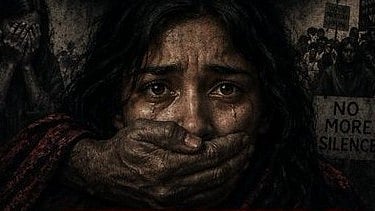
A leading minority rights organisation has sounded a grave alarm over the deepening crisis of violence against women in Pakistan, pointing to a sharp and troubling rise in reported cases over the past year.
According to the Voice of Pakistan Minority (VOPM), 6,543 incidents of gender-based violence were recorded in 2025 — an unsettling surge from 5,253 in 2024, marking a steep 25 per cent increase in just one year. The figures, the organisation warned, are not merely statistics but stark signals of a worsening reality.
“This is not just a trend; it is a warning,” the VOPM said, cautioning that despite the presence of laws and policy frameworks, women across the country are becoming increasingly vulnerable rather than secure.
The report paints a chilling portrait of daily life. In 2024 alone, more than 24,000 abductions were reported — translating to roughly 67 women taken each day. Alongside this, over 5,000 rape cases were documented, nearly 19 every day, while 405 women lost their lives in the name of so-called “honour”.
Yet, beneath these harrowing numbers lies what the organisation describes as an even darker truth: a near-total collapse of justice. Conviction rates remain dismally low — less than 2 per cent in rape cases and a mere 0.1 per cent in abduction cases — raising serious concerns about accountability.
“These are not just failures of the legal system,” the VOPM observed, “but signals to victims that their suffering may never be acknowledged, and to perpetrators that they may never be held accountable.”
The crisis, it said, extends far beyond reported crimes. An estimated 90 per cent of women experience domestic violence, while 85 to 90 per cent face harassment in workplaces—figures that underscore how danger has become an almost constant presence in the lives of many women.
In provinces such as Sindh and Balochistan, the situation is believed to be even more dire. Countless cases remain buried under layers of fear, social pressure, and the influence of powerful local actors—where silence is not just expected, but enforced.
“What makes this crisis even more difficult to confront,” the report noted, “is how normalised it has become.” Stories of violence — whether driven by personal choices, family disputes, or warped notions of honour — surface with disturbing regularity, only to fade quickly from public consciousness.
At the heart of the issue, the organisation argued, lies a deeply entrenched systemic failure. Informal justice mechanisms such as jirgas continue to operate alongside formal legal structures, often overriding them and delivering decisions that strip women of their most basic rights.
“These parallel systems do not just fail women — they actively endanger them,” the VOPM said, urging urgent and meaningful reform to confront what it described as a crisis that is no longer sporadic, but structural — and profoundly human.
With IANS inputs
Join our official telegram channel (@nationalherald) and stay updated with the latest headlines