World
Russia and China condemn US-Israeli strikes on Iran, call for ceasefire
Russian foreign minister Sergey Lavrov warns the war meant to stop nuclear proliferation could trigger the opposite outcome
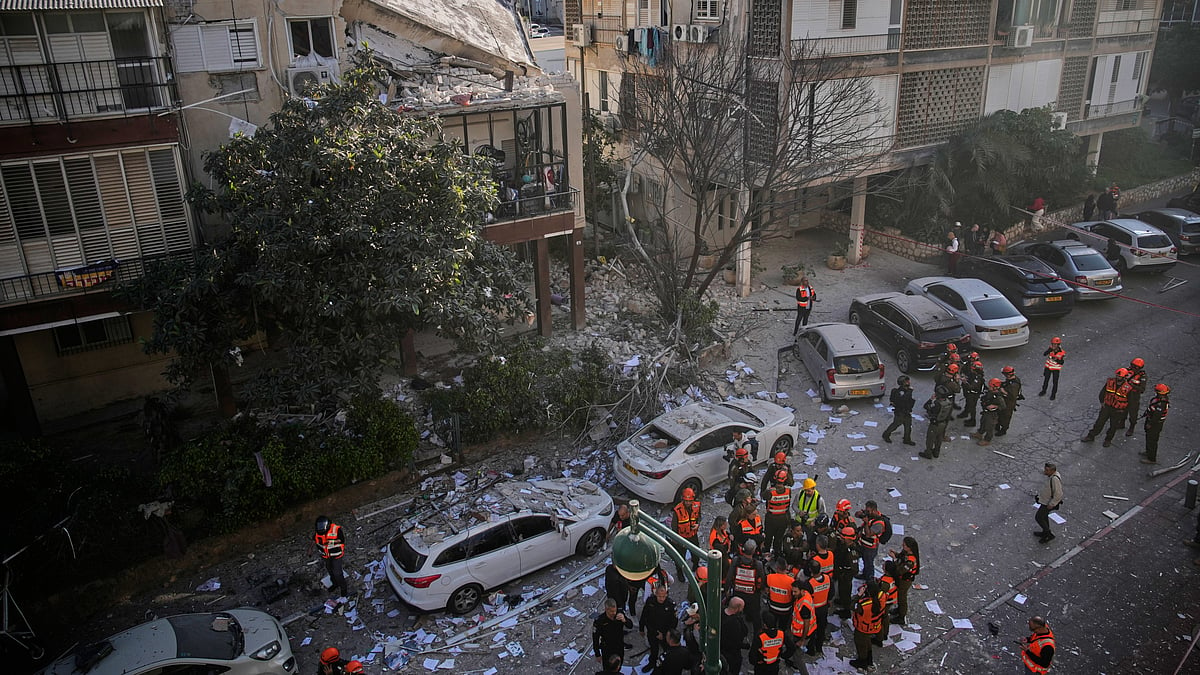
As American and Israeli missiles struck Iranian targets, diplomatic tempers flared just as fiercely in Moscow and Beijing, with both powers condemning the military campaign and warning of dangerous global consequences, the Al Jazeera reported.
Russia declared it had seen no evidence that Tehran was developing nuclear weapons, while China demanded an immediate halt to what it described as escalating hostilities that threaten to push the region into deeper turmoil.
Chinese foreign minister Wang Yi, in a pointed phone call with his Israeli counterpart Gideon Saar, expressed “deep regret” that military action had interrupted what Beijing said were promising negotiations between Washington and Tehran. According to China’s foreign ministry, Wang noted that talks had made “significant progress”, even addressing Israel’s security concerns, before being derailed by force.
“China opposes any military strikes launched by Israel and the US against Iran,” Wang said, urging an immediate cessation of operations to prevent the conflict from spiralling beyond control. “Force cannot truly solve problems,” he warned. “It will instead create new ones and leave serious long-term consequences.”
Beijing also pressed Israel to ensure the safety of Chinese nationals and institutions in Iran — a request that, according to the ministry, Saar agreed to address with “concrete measures.” The call formed part of a broader diplomatic flurry, following Wang’s outreach to the foreign ministers of Iran, Oman and France as China sought to position itself as a stabilising voice amid the gathering storm.
In Moscow, Russian foreign minister Sergey Lavrov delivered an equally stark rebuke. He warned that the very war purportedly aimed at halting nuclear proliferation could produce the opposite result. “The logical consequence,” Lavrov said, “could be that forces will emerge in Iran in favour of acquiring a nuclear bomb — precisely what the Americans claim they want to prevent.”
His reasoning was blunt: “The US does not attack those who possess nuclear weapons.” Lavrov cautioned that other countries in the Middle East might now feel compelled to pursue nuclear capabilities, potentially setting off an uncontrollable arms race across an already volatile region.
Israel, widely regarded as the Middle East’s only nuclear-armed state — though it maintains deliberate ambiguity over its arsenal — was also indirectly referenced in Lavrov’s warning about double standards and destabilising precedents.
Lavrov said Moscow still had seen no proof that Iran was building nuclear weapons. After speaking with his Iranian counterpart Abbas Araghchi, he reiterated Russia’s readiness to assist in finding a diplomatic solution, while condemning what he described as “unprovoked military aggression”.
Russia’s foreign ministry earlier accused Washington and Tel Aviv of launching a “premeditated and unprovoked act of armed aggression against a sovereign and independent UN member state.” It alleged that the true objective — regime change in Tehran — had been concealed beneath the veneer of negotiations.
The ministry warned that the unfolding conflict risked triggering not only humanitarian and economic disaster but potentially even radiological consequences, cautioning that the chain reaction of violence could spiral far beyond its initial flashpoint.
The sharp rhetoric from Moscow comes even as Russia faces its own accusations of aggression following its full-scale invasion of Ukraine, a war now entering its fifth year — underscoring the complex and often contradictory geopolitical fault lines shaping the current crisis.
As missiles fly in West Asia, diplomatic volleys from Beijing and Moscow signal that the confrontation over Iran may not remain confined to the battlefield alone, but could reshape global power alignments in unpredictable ways.
Join our official telegram channel (@nationalherald) and stay updated with the latest headlines