World
Russia deploys nuclear-capable Oreshnik hypersonic missiles in Belarus, signals wider European reach
Moscow releases first official footage of Oreshnik system on combat duty amid heightened tensions over Ukraine war
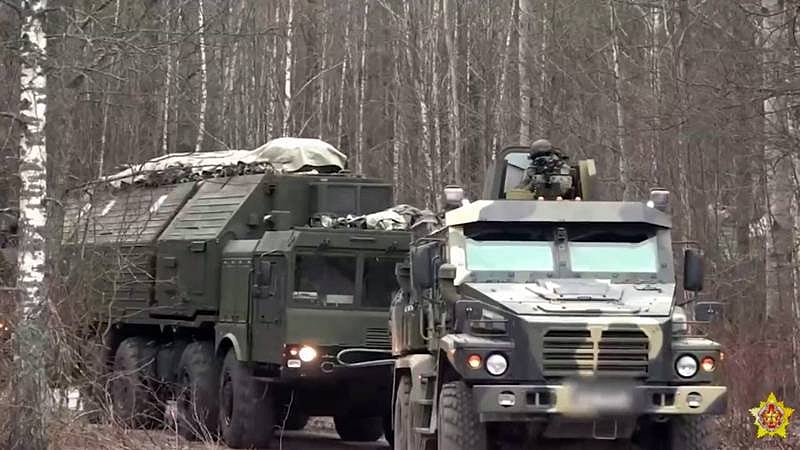
Russia on Tuesday released official video footage showing what it said was the deployment of its nuclear-capable hypersonic Oreshnik missile system in neighbouring Belarus, a move seen as significantly enhancing Moscow’s ability to strike targets across Europe in the event of a wider conflict.
State news agency TASS said this was the first time the Russian Defence Ministry had publicly showcased the mobile Oreshnik missile systems. President Vladimir Putin has previously claimed that the missile is impossible to intercept, citing speeds exceeding 10 times the speed of sound.
The deployment comes at a time of heightened East-West tensions linked to Russia’s ongoing war in Ukraine. Belarus borders Ukraine as well as NATO members Poland, Lithuania and Latvia, and the placement of the system there would marginally reduce missile flight times to European targets.
The video, jointly released by Russian and Belarusian defence ministries, showed mobile launchers moving along forest roads, missile crews camouflaging the systems with netting, and senior officers briefing troops. A Russian officer was seen informing personnel that the systems had been officially placed on combat duty, with routine training and reconnaissance activities underway.
The footage did not disclose the exact location of the deployment. However, two US researchers told Reuters that satellite imagery strongly suggests the missiles are stationed at a disused airbase known as Krichev-6 in eastern Belarus.
Jeffrey Lewis of the Middlebury Institute of International Studies and Decker Eveleth of CNA said a building seen in the video matched imagery from Planet Labs dated November 19. They credited Russian military blogger Dmitry Kornev with first geolocating the site.
Some Western analysts view the deployment as part of Russia’s increasing reliance on nuclear signalling to deter NATO countries from supplying Ukraine with long-range weapons.
Putin has said the Oreshnik’s destructive power is comparable to a nuclear weapon even with a conventional warhead.
Intermediate-range missiles can travel up to 5,500 km, allowing strikes across Europe and potentially the western United States.
Russia tested a conventionally armed Oreshnik against a target in Ukraine in November 2024.
Scepticism remains in Western capitals about the missile’s battlefield impact. A US official said in December 2024 that the system was not considered a “game-changer”.
Belarusian President Alexander Lukashenko, a close ally of Putin, had earlier announced plans to host the missiles, saying no more than a dozen Oreshnik systems would be deployed. His defence minister described the move as a response to what Minsk views as aggressive actions by Western countries.
Lukashenko allowed Russian forces to use Belarusian territory to launch their invasion of Ukraine in February 2022, though Belarusian troops have not taken part in the fighting.
Join our official telegram channel (@nationalherald) and stay updated with the latest headlines