World
Spain's first general strike in 14 years puts housing crisis at centre of political battle
Millions of workers join nationwide strike over rising rents and living costs, as political parties seek to turn the protest to their advantage ahead of a crucial election
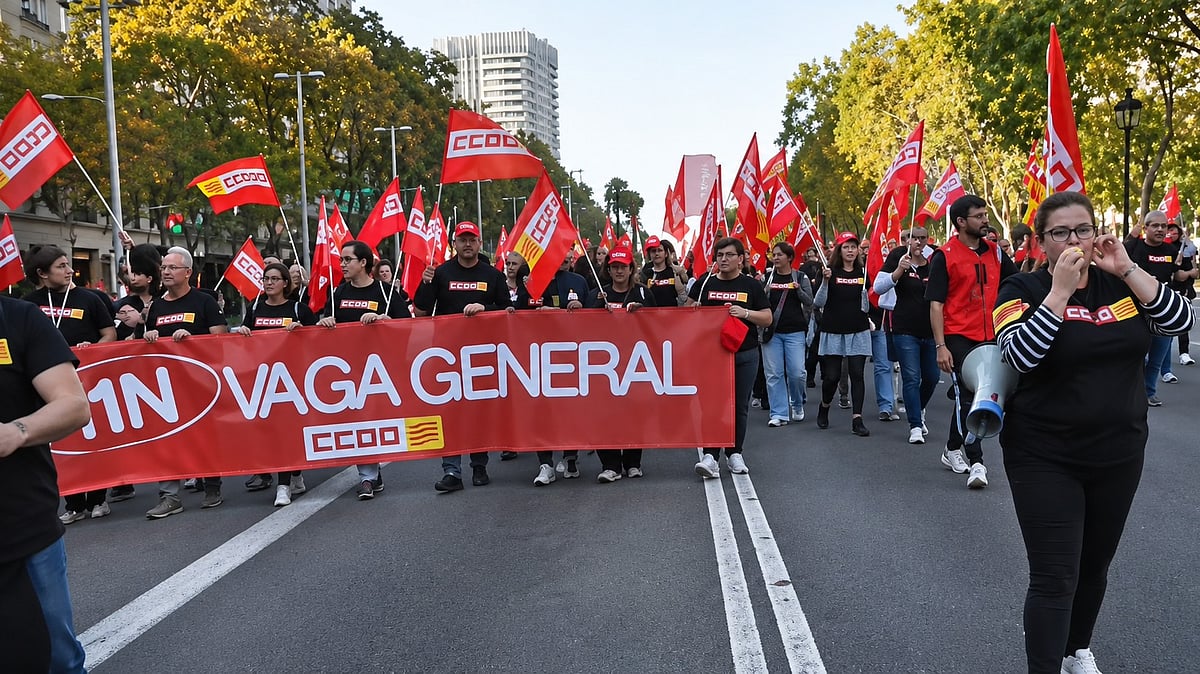
Millions of workers across Spain went on strike on Wednesday demanding government action on the country's housing crisis, bringing housing costs and workers' rights to the centre of a political contest less than three weeks before a national election.
The first general strike in 14 years is expected to disrupt public transport and slow or shut down businesses, factories and shops across the eurozone's fourth-largest economy.
Spain's two main trade unions, the General Union of Workers (UGT) and the Workers' Commissions (CCOO), reported widespread participation in the early hours, with significant stoppages in key sectors. According to a statement posted on social media, participation in work stoppages stood at 90 per cent in the automotive and port sectors, 85 per cent in the meat industry, 82 per cent in waste collection and 75 per cent in the energy sector.
Minor incidents were reported during the initial hours of the strike. Roadblocks, some involving burning tyres, were set up in Barcelona, while scuffles broke out between picketers and police near Madrid's main wholesale market. Workers also set off fireworks as the strike began at midnight in Barcelona.
The walkout was called amid growing anger over housing costs. Average rents in Spain have nearly doubled over the past decade, putting pressure on household budgets and leaving many residents unable to afford homeownership.
Public anger intensified after the nationally televised eviction of an 87-year-old woman, Maricarmen, from her Madrid home last month. Her subsequent death turned her into a symbol of the housing insecurity faced by tenants.
Housing activists used the outrage to mobilise support for the strike, demanding the elimination of tourist apartments, a crackdown on real estate speculation and stronger protections for renters, including automatic renewal of leases.
The UGT and CCOO have called for greater government intervention in the housing market and a new minimum wage agreement through negotiations with employers. The strike's slogan is "Salaries. Housing. Prices."
Housing crisis returns to centre of election debate
The protests following Maricarmen's eviction had prompted Prime Minister Pedro Sánchez's government to introduce emergency measures to limit evictions and support tenants. However, right-wing parties in Parliament refused to ratify the measures, arguing that they would drive rental properties out of the market.
Sánchez called an election on 5 October, seeking another four-year term for his left-wing coalition. But a deadly high-speed train collision that killed 69 people has since dominated the campaign, diverting attention from housing.
Political analyst Oriol Bartomeus of the Autonomous University of Barcelona said the strike offered Sánchez's Socialists and other left-wing parties an opportunity to bring housing back into the election debate.
"The Socialists need for the strike to be a success and for there not to be any violence so that the election campaign can swing back to being about housing, back in the framework of Maricarmen," he told The Associated Press.
The government is due to make another attempt on Thursday to secure parliamentary approval for the two housing decrees rejected by the full lower chamber last month.
Sánchez, in a video posted on social media this week, credited the workers' movement with securing social protections such as the 40-hour work week and national health insurance. He warned that right-wing parties would bring austerity and underfunded public services.
Verónica Martínez, spokesperson for Sumar, the junior partner in the governing coalition, said the Left needed workers to mobilise, adding that rights were first won on the streets and later through institutions.
Right sees opportunity in possible unrest
The conservative Popular Party and far-right Vox oppose government intervention in the housing market beyond incentives to increase the construction of new homes. Both have accused the unions of using the strike to help Sánchez remain in power.
"This strike is not a general strike; it is an electoral strike," Popular Party spokesperson Miguel Tellado said on Tuesday. He argued that the protest was directed not against the government in office but the government that could emerge after the election.
Bartomeus said the right-wing parties could also benefit if the demonstrations descended into violence. He argued that the Popular Party and Vox would prefer the strike to end in scenes of disorder, allowing them to present themselves as forces of law and order.
The competing political calculations have made Wednesday's walkout more than a labour protest. With housing costs, wages and the future of Spain's social policies at stake, its impact could extend beyond the disruption of a single day.
Join our official telegram channel (@nationalherald) and stay updated with the latest headlines