World
Storms ravage California coast as ‘Super El Nino’ fuels fears of further damage
El Niño, powerful waves and unusually high tides are increasing California’s coastal flooding and erosion risks
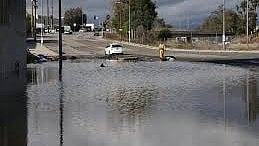
Record rainfall has caused flooding in San Francisco, damaged infrastructure and left over 51,000 customers without power
El Niño, powerful waves and unusually high tides are increasing California’s coastal flooding and erosion risks
California is strengthening coastal protection measures amid warnings of a potentially historic El Niño event
California is facing growing coastal threats as record rainfall, powerful ocean swells and unusually high tides combine to increase the risk of flooding and erosion. Scientists have warned that the impacts could intensify in the coming days as El Niño-driven sea-level rise and seasonal king tides put coastal communities and infrastructure under pressure.
The US National Weather Service issued warnings early Thursday as fresh storms moved towards California's coastline, bringing heavy rainfall and the threat of flash flooding.
Describing the intensity of the storm system, the weather agency said rainfall rates had exceeded one inch (25.4 mm) per hour in some areas, prompting multiple flash flood warnings.
An atmospheric river influenced by a strong El Niño event brought severe flooding to San Francisco on Wednesday, dumping 2.64 inches of rain in a single day and breaking a rainfall record for that date that had stood for more than a century, Xinhua News Agency reported.
Floodwaters inundated buildings, stranded vehicles on Bay Area freeways and disrupted electricity supplies, leaving more than 51,000 customers without power by Wednesday afternoon.
El Niño, a climate phenomenon characterised by warmer-than-average sea surface temperatures in the tropical Pacific Ocean, can bring wetter and stormier weather to California. It can also temporarily elevate sea levels along the US West Coast, allowing high tides and powerful waves to push further inland.
Meanwhile, large ocean swells continued to batter Southern California's coastline on Thursday, worsening erosion and damage caused by previous storms.
Coastal infrastructure has already shown signs of vulnerability. In October, a 360-foot crack developed in a coastal bluff beneath Pacific Coast Highway near Crystal Cove State Park. The incident prompted the California Department of Transportation (Caltrans) to restrict traffic to one lane in each direction while crews worked to stabilise the slope.
A high surf advisory remained in effect for Malibu and Los Angeles County beaches until 9 am on Friday, with waves reaching an estimated six to nine feet.
However, scientists warned that more severe coastal conditions could emerge next week as unusually high king tides coincide with potentially powerful swells and additional rainfall.
The high tides, expected from Sunday through 27 November, could push maximum coastal water levels in parts of Southern California above eight feet starting Monday.
According to the California Coastal Commission, the highest tides of the season are expected between 24 and 26 November, 23 and 25 December, and 21 and 22 January.
Mark Merrifield, director of the Center for Climate Change Impacts and Adaptation at Scripps Institution of Oceanography, described the situation as a combination of three major coastal threats: stronger waves, heavier rainfall and rising sea levels associated with El Niño.
The National Oceanic and Atmospheric Administration (NOAA) has estimated at least a 60 per cent probability of a historic El Niño event during the October-December period, potentially surpassing all recorded events since 1950. The US Geological Survey has also described the phenomenon as potentially the largest and most intense on record.
Amid growing concerns, California is strengthening measures to protect vulnerable coastal infrastructure.
Governor Gavin Newsom, who declared a statewide state of emergency on September 21, signed an executive order on 27 October establishing a Highway 1 Task Force. The initiative aims to identify vulnerable stretches of the coastal highway and accelerate preventive measures.
According to the governor's office, emergency project spending along the Big Sur section of Highway 1 reached approximately $312 million between 2020 and 2026.
With heavy rainfall, powerful swells and exceptionally high tides expected to overlap, scientists warn that California's coastline could face increasingly severe flooding and erosion risks in the days ahead.
With IANS inputs
Join our official telegram channel (@nationalherald) and stay updated with the latest headlines