World
Trade deal a ‘big win’ for USA: Trump administration official
US trade representative stresses India will continue to retain protections over “certain key areas”, no specifics
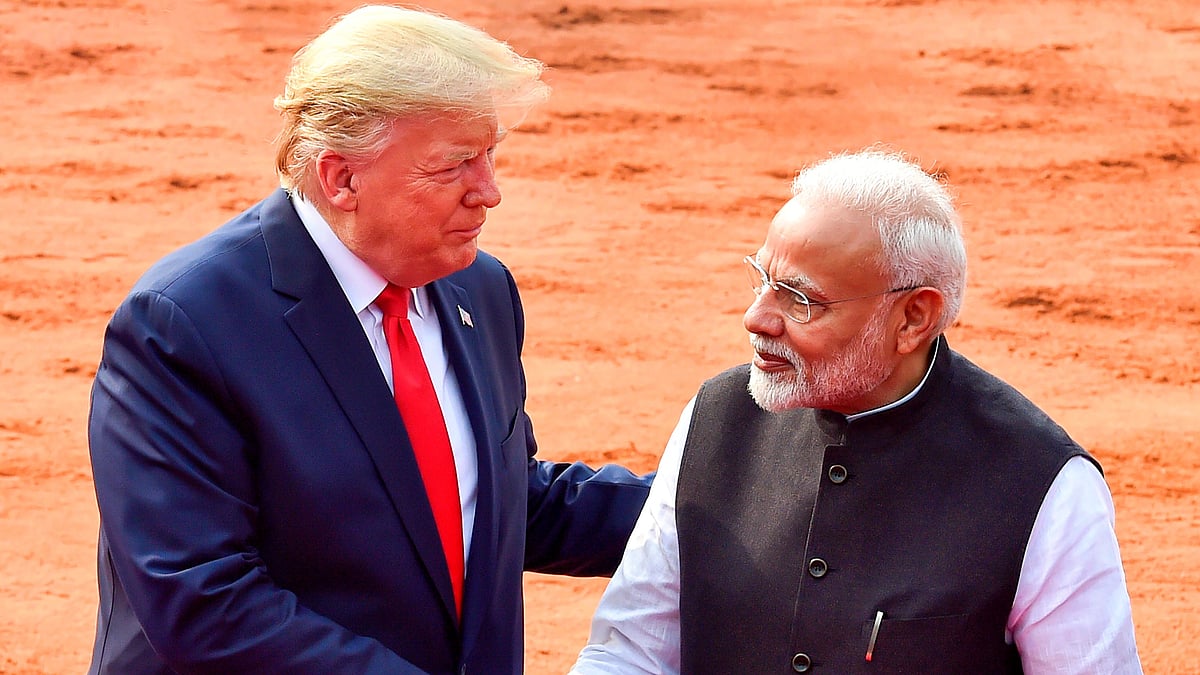
India is set to eliminate tariffs on a “vast array” of American industrial and agricultural products — including “fruits” and “vegetables” — bringing them down to zero per cent under a trade agreement announced by President Donald Trump, according to a senior US official.
US trade representative Jamieson Greer characterised the agreement as a “big win”, while stressing that India would continue to retain protections over “certain key areas”.
“This is it. The time has come, and now we have the deal. We'll finish papering it, but we know the specifics. We know the details. It's a very exciting opportunity,” Greer said in an interview with CNBC 'Squawk Box' on Tuesday.
Greer added that the US would continue to impose a tariff of 18 per cent on Indian goods, citing the scale of America’s trade deficit with India. At the same time, he said, New Delhi had agreed to sharply cut its own tariffs on a wide range of US exports.
“Because we have this giant trade deficit with them, but they've also agreed to reduce their tariffs for us on a variety of agricultural products, manufactured goods, chemicals, medical devices, etc. It's an exciting opportunity for both countries,” he said.
Separately, White House press secretary Karoline Leavitt said on Tuesday that India had committed to “no longer” purchasing Russian oil, and that Prime Minister Narendra Modi had also agreed to investments worth USD 500 billion across key sectors of the US economy.
The trade agreement was also discussed during a meeting in Washington, DC, between external affairs minister S. Jaishankar and US state secretary Marco Rubio on Tuesday, 3 February. The two leaders “welcomed” the deal and spoke about “formalising” bilateral cooperation in the exploration and mining of critical minerals.
According to a state department readout, the meeting underscored that both sides “emphasised the importance of our democracies working together to unlock new economic opportunities and advance our shared energy security goals”.
In a Truth Social post on Monday, Trump said the US would lower its reciprocal tariff on Indian goods from 25 per cent to 18 per cent under the agreement, with immediate effect. India would “likewise move forward to reduce their tariffs and non-tariff barriers against the US to zero”, he said.
Trump also said Modi had committed to significantly increasing purchases of American goods, in addition to buying more than USD 500 billion worth of US energy, technology, agricultural products, coal and other items.
Providing further details, Greer said India’s average tariff on industrial goods currently stood at around 13.5 per cent. “That's going to go to zero for virtually everything. When I say virtually, I mean 98-99 per cent. On the agricultural side, there's a vast, vast array of agricultural goods. So it will go to zero,” he said.
“India, like every country in the world, including the US, has some protection around certain key areas where they'll continue to control that. We'll continue to work on access. But for a variety of things, tree nuts, wine, spirits, fruits, vegetables, etc, they're going down to zero. This is a big win,” Greer added.
In a post on X, the Office of the US trade representative said, “India will lower tariffs on a wide array of US industrial and agricultural goods to 0%. President Trump's historic deal with India delivers unprecedented market access for American farmers and producers.”
Turning to non-tariff barriers, Greer said while cutting tariffs was significant, technical and regulatory obstacles often posed greater challenges. “So we have an understanding and agreement with the Indians as well on a variety of technical barriers to trade areas where they have not accepted US standards,” he said.
“We know American goods are safe, we know they're effective, etc. We have effective regulation in the US, sometimes too effective. So we have an agreement with them on a process for recognising certain US standards.
“They obviously have their own political considerations, and they have their own processes for accepting those standards, but that's a key portion of this trade agreement that should open up this market of over a billion people to US goods,” Greer said.
Asked about India’s purchases of Russian oil, Greer said that before 2022–23, India imported little Russian crude. “They took advantage of a situation where Russian crude was trading at a discount because they couldn't get it to any other countries because of sanctions. President Trump very accurately... put the Indians on notice that we view this as supporting the Russian war effort.
“And starting at the end of last year, the Indians started winding down their purchase of Russian oil. We've been monitoring that. They've been diversifying purchases of energy from the US, not just oil, but also gas, propane, and other things. That's been going up. We'll keep monitoring that,” he said.
Leavitt said India was “committed to not only no longer purchasing Russian oil, but buying oil from the US, also perhaps from Venezuela too, which we know will now have a direct benefit on the US and the American people”.
She added that, alongside this, Modi had “committed to $500 billion of investments into the US, including for transportation, for energy and for agricultural products as well. So this is another great trade deal thanks to President Trump”.
Earlier, speaking to Fox News, Leavitt said Trump and Modi had a “great call” on Monday. “…when it comes to PM Modi, I know he (Trump) particularly enjoys their relationship and has a deep respect for the Prime Minister and for his country of India. They had a great call. It was very productive yesterday, and they struck a deal in which India has agreed to stop purchasing Russian oil to buy more American oil from the US, and potentially from Venezuela too,” she said.
Leavitt also said Trump and his national security team were “now dictating” Venezuela’s commercial oil arrangements and exports.
She said while the US tariff on Indian goods would stand at 18 per cent, American exports entering India would face zero tariffs. “So this is a great deal and a huge win for American workers, businesses and consumers alike,” she said.
Trump had earlier imposed tariffs of up to 50 per cent on India, including a 25 per cent levy linked to New Delhi’s purchases of Russian oil.
With PTI inputs
Join our official telegram channel (@nationalherald) and stay updated with the latest headlines