World
Trump vows to “win” in Iran as analysts warn of high risks and uncertain outcomes
Experts caution that any US military move against Tehran could trigger severe retaliation, regional instability and political fallout at home
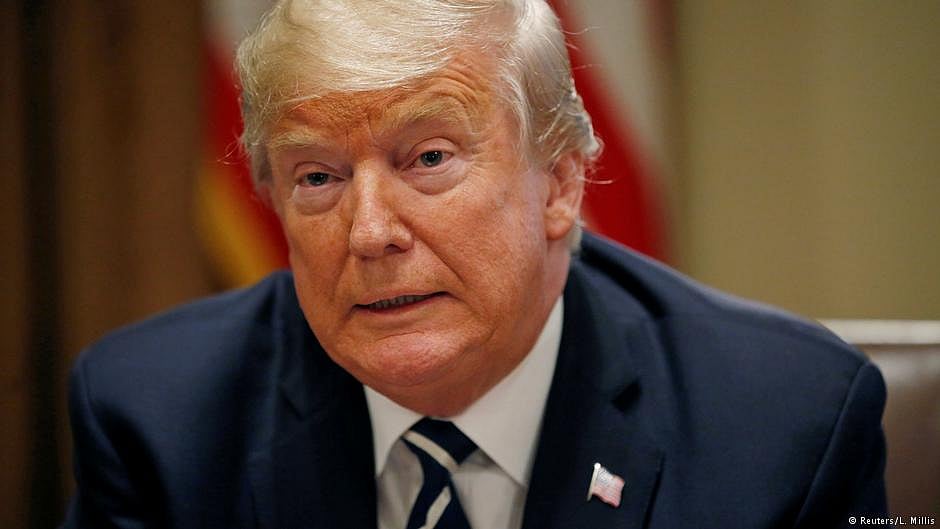
Donald Trump has declared that his objective in Iran is to “win”, but analysts warn that the United States president faces no straightforward path to victory against a deeply ideological governing system fighting for its survival.
Unlike its largely symbolic responses to previous US actions, including the 2020 assassination of top general Qassem Soleimani and the bombing of nuclear facilities last June, Iran is expected to retaliate forcefully against any direct attack on its central leadership.
Al Jazeera said, experts caution that even a targeted strike on Supreme Leader Ali Khamenei or other senior figures may fail to bring down the regime, while risking widespread destabilisation across the region.
“All the options are pretty terrible,” said Barbara Slavin, a distinguished fellow at the Stimson Center. “It’s extremely difficult to predict the consequences of any action, particularly if the regime feels cornered. In that scenario, Iran could lash out in horrific ways against US forces and allies in the region.”
Trump’s rhetoric has intensified since the beginning of the year, as anti-government protests swept across Iran. He threatened military intervention if Iranian authorities killed demonstrators, writing on social media in early January that the US was “locked and loaded” to come to their rescue. He repeatedly urged protesters to seize state institutions, promising that American help was imminent.
Despite those warnings, Iranian authorities launched a brutal crackdown that, according to activist groups, has left thousands dead. As Tehran imposed a nationwide internet blackout, Trump appeared to soften his stance, relaying Iranian officials’ claims that armed demonstrators had been attacking security forces. The US president later expressed “respect” for Iran after it reportedly halted hundreds of planned executions.
Some reports suggest the protest movement has lost momentum for now, although verification remains difficult due to restricted communications. Analysts stress, however, that the crisis is far from over and could rapidly escalate again. Trump has not ruled out military action, and US media have reported a build-up of American forces in the Middle East, including the deployment of an aircraft carrier strike group.
The president has previously demonstrated a readiness to use military force, boasting about operations such as the killing of ISIL leader Abu Bakr al-Baghdadi, the Soleimani assassination and strikes on Iranian nuclear sites. Earlier this month, he also ordered the abduction of Venezuelan President Nicolás Maduro.
Yet specialists argue that Iran is not a target that can be subdued quickly. “This is not Venezuela,” Slavin said, pointing to the scale and resilience of the Iranian state. “A prolonged conflict would be enormously costly, particularly given the other crises Trump is already grappling with.”
The prospect of war also appears to clash with the administration’s own strategic vision. Only two months ago, the White House released a National Security Strategy pledging to shift resources away from the Middle East and reaffirming a commitment to non-intervention. However, Iran’s violent suppression of protests may have pushed Trump into what some describe as an unintended humanitarian posture.
Trita Parsi, executive vice president of the Quincy Institute, warned that Tehran may no longer exercise restraint in the face of US pressure. “Iran doesn’t need to win a war militarily,” he said. “It only needs to ensure that a prolonged conflict damages Trump politically, through rising oil prices, global inflation and mounting instability.”
Iran’s vulnerability has increased sharply in recent years. Its regional alliance network has largely collapsed, key partners such as Hamas and Hezbollah have been weakened, and Syria’s former president Bashar al-Assad has fallen from power.
Israeli strikes have degraded Iran’s air defences, while US attacks have severely damaged its nuclear programme. Economically, sanctions have driven the rial to historic lows, compounding domestic unrest.
Despite this, analysts stress that the regime has survived decades of war, sanctions and internal turmoil. “The ferocity of the state’s response reflects deep insecurity,” said Naysan Rafati of the International Crisis Group. “But desperation can also lead to reckless decisions, especially if Tehran believes foreign intervention could reignite mass protests.”
Within Washington, hawkish voices see a rare opportunity to dismantle the Islamic Republic, while others urge caution. US allies in the Gulf fear regional chaos, and Trump must also consider domestic opinion ahead of the 2026 midterm elections. Large segments of his “America First” base remain sceptical of foreign wars after the experiences of Iraq and Afghanistan.
Diplomacy has not been entirely ruled out. Trump’s special envoy, Steve Witkoff, has said he hopes for a negotiated settlement, demanding that Iran abandon uranium enrichment, scale back its missile programme and end support for armed allies. Critics argue these terms amount to capitulation and leave little room for compromise.
While Iran has insisted it retains the right to enrichment and self-defence, some analysts believe a limited nuclear deal in exchange for sanctions relief remains possible. “Trump could strike a deal and present it as a major victory,” Slavin suggested. “But it would be hugely controversial and seen by many as abandoning the protesters.”
For now, Iran remains defiant, portraying the unrest as a foreign-backed conspiracy and warning that any external attack will be met with severe retaliation. As tensions mount, analysts agree on one point: the path Trump has outlined is fraught with uncertainty, and the costs of miscalculation could be immense.
Join our official telegram channel (@nationalherald) and stay updated with the latest headlines