World
US airstrikes on IS militants mark escalation in Nigeria’s northwest conflict
Attacks in Sokoto highlight Washington’s growing role as Nigeria struggles with deep-rooted security crises
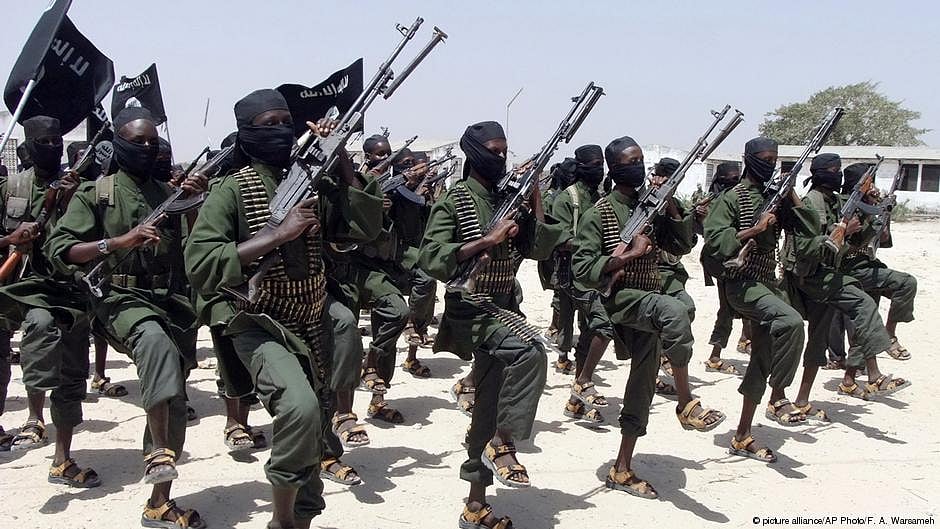
United States airstrikes targeting Islamic State-linked militants in northwestern Nigeria have marked a significant escalation in efforts to counter armed groups that Nigeria’s overstretched military has struggled to contain for years.
US President Donald Trump said the “powerful and deadly” strikes were carried out on Thursday in Sokoto state against Islamic State fighters whom he accused of “targeting and viciously killing, primarily, innocent Christians”. Security experts and residents, however, note that Nigeria’s protracted violence affects both Christians, who are predominant in the south, and Muslims, who form the majority in the north.
Speaking to Politico on Friday, Trump said he personally decided the timing of the strikes. “They were going to do it earlier,” he said. “And I said, ‘Nope, let’s give a Christmas present.’”
Nigeria’s government said the operation followed intelligence-sharing and strategic coordination between Abuja and Washington. The Associated Press was unable to independently verify the scale of damage or casualties caused by the strikes. US Defence Secretary Pete Hegseth hinted at further action, writing on X: “More to come….”
Although officials did not specify which faction was targeted, analysts believe the strikes were likely aimed at Lakurawa, a lesser-known Islamic State affiliate formally known as the Islamic State Sahel Province, which has expanded rapidly in northwestern states such as Sokoto and Kebbi over the past year.
Nigeria is battling multiple armed groups, including the Islamic State West Africa Province, an offshoot of Boko Haram operating mainly in the northeast, and Lakurawa, which has gained notoriety for attacks on rural communities and security forces. Nigerian military officials have previously said Lakurawa has roots in neighbouring Niger and became more active along Nigeria’s borders after Niger’s 2023 military coup disrupted cross-border security cooperation.
Analysts say Lakurawa first emerged in the region around 2017, after being invited by traditional leaders in Sokoto to help defend communities from bandit gangs. Over time, the group turned on local leaders and imposed a harsh interpretation of Islamic law, alienating residents.
“Communities now openly say that Lakurawa are more oppressive and dangerous than the bandits they once claimed to protect them from,” said Malik Samuel, a Nigerian security researcher with Good Governance Africa. The group is accused of killings, kidnappings, sexual violence and armed robbery, and is believed to control territory across parts of Sokoto and Kebbi.
Some attacks attributed to Lakurawa are also believed to involve the Islamic State Sahel Province, which researchers say has quietly expanded from Niger’s Dosso region into northwestern Nigeria. According to conflict monitors, the group has operated covertly to entrench itself along the Niger–Nigeria border and is now pushing towards neighbouring Benin.
Despite the latest military action, analysts warn that Nigeria’s security crisis is driven as much by governance failures as by armed militancy. Remote regions where violence is most intense often suffer from extreme poverty, unemployment and a lack of state presence, making them fertile ground for recruitment by non-state actors.
Nigeria’s Defence Minister Christopher Musa has previously acknowledged that military action accounts for only a fraction of what is needed to resolve the crisis, with the rest dependent on governance and development. “The absence of the state in remote communities makes it easy for armed groups to present themselves as an alternative authority,” Samuel said.
Experts see the US airstrikes as crucial backing for Nigerian forces, which are thinly stretched across multiple conflict zones. While Nigeria regularly carries out its own air operations and has expanded security recruitment, these efforts are often short-lived. Militants frequently evade attacks by moving swiftly through vast forests on motorbikes and using hostages, including schoolchildren, as human shields.
The strikes underline both the severity of the threat posed by Islamic State-linked groups in Nigeria and the growing international concern that the violence, if left unchecked, could further destabilise the wider Sahel and West African region.
With agency inputs
Join our official telegram channel (@nationalherald) and stay updated with the latest headlines