World
US Republicans plan bipartisan Bill to block Trump’s Russian oil purchases
US president’s deal with Putin to supply 300,000 tons of diesel sparks legal and sanctions concerns
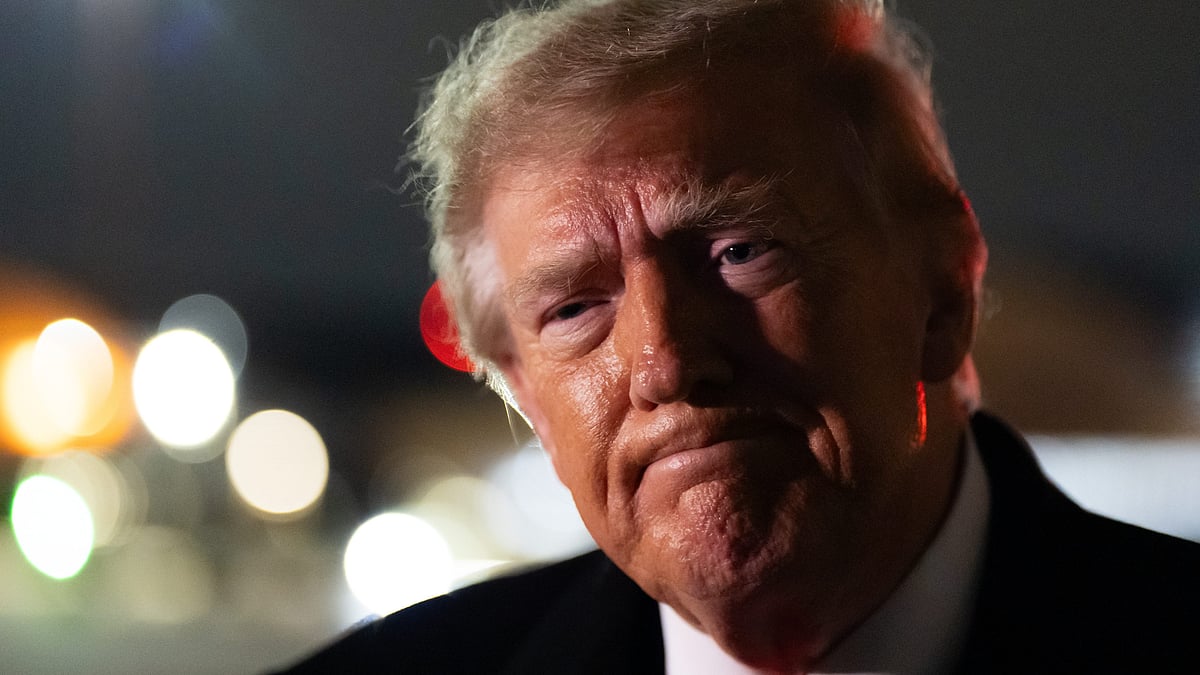
Republican lawmakers Brian Fitzpatrick and Don Bacon plan a bipartisan bill to block Russian oil purchases
Trump’s deal with Putin to supply 300,000 tons of diesel sparks legal and sanctions concerns
US lawmakers warn the deal could fund Russia’s war; the bill faces time constraints
Republican Congressman Brian Fitzpatrick has announced plans to introduce bipartisan legislation to block US President Donald Trump’s move to ease restrictions on Russian oil following talks with Russian President Vladimir Putin.
Fitzpatrick’s proposal has received support from outgoing Republican Congressman Don Bacon of Nebraska, who has agreed to co-sponsor the bill. However, the legislation could face a time constraint, as the current term of the US House of Representatives expires in January, leaving lawmakers only a few months to consider and pass the measure.
“We will be introducing bipartisan legislation to block any and all purchases of Russian oil,” Fitzpatrick, co-chair of the Congressional Ukraine Caucus, said in a post on X.
He said the proposed legislation would be called the ‘Ronald Reagan Peace Through Strength Act’ and would be brought to the House floor through a discharge petition, a procedure that allows members to force a bill to a vote under certain conditions.
“It will be forced to the Floor via discharge and it will pass overwhelmingly,” Fitzpatrick said.
Bacon also expressed support for the initiative, confirming that he would join as an original co-sponsor.
“I’ve already agreed to be an original cosponsor. Congress must make a stand,” Bacon said in a post on X. He is not seeking re-election in the November 3 midterm polls.
The proposed legislation follows Trump’s announcement on Friday that the United States had reached an agreement with Russia to immediately supply 300,000 tons of diesel to the US and the global marketplace after a phone conversation with Putin.
The announcement reportedly surprised congressional leaders, particularly after the US Congress passed the Sanctioning Russia and Iran Act by an overwhelming majority last month. The legislation empowers Trump to impose sweeping sanctions on Moscow and levy 100 per cent tariffs on its top five trading partners in the oil and gas sector, including India and China.
The development has also raised questions over the administration’s authority to ease restrictions on Russian energy imports in light of existing US law.
Senator Jeanne Shaheen, the ranking member of the Senate Foreign Relations Committee, said Congress had prohibited Russian energy imports in 2022 and argued that the administration could not bypass the law to purchase diesel from Moscow.
“Congress banned Russian energy imports in 2022. @POTUS cannot simply ignore that law to buy diesel from Putin. The law mandates consultation with Congress and a formal review process. The Administration appears to have bypassed both,” Shaheen said.
Senator Richard Blumenthal, a co-author of the Russia sanctions legislation, also criticised Trump’s agreement with Putin, describing it as an “embarrassment”.
Blumenthal co-authored the Sanctioning Russia and Iran Act with the late Republican Senator Lindsey Graham. The legislation was passed by both chambers of Congress with overwhelming support on September 16, before Trump signed it into law two days later.
Following the bill’s passage, Blumenthal had warned India and China to “clean up your act” and seek alternative sources of oil rather than continue purchasing Russian energy.
Congressman Dave Min, a Democrat from California, also criticised the prospect of the United States easing restrictions on Russian oil while seeking to pressure other countries over their energy purchases.
“If Trump keeps cutting (illegal) oil deals with Russia, we may just have to start sanctioning ourselves,” Min said.
Republican Congressman Michael McCaul of Texas expressed concern that lifting sanctions on Russian oil could undermine efforts to pressure Moscow over its war in Ukraine.
“Unfortunately, while I understand the desire to bring down diesel prices, I am concerned the lifting of sanctions on Russian oil will only fund the Kremlin’s war machine—emboldening more violence and destruction, as we have seen in recent days,” McCaul said in a post on X.
The proposed legislation is expected to test congressional support for maintaining restrictions on Russian energy imports amid the administration’s efforts to secure additional diesel supplies and address fuel prices.
Although Fitzpatrick has predicted overwhelming support for the bill, its prospects remain uncertain, particularly given the limited legislative time available before the current House term expires in January.
With PTI inputs
Join our official telegram channel (@nationalherald) and stay updated with the latest headlines