Nation
Allahabad HC reaffirms right to pray on pvt property, directs UP to ensure protection
Court underscores Article 25 applies equally to all faiths, warns against misuse of religious gatherings to disturb public order
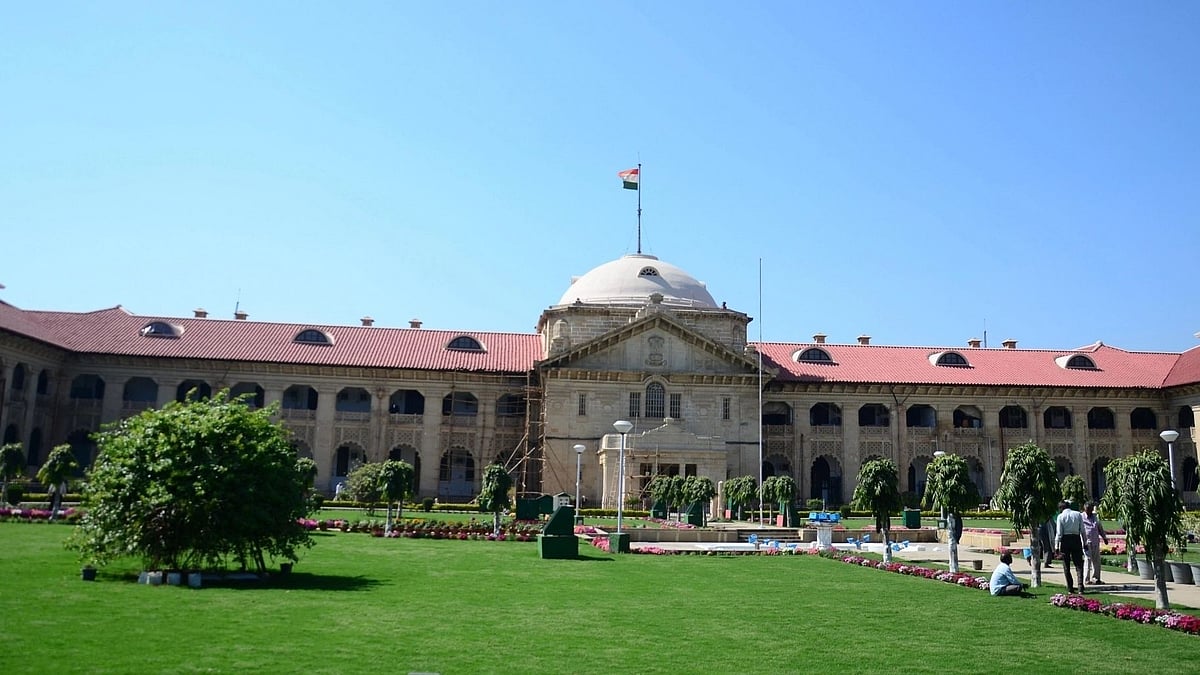
The Allahabad High Court has reiterated that the State is duty-bound to ensure protection for individuals facing threats while offering prayers within private premises, stressing that no obstruction can be placed on such religious activity.
A bench of Justices Atul Sreedharan and Siddharth Nandan, hearing Munazir Khan v. State of UP & Others, directed the Uttar Pradesh administration to remain mindful of its earlier ruling that prayers or religious functions conducted within private property cannot be impeded, irrespective of the faith involved.
“Any objection taken by any person (individual or group) against prayers being conducted in a private space should be taken cognizance of by the State and, if need be, protection be accorded to the place of worship and the worshippers,” the court said.
In a detailed order, the bench situated its reasoning within India’s constitutional and social fabric, emphasising that the country’s strength lies in its diversity. “The glory of this republic of 1.4 billion… lies in her resilience and strength, arising from her historical, religious, cultural and linguistic diversity… formalised by Article 25 of the Constitution of India,” the court observed.
It clarified that its interpretation of Article 25 — which guarantees freedom of conscience and the right to freely profess, practise and propagate religion — does not confer any special status on a particular faith.
“The elucidation of Article 25… is not to be construed as giving any special status to the adherents of the Islamic faith,” the bench noted, adding that the provision grants equal and immutable rights to all religions, subject only to public order, morality and health.
The court also highlighted that this constitutional protection extends even to non-belief. Freedom of conscience, it said, equally enables an atheist to profess and propagate the view that there is no God, grounded in logic and reason.
At the same time, the bench drew a clear boundary: Article 25 cannot be invoked to shield acts or speech that disturb communal harmony. “The law prohibits actions and speech having the propensity to vitiate public order by pitting one religious denomination against the other,” it said, adding that such conduct would fall outside constitutional protection and attract criminal liability.
It further cautioned that religious gatherings must remain true to their purpose. “By no stretch of imagination does Article 25 accord protection to incitement of one faith by the other in the garb of prayer,” the court said.
The observations came in a case from Sambhal district, where it was alleged that authorities had restricted Muslims from offering prayers at a particular site during Ramzan.
On 13 March, the Court had questioned the local administration’s reported decision to limit the number of worshippers and remarked that officials unable to uphold law and order should resign.
In the latest hearing, the state argued that no such restriction — including a cap of 20 worshippers — had been formally imposed, and suggested that the earlier order contained factual inaccuracies.
The court, however, pointed out that the order had been dictated in open court in the presence of both parties, and no objection had been raised at the time. “If the said order was imperfect on facts on account of misrepresentation by the petitioner, the counsels appearing for the State would have very well prevented this Court from recording that fact,” the bench observed.
The court also made a broader distinction between religious traditions, noting that congregational prayer is a core feature of Abrahamic faiths, while “Eastern faiths like Hinduism, Buddhism… don’t have fixed days for community congregations for worship in temples”, where gatherings are often linked to festivals.
At the same time, it reaffirmed that Article 25 protects the right of all religious denominations to congregate for worship, within the bounds of law.
On the specific site in question, the bench observed that photographs indicated the structure was not presently a mosque, though it had been used for offering namaz earlier. It directed that no obstruction be caused to devotees seeking to pray there.
The matter was ultimately disposed of with a direction to follow the court’s earlier ruling permitting prayers within private properties, while recording the state’s assurance that it would not interfere with religious practices carried out on such premises.
“The State… shall not interfere and interrupt worship carried out by any denomination in their private properties or at their respective places of worship,” the court recorded, while also directing the petitioner to ensure that established practices at the site, followed since 1995, are adhered to.
The order is to be circulated by the director-general of police and the additional chief secretary (home) to law enforcement authorities across Uttar Pradesh.
Advocate Wahaj Ahmad Siddiqui appeared for the petitioners, while additional advocate-general Manish Goyal and advocate Priyanka Midha represented the state.
Join our official telegram channel (@nationalherald) and stay updated with the latest headlines