Nation
Bengaluru voter roll shrinks 43% after SIR, electorate falls to 59 lakh
Bengaluru's final electoral roll records 59.08 lakh voters, with nearly 47 lakh names flagged under the ASDDO category
Bengaluru's electorate falls by 43.13 per cent from 1.03 crore to 59.08 lakh after the SIR.
Nearly 47 lakh names are listed under the absent, shifted, dead, duplicate and others (ASDDO) category.
Bengaluru South, Mahadevapura and Bommanahalli record the highest number of deletions.
Bengaluru's electorate has shrunk by 43.13 per cent, from 1.03 crore before the Special Intensive Revision (SIR) to 59.08 lakh following the publication of the final electoral roll on 27 October.
According to the final roll, a total of 59,08,151 voters fall within the Greater Bengaluru Authority (GBA) limits. Of these, 28.67 lakh are men, 30.40 lakh are women and 674 belong to the 'others' category.
The electorate comprises 24.01 lakh voters in Bengaluru Urban, 13.25 lakh in BBMP (North), 11.13 lakh in BBMP (South), 10.67 lakh in BBMP (Central) and 8.04 lakh in Bengaluru Rural.
Official data show that 46.88 lakh names were listed under the ASDDO (absent, shifted, dead, duplicate and others) category across 28 Assembly constituencies within the GBA limits in the final electoral roll.
Of these, 7.27 lakh voters were marked absent, 32.74 lakh as permanently shifted, 3.19 lakh as deceased and 63,549 as already enrolled (duplicate).
Among Bengaluru's Assembly constituencies, the ASDDO status report showed that Bengaluru South recorded the highest number of deletions, at 3.63 lakh, followed by Mahadevapura with 2.96 lakh, Bommanahalli with 2.65 lakh and K.R. Puram with 2.58 lakh. All four constituencies are currently represented by BJP MLAs.
Last year, Lok Sabha Leader of Opposition Rahul Gandhi had alleged large-scale inclusion of fake voters in the electoral rolls of Mahadevapura Assembly constituency ahead of the 2024 Lok Sabha elections.
The data also showed that Shivajinagar, a constituency with a sizeable minority population, saw 81,236 voters deleted.
Despite recording the highest number of deletions, Bengaluru South continued to have the largest electorate, with over 4.41 lakh voters. Rajajinagar had the lowest electorate, with just over 1.13 lakh voters, following the SIR exercise.
According to the GBA, a total of 2.74 lakh voters were newly added to the final electoral roll within its limits compared with the draft roll. Details of 1,81,053 voters were modified, while 65,881 names were deleted.
The exercise resulted in a net increase of 2.08 lakh voters in the final electoral roll within the GBA limits, the authority stated.
An analysis of district-wise data showed that Belagavi, which had the highest number of electors at 41.07 lakh before the SIR began, now has 36.35 lakh. Bengaluru Urban's electorate has fallen from 40.21 lakh to 24.01 lakh, while Mysuru's has declined from 27.99 lakh to 22.80 lakh.
However, these three districts continue to have the highest number of electors, in the same order, following the SIR.
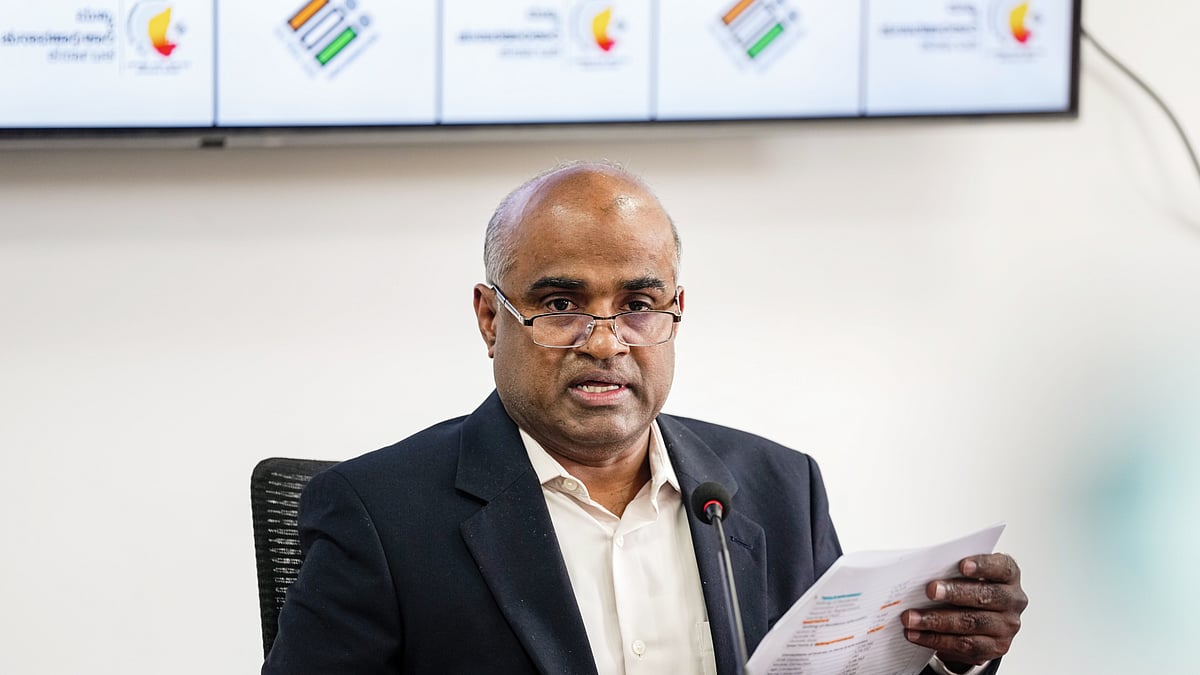
Addressing a press conference on Tuesday, 27 October, Karnataka chief electoral officer V. Anbukkumar assured that no voter had been deleted merely because Form 7 applications were submitted in bulk.
He said not a single eligible voter had been deleted and that applications submitted through Form 6 had been verified, with eligible applicants included in the electoral roll. "There should be no confusion or apprehension that eligible voters have been left out arbitrarily. The process has been conducted transparently and in accordance with the law," the CEO said.
Responding to a question on the number of foreigners identified in the state during the SIR, he said, "Yes, we have detected foreigners. Their number is definitely less than 1,000."
According to sources, most of the foreigners identified for deletion from the electoral rolls were reportedly from Nepal.
Anbukkumar said the publication of the final electoral roll did not mark the end of the revision process, as electoral rolls are continuously updated.
With PTI inputs
Join our official telegram channel (@nationalherald) and stay updated with the latest headlines