Nation
Delhi chokes under ‘severe’ air quality, thick layer of smog engulfs city
AQI soars past 400, plunging Delhi into the ‘severe’ category and reducing visibility across streets and skies
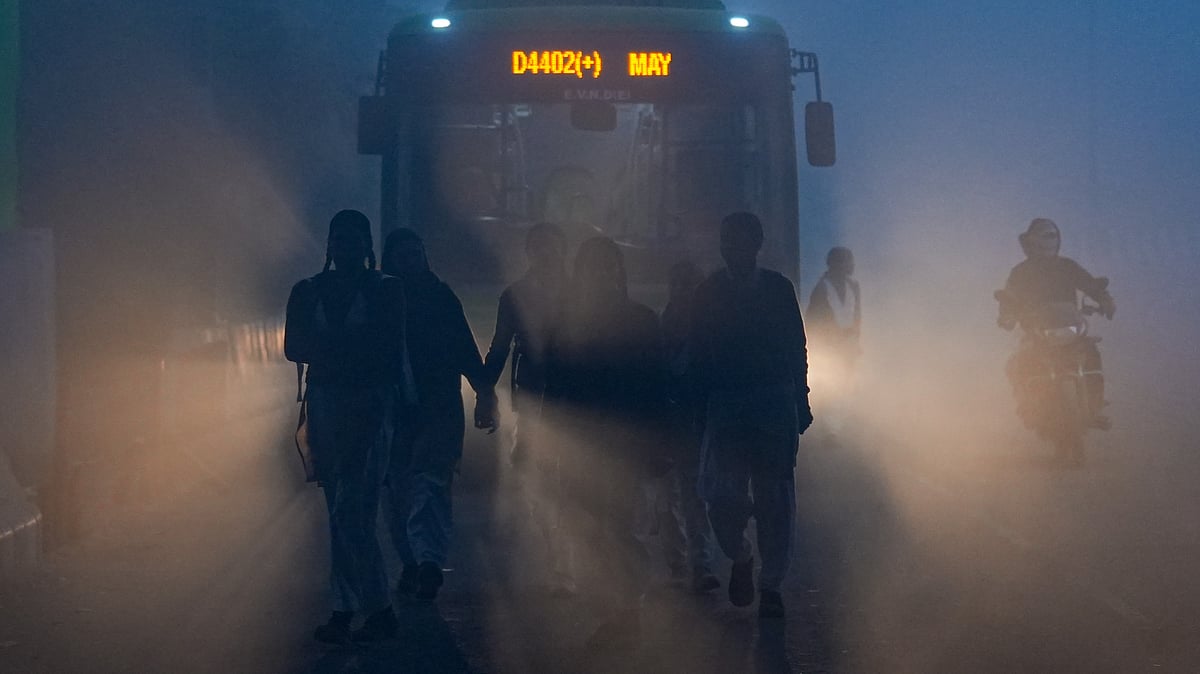
Delhi woke up to a winter morning shrouded in a toxic haze on Monday, as a dense veil of smog intertwined with the seasonal fog to create perilous conditions across the national capital.
The Air Quality Index (AQI) soared past 400, plunging the city into the ‘severe’ category and sharply reducing visibility, turning streets, skies, and skylines into a blur.
By 7 am, Delhi was blanketed under a thick, yellow-grey smog, with the overall AQI recorded at a hazardous 402. Over half of the city’s air quality monitoring stations reported readings beyond 400, underscoring the widespread nature of the crisis. Out of 40 stations, 25 recorded AQI levels in the ‘severe’ range, with Vivek Vihar registering 458, Anand Vihar 459, Wazirpur 444, and Rohini 445. Fine particulate matter (PM2.5) dominated the toxic cocktail engulfing the city, while data from Lodhi Road and RK Puram stations remained unavailable.
The choking air was compounded by thick fog, drastically reducing visibility across the capital and its surrounding regions. The India Meteorological Department (IMD) issued a ‘red alert’ for very dense fog between 5:31 am and 8:31 am, warning commuters to drive cautiously, use fog lights, avoid unnecessary travel, and cover their faces while venturing outdoors. Visibility had begun dropping sharply late Sunday night and persisted into the early hours of Monday, slowing traffic and making travel perilous.
Delhi airport, too, felt the brunt of the foggy assault, with visibility plummeting to around 125 metres and runway sightlines ranging between 100 and 150 metres. In an advisory posted on X, the airport warned that flights were being conducted under CAT III conditions, which may lead to delays or cancellations. Ground staff were deployed across terminals to assist passengers navigating the challenging conditions.
Airlines, grappling with the uncertainty, issued their own advisories. IndiGo cited fluctuating visibility and slower operations at Delhi and Hindon airports due to dense fog and winter chill, while emphasizing that passenger safety remained paramount. Air India, in a late-night advisory, noted that the weather forecast indicated continued low visibility across northern India and assured travellers that ground teams were ready to provide assistance in the event of delays, diversions, or cancellations.
The transport turmoil was not limited to the skies. Rail services, including the Rajdhani Express, Vande Bharat, and Jan Shatabdi trains, experienced delays, adding to the difficulties faced by commuters.
Health experts urged residents to exercise extreme caution, limit outdoor exposure, and remain vigilant as authorities monitored the evolving situation. As the city gasps under the weight of its winter smog, Delhi’s skies, streets, and homes continue to bear the silent, invisible burden of a pollution crisis that refuses to lift.
With IANS inputs
Join our official telegram channel (@nationalherald) and stay updated with the latest headlines