Nation
Delhi University offers 7,000 hostel seats to 3.5 lakh outstation students
As 7 students die in south Delhi PG collapse, NSUI turns spotlight on Delhi’s chronic shortage of affordable student housing
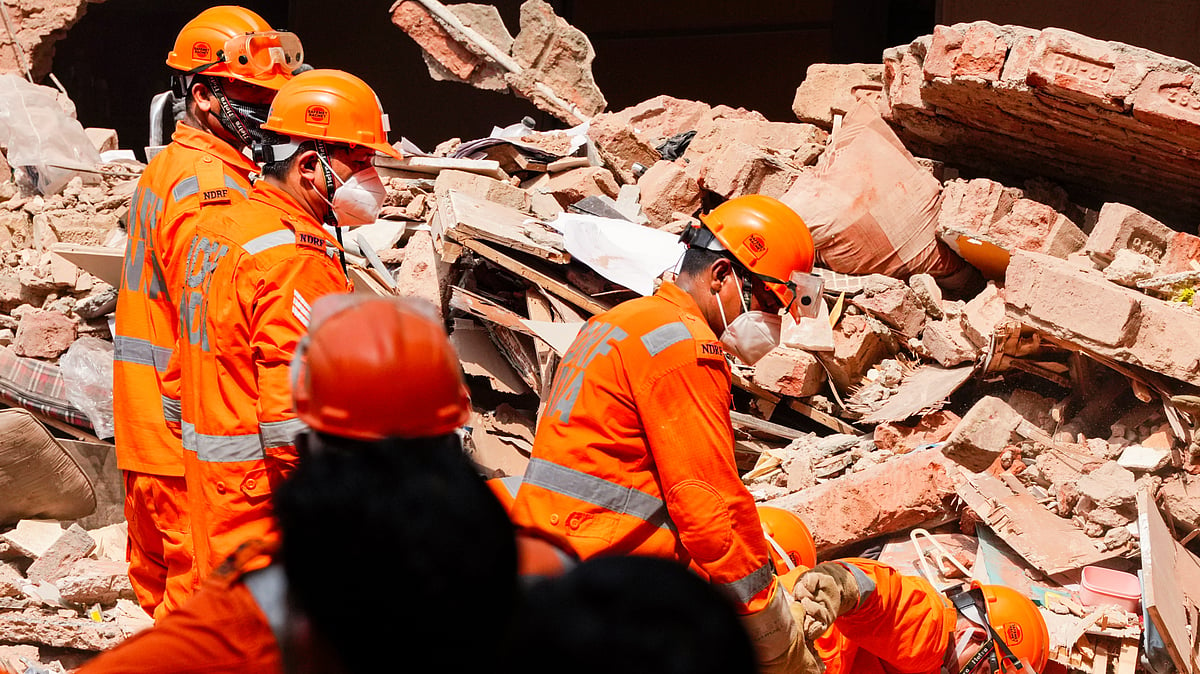
Union home minister Amit Shah was inaugurating the swanky new office of the Bharatiya Janata Party in Panjim, Goa, on Sunday, 6 September, the day when a four-storeyed house in south Delhi collapsed, burying an estimated 30-40 students staying in paying guest accommodation.
If the BJP could build a brand-new office in every district in the country during the last 10 years, why has the BJP government failed to build 100 hostels for students in Delhi during this period, asked NSUI (National Students' Union of India) activists the day after the tragedy, in which the death toll has reached seven and counting.
Prime Minister Narendra Modi attended the centenary celebrations of Shri Ram College of Commerce on Saturday, and released a commemorative coin worth Rs 100. It would have been so much better if he had at least announced the intention of constructing 100 hostels in Delhi University (DU), mocked Kanhaiya Kumar, former Jawaharlal Nehru University (JNU) student's union president who is currently in charge of NSUI.
DU’s official National Institutional Ranking Framework submission confirms the breakdown of 'within state' and 'outside state' students and reveals the strength of outstation students to be 3.5 lakh, half the total strength of 7 lakh students.
Two other universities in the national capital — JNU and Jamia Millia Islamia — have fewer students than DU but offer more hostel seats than DU. JNU has around 10,000 students and offers hostel facilities to approximately 5,500. Jamia, too, has a better ratio of hostel accommodation to students. While JNU offers hostel accommodation to 55-65 per cent of its students and Jamia accommodates 15 per cent, DU offers hostel seats to just one per cent of its students.
DU students overwhelmingly depend on private PGs and rented flats in areas like Mukherjee Nagar for north campus and Satya Niketan for south campus. The rent for twin-sharing PG accommodation in Satya Niketan was Rs 14,000 per month, confided a student survivor who had left the PG because there was no water to freshen up. The rent excludes electricity and water charges, but food has to be arranged by the students themselves. No receipts are given and the payment is collected in cash.
On Monday, 7 September, the NSUI demanded that the government enforce the Rent Control Act for PG accommodation and regulate facilities offered by owners. The NSUI has vowed to make this an issue in the Delhi University students’ union (DUSU) elections due on 18 September. Besides the higher living costs, outstation students are also fleeced because PG accommodations vary widely in terms of safety and amenities, unlike regulated and standardised university hostels.
While each of the top 10 colleges affiliated to DU boasts 3,500-4,000 students, only three of these colleges — Miranda House, Indraprastha College and St Stephen’s — provide hostels for roughly 10 per cent of their students. Hindu College, Hansraj College and Daulat Ram College offer 200 seats each, while Gargi College has accommodation for just 150 students, the same as SRCC and Kirori Mal College. Lady Shri Ram College offers 300 seats and St Stephen’s 400 seats, followed by Miranda House, which accommodates 370 students in hostels.
Join our official telegram channel (@nationalherald) and stay updated with the latest headlines