Nation
ED moves Delhi HC to delete trial court remarks after Kejriwal discharge
Agency calls observations “judicial overreach” after court said money-laundering case cannot stand if CBI case collapses
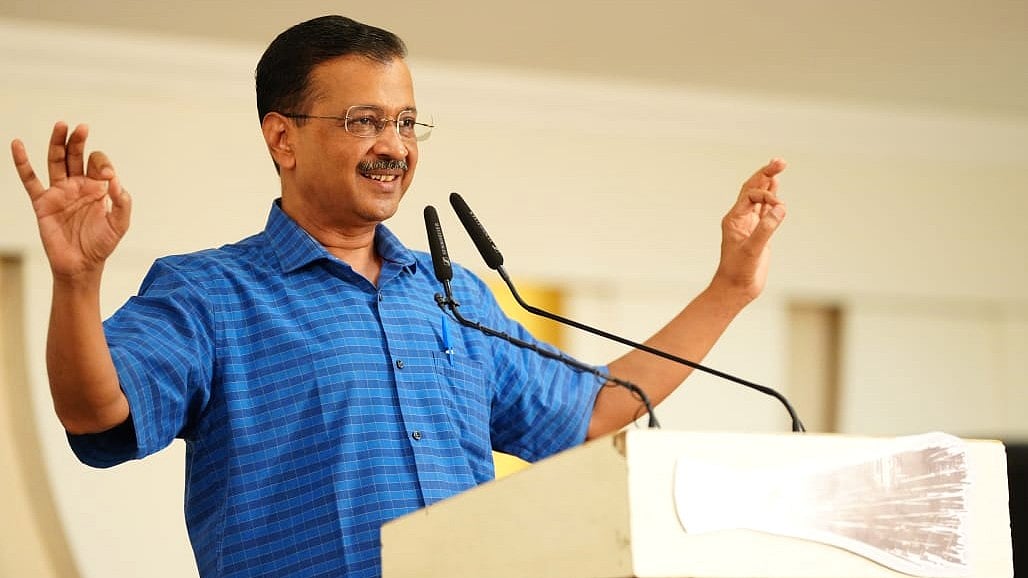
The Enforcement Directorate (ED) has moved Delhi High Court seeking to expunge remarks made by a trial court about its money-laundering probe while discharging former Delhi chief minister Arvind Kejriwal and others in the CBI-investigated excise policy case.
In its petition filed on 7 March, the ED argued that the 27 February order of special judge Jitendra Singh contained “adverse, sweeping and unwarranted” observations against the agency even though it was not a party to the proceedings before the court.
The Central Bureau of Investigation (CBI) case concerns alleged irregularities in the Delhi government’s 2021 excise policy, which was later scrapped. The CBI and the ED investigated the matter independently, with the ED probing the alleged money-laundering angle under the Prevention of Money Laundering Act (PMLA).
While discharging Kejriwal, former Delhi deputy chief minister Manish Sisodia and others, the trial court made several observations about the legal relationship between the CBI case and the ED’s investigation.
Referring to the Supreme Court’s ruling in the 2022 Vijay Madanlal Choudhary judgment, the court noted that the alleged money-laundering offence rests on the existence of a “predicate offence”, in this case the corruption case registered by the CBI.
“The foundational case, or the predicate offence, constitutes the foundational edifice upon which the allegation of money laundering rests; if the foundation crumbles, the superstructure must necessarily fall,” the court observed.
The remark has drawn the ED’s sharp objection. In its plea before the High Court, the agency said the trial court neither examined the ED’s evidence nor heard its submissions before making observations that could affect its investigation.
“If such sweeping, unguided, bald observations are permitted to stand, which have been passed behind the back of the Enforcement Directorate based on pure conjectures, without anchoring itself on any material or evidence gathered by the ED… grave and irreparable prejudice would be caused,” the petition said.
The ED also cited various Supreme Court judgments to argue that proceedings under the PMLA are independent of the trial in the scheduled or predicate offence and that money laundering is treated as a separate crime.
At the same time, the trial court’s observation relied on the Supreme Court’s interpretation of the PMLA framework — namely that the existence of a scheduled offence forms the legal basis for a money-laundering case.
That principle becomes significant in this instance because the court discharged the accused after concluding that the prosecution’s material did not meet the threshold required to frame charges in the CBI case.
The order also underscored the consequences of weak prosecutions, noting that liberty curtailed through pre-trial detention cannot easily be restored. “Liberty, once curtailed, cannot be meaningfully restored by a subsequent acquittal,” the court said.
The ED, which has filed nine chargesheets against 40 accused in the case and arrested several political leaders including Kejriwal and Sisodia, has argued that allowing such remarks to remain on record could prejudice its independent investigation.
In effect, the agency is asking the high court to delete passages suggesting that if the prosecution’s foundational case has collapsed, the legal structure built upon it may struggle to remain standing.
With PTI inputs
Join our official telegram channel (@nationalherald) and stay updated with the latest headlines