Nation
Ex-AAP councillor Tahir Hussain, 4 others get life for IB officer's murder in Delhi riots
Court rejects death penalty, says prosecution failed to prove convicts are beyond reformation
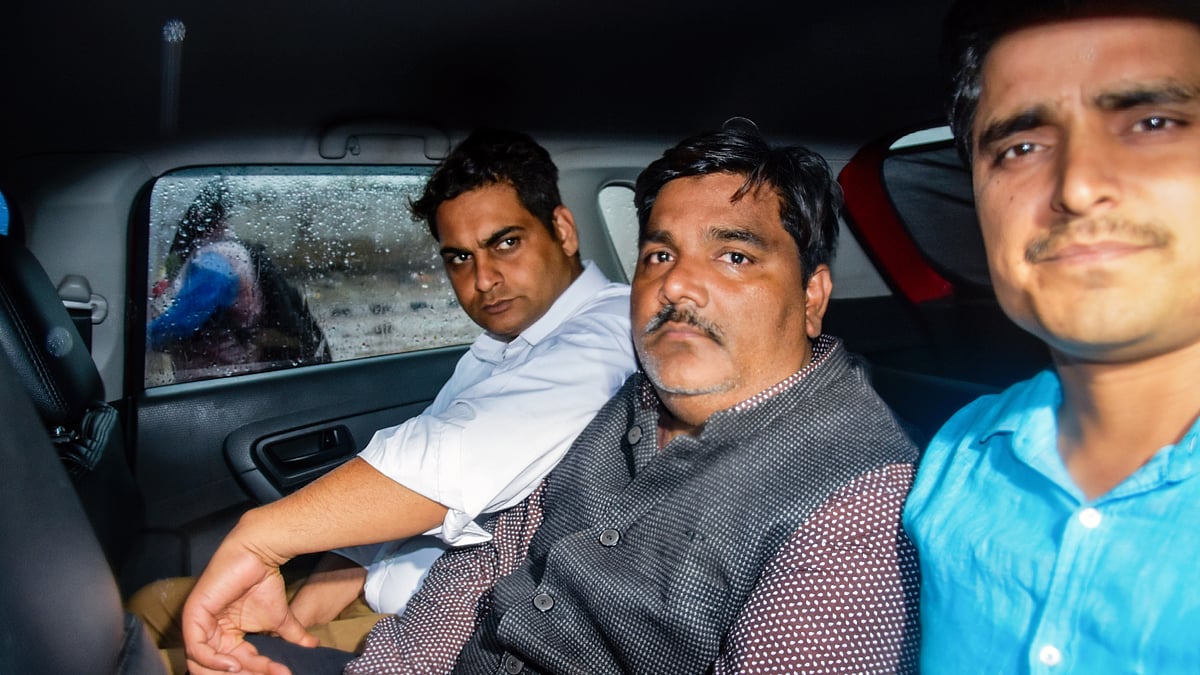
A Delhi court on Friday, 31 July sentenced former Aam Aadmi Party (AAP) councillor Tahir Hussain and four others to life imprisonment for the murder of Intelligence Bureau officer Ankit Sharma during the 2020 northeast Delhi riots.
Additional sessions judge Praveen Singh pronounced the sentence after hearing arguments on the quantum of punishment, observing that the prosecution had failed to establish that the convicts were beyond the possibility of reformation.
The order was delivered in the physical presence of Hussain and the four co-convicts amid tight security. The courtroom was packed with lawyers and senior Delhi Police officials, including the Crime Branch's joint commissioner and deputy commissioner of police.
The Delhi Police had sought the death penalty for all five convicts, arguing that they had 'descended to the level of animals' in the brutal assault on Sharma.
Special public prosecutor Madhukar Pandey told the court that Sharma had been murdered with extreme brutality and that the convicts had shown him no mercy, leaving no grounds for leniency.
"Those who are asking for mercy today should have shown mercy themselves. No mercy was shown from anyone's side. No one even took Ankit to the hospital. They are asking for mercy after committing such a brutal murder," Pandey argued.
On 13 July, the court convicted Hussain and the four others for Sharma's murder. The Intelligence Bureau officer was attacked by a mob during the riots, and his body was later recovered from a drain.
In its conviction order, the court held that Hussain was part of a heavily armed mob that had assembled 'with animus against Hindus' and engaged in rioting, arson and looting before murdering Sharma in what it described as a 'savage and relentless assault'.
The court also held that the prosecution had proved members of the unlawful assembly knew that pursuing their common objective could result in death.
Hussain was convicted under several provisions of the Indian Penal Code, including Sections 302 (murder), 365 (kidnapping or abduction with intent to secretly and wrongfully confine), 147 (rioting), 148 (rioting armed with a deadly weapon), 153A (promoting enmity) and 188 (disobedience to an order duly promulgated by a public servant), read with Section 149 (unlawful assembly).
With PTI inputs
Join our official telegram channel (@nationalherald) and stay updated with the latest headlines