Nation
Explained: Why Nepal’s rescue operation is so difficult
Destroyed roads and bridges, unstable Himalayan terrain, severed communications and the threat of another flash flood are turning the search for survivors into a race against time
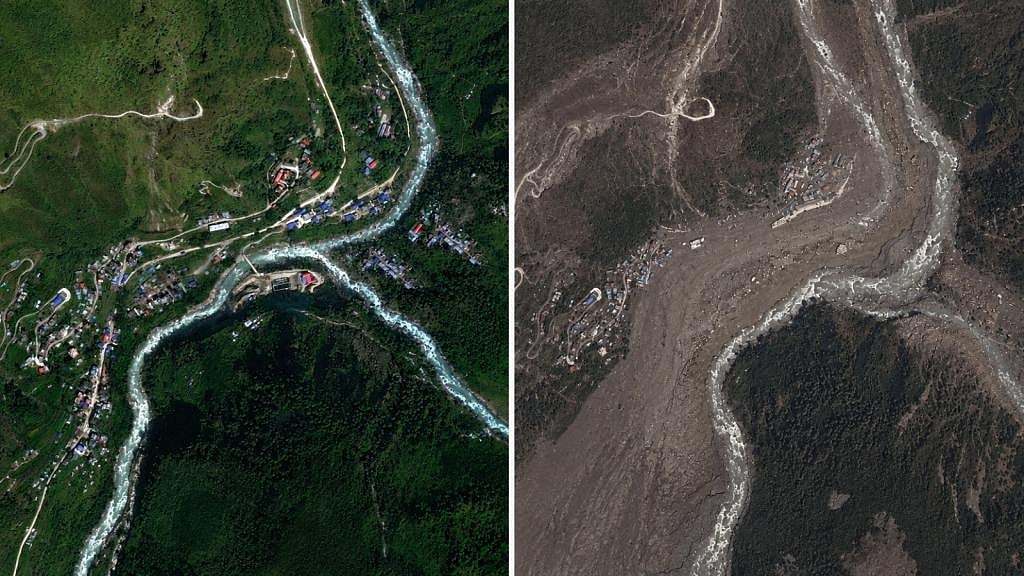
Nepal is battling one of its worst flood disasters in years, with at least 700 people dead and nearly 2,400 still missing as rescuers search devastated parts of the country. The floods have swept away homes, roads and bridges and damaged major hydropower infrastructure, leaving entire communities cut off.
But finding survivors is proving extraordinarily difficult. Rescuers are battling the rugged Himalayan terrain, destroyed access routes, thick mud and debris, disrupted communications and the continuing threat of fresh flooding — turning the search into a race against both time and the landscape.
Rescue teams searching for survivors after devastating flash floods in Nepal’s Himalayan border region are facing an obstacle that is as formidable as the disaster itself — the terrain.
The floods swept through parts of Nepal and Tibet, carrying huge amounts of water, mud, rocks and debris through narrow mountain valleys. Homes, vehicles, roads and bridges were destroyed, while several hydropower projects were damaged.
For rescuers, reaching the affected areas has now become one of the biggest challenges.
Roads and bridges have been washed away
The worst-hit areas are located in steep, high-altitude Himalayan corridors where settlements are often built close to rivers. The same rivers that provide communities with access to transport and other resources can become extremely destructive during flash floods.
More than 35 bridges have been destroyed and at least 40 km of roads have been damaged or rendered inaccessible, according to local United Nations coordinators.
This has severely restricted ground access to some of the affected settlements.
The road to the Nepal-Tibet border is difficult even under normal circumstances. From Kathmandu, reaching the border can take around a day by road in good conditions.
With roads and bridges washed away, conventional rescue vehicles and heavy equipment cannot easily reach the worst-hit locations.
Helicopters are vital — but they cannot solve everything
With ground routes cut off, rescuers have had to rely heavily on helicopters.
Nepal has access to military, humanitarian and private helicopters, giving authorities an important advantage during the emergency. But aircraft can only help if they can safely reach and land near the affected areas.
The rugged Himalayan landscape offers few suitable landing sites. Narrow valleys, steep slopes, damaged infrastructure and unstable ground make helicopter operations particularly difficult.
Helicopters also cannot replace the heavy equipment needed to clear tonnes of mud and debris or recover people trapped inside damaged structures.
That means rescuers still need to establish ground access before many operations can be carried out effectively.
Thick mud and debris are hiding survivors
The force of the floods left behind layers of mud, rocks and debris across villages and infrastructure sites.
In some locations, bulldozers and excavators are being used to clear the wreckage and search for survivors.
But digging through collapsed buildings presents another problem: rescuers may not know exactly where people are trapped.
The experience of Nepal's 2015 earthquake showed how difficult such searches can become without specialised equipment capable of detecting people beneath collapsed structures.
That makes the availability of search-and-rescue technology crucial, particularly when rescuers are working through thick mud and unstable debris.
Hydropower tunnels have created another rescue challenge
The floods also struck hydropower infrastructure along the river network.
Workers became trapped inside project tunnels as floodwaters and debris swept through the affected areas. In one operation, more than 100 people were reportedly trapped inside a tunnel at the Upper Trishuli 3A hydropower project.
The Nepali Army has been involved in rescuing workers from such locations.
These operations are particularly complicated because tunnels can become flooded or blocked, while rescuers must simultaneously deal with unstable structures and limited access.
Communications disrupted
The destruction has not been limited to roads and bridges.
Power infrastructure and communication lines have also been damaged, making it harder for authorities to establish what has happened in isolated settlements.
That creates a basic problem for rescue teams: before rescuers can reach a location, they need reliable information about who is there, who is missing and what infrastructure remains accessible.
The loss of electricity from hydropower plants has further complicated communications in parts of the affected region.
The danger is not over
Perhaps the biggest challenge is that rescuers cannot assume that the flood has ended.
The disaster has altered the landscape high in the mountains, with barrier lakes reportedly forming in some areas. If these temporary blockages collapse, another surge of water could travel downstream with little warning.
Search operations have already been suspended at times because of the threat.
This creates a difficult balance for rescue commanders. Teams have to move quickly because people trapped beneath debris have a limited chance of survival, but sending rescuers into an unstable area could put more lives at risk.
Why Nepal refused foreign aid?
Despite the scale of the disaster, the Nepali government has reportedly declined offers from foreign countries to send their own rescue teams, instead seeking financial assistance.
The decision is partly influenced by Nepal's experience after the 2015 earthquake, when coordinating large numbers of foreign rescue teams created additional logistical difficulties.
There is also a strong emphasis on local communities.
People living in affected areas often know which homes were occupied, where residents may have gone and which routes remain usable. Disaster experts say local residents therefore become the first line of the search effort, with the army and other agencies supporting them.
Race against geography and time
The rescue operation in Nepal is therefore not simply a question of sending more personnel into the affected areas.
Teams have to overcome destroyed transport links, difficult Himalayan geography, limited landing sites, damaged communications, thick mud and debris, inaccessible tunnels and the continuing possibility of another flash flood.
Every kilometre of washed-out road can delay heavy equipment. Every destroyed bridge can isolate an entire settlement. And every unstable slope or temporary lake can force rescuers to retreat.
For families waiting for missing relatives, the consequences are devastating. For rescuers, the mission is a race against time — in a landscape where the mountains themselves have become an obstacle to reaching those who may still be alive.
Join our official telegram channel (@nationalherald) and stay updated with the latest headlines