Nation
From 'false narrative' to FIR: How the Ram Mandir donation row snowballed
An allegation initially dismissed by the Uttar Pradesh government has grown into an SIT probe, arrests, and resignations
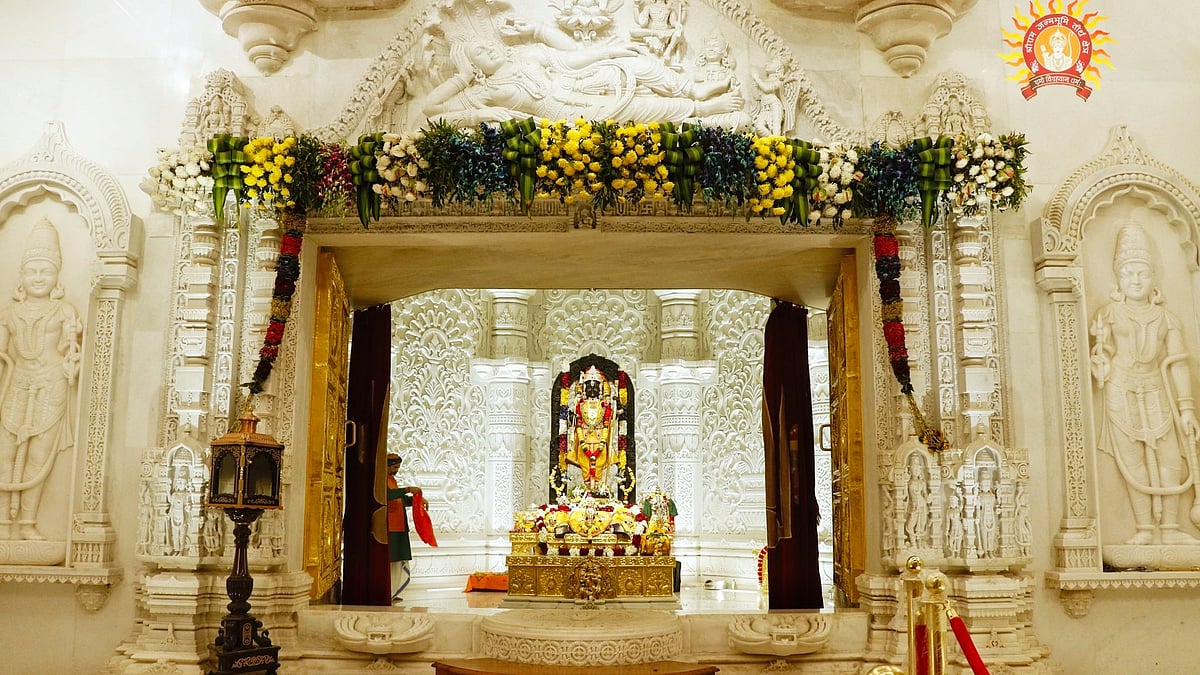
What began as an allegation by a Samajwadi Party MLA has, within weeks, snowballed into one of the biggest controversies surrounding the Ayodhya Ram Mandir since its inauguration.
Claims that crores of rupees in devotees' donations had gone missing were initially dismissed by both the Shri Ram Janmabhoomi Teerth Kshetra Trust and the Uttar Pradesh government as a "false narrative". But the issue has since escalated into a Special Investigation Team (SIT) probe, an FIR, the arrest of eight people — including a close aide of the trust's former general-secretary Champat Rai — and ultimately the resignation of Rai and trustee Anil Mishra on Friday, 26 June.
The controversy has also fuelled a political slugfest, with Opposition leaders alleging that cash and valuables donated by devotees have gone missing. According to people familiar with the matter, the trust has received enquiries from devotees seeking information about gold and silver offerings worth crores of rupees, including idols, that they had donated to the temple.
Here's how the controversy unfolded.
The allegation
The row began earlier this month when Samajwadi Party MLA Pawan Pandey alleged that between Rs 7 crore and 7.5 crore in devotees' donations had been stolen or embezzled.
The allegations were swiftly rejected by the trust and the BJP government in Uttar Pradesh. Deputy chief minister Brajesh Pathak accused the Samajwadi Party of attempting to create a "false narrative" around the Ram temple.
"Those trying to spread rumours about Shri Ram Temple are attempting to create a false narrative. The people of the state understand such politics," he said, accusing Samajwadi Party chief Akhilesh Yadav of spreading misinformation.
The controversy gathers pace
But what began as a local political allegation soon gained statewide attention after Akhilesh himself amplified the issue on social media, demanding accountability over devotees' donations and questioning the trust's functioning.
His intervention drew wider political attention to the allegations, with Opposition parties demanding transparency in the handling of donations and valuable offerings made by devotees.
According to figures presented before the trust's executive committee, the temple received donations worth Rs 82.78 crore between 1 April 2025 and 28 February 2026. During the same period, it earned Rs 138.03 crore as interest on bank deposits. The trust maintains accounts with the State Bank of India and Punjab National Bank in Ayodhya.
The legal battle begins
The controversy moved beyond politics after advocate Mohit Ashok approached Allahabad High Court on 12 June, seeking an independent investigation. Ashok said he had earlier submitted representations to the Uttar Pradesh principal secretary (vigilance), the Ram Temple Trust, the CBI and other authorities on 8 June.
A day after the petition was filed, the Uttar Pradesh government constituted an SIT at the trust's request to investigate the allegations. The panel was tasked with submitting preliminary and final reports into the alleged irregularities.
The probe widens
As the SIT began examining the allegations, investigators questioned Rai, scrutinised the trust's records, examined CCTV footage, inspected donation boxes and verified the counting process.
The controversy also gathered fresh political momentum. Former Delhi chief minister Arvind Kejriwal, who visited the Ram temple on Thursday, 25 June, alleged that offerings such as sandals, jewellery, garlands and lamps had been stolen.
"Diamonds and precious stones that devotees offered to God have been stolen, Rs 200 crore in cash has been stolen, and even 200 kilograms of silver have been stolen," he alleged.
The allegations have also prompted several donors to publicly seek answers about offerings they claim were never acknowledged by the Trust.
Among them is Raju V. Manwani, a businessman representing the global Sindhi community, who said nearly 200 devotees from India and abroad had donated 200 one-kilogram silver bricks for the Ram temple in January 2021. According to him, the donation was handed over to the trust without any receipt being issued, and the community has received no information on how the silver was utilised. He has urged the SIT to examine the donation as part of its probe.
In another case, a woman devotee alleged that she was never issued a receipt after donating a silver idol of Kakabhushundi to the temple. She claimed the offering remained on display for several months but has since disappeared, adding to growing questions from devotees over the accounting of non-cash donations.
On Friday, Shiv Sena (UBT) leader Sanjay Raut also claimed his party had never received a receipt for the Rs 1 crore donation it had made to the trust. "We haven't received the receipt for Rs 1 crore. When the trust was formed, we gave a cheque of Rs 1 crore. We gave the first silver brick weighing more than 25 kg," he said, according to PTI. He also alleged attempts were being made to shield Rai and local BJP leaders.
FIR, arrests and resignations
The investigation entered a new phase on Thursday when an FIR was registered on the basis of a complaint filed by the Trust.
Police have so far arrested eight people in connection with the alleged embezzlement: Ramashankar Yadav alias Tinnu, a close aide of Rai; Anukalp Mishra; Avinash Shukla; Karunesh Pandey; Manish Yadav; Lavkush Mishra; Ramashankar Mishra; and Subhash Srivastava, a retired bank employee who supervised the counting of donations.
Hours after the arrests, Rai and Mishra stepped down from their positions, citing moral responsibility amid the ongoing investigation.
What began as an allegation dismissed as Opposition propaganda has now left the Ram Temple Trust facing a criminal investigation, multiple arrests, persistent questions from devotees over missing offerings and intense political scrutiny. With the SIT yet to submit its final report, the controversy shows little sign of subsiding.
Join our official telegram channel (@nationalherald) and stay updated with the latest headlines