Nation
Govt asks state-run fuel retailers to build 30-day LPG reserves
Centre pushes for larger strategic stockpiles as conflict exposes India’s dependence on Gulf energy imports
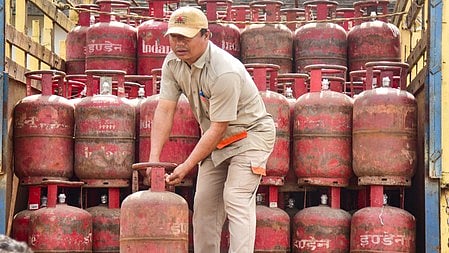
The Centre has directed state-run fuel retailers to prepare plans for maintaining liquefied petroleum gas (LPG) reserves sufficient to meet at least 30 days of demand, amid supply disruptions triggered by the conflict in West Asia.
“We are working on the strategic reserves. Oil marketing companies have been asked to work out a plan to have LPG reserves for a minimum of 30 days with them, and they are working on it,” petroleum ministry joint secretary Sujata Sharma told reporters on Friday, 29 May.
The directive has been issued to state-owned oil marketing companies Indian Oil Corporation (IOC), Bharat Petroleum Corporation Ltd (BPCL) and Hindustan Petroleum Corporation Ltd (HPCL), asking them to develop proposals for additional LPG storage capacity beyond their routine commercial inventories.
The move comes as the prolonged conflict in West Asia exposes the vulnerability of India’s energy supply chain. A substantial portion of India’s energy imports originates in the Gulf region — accounting for around 40 per cent of crude oil imports, 65 per cent of natural gas supplies and about 90 per cent of LPG imports.
According to officials, the three-month conflict disrupted energy flows from the region, putting pressure on India’s supply management systems.
While India has managed to secure alternative supplies of crude oil and natural gas — critical for transport fuels, electricity generation, fertiliser production, CNG and piped cooking gas — LPG availability has been affected, forcing tighter regulation of supplies to commercial consumers.
Sharma also said the government was working on expanding crude oil storage capacity, although she did not provide details.
Despite supply pressures, the government maintained that India currently has adequate inventories of petrol, diesel, LPG, crude oil and natural gas. Refineries are operating at optimal levels and domestic LPG production has reached a record high of around 52,000 tonnes a day, Sharma said.
“No dry out reported at any LPG distributorship,” she said, while noting that authorities were witnessing “abnormal sale” patterns at several petrol pumps.
Officials attributed the spike in retail fuel sales partly to increased agricultural demand and partly to a migration of customers from private retailers and bulk supply channels to state-owned fuel stations because of price differences.
According to government data, more than 150 districts have reported petrol sales growth exceeding 30 per cent, with sales doubling in 14 districts. Diesel demand has shown similar trends, with 156 districts recording growth of more than 30 per cent and six districts posting increases above 100 per cent.
At the same time, sales by private fuel retailers have fallen sharply. Diesel sales through private outlets declined by 38 per cent, while bulk diesel sales by state-run oil marketing companies dropped 29 per cent, Sharma said.
The pricing gap appears to be driving part of this shift. Petrol and diesel sold through retail outlets of public sector oil companies continue to remain below cost, while bulk consumers such as telecom tower operators are charged market-linked rates. Private retailers, meanwhile, have raised prices more aggressively than their public sector rivals.
IOC, BPCL and HPCL, which together control roughly 90 per cent of India’s fuel retail market, have increased petrol and diesel prices by around Rs 7.50 per litre since 15 May.
The government said it was closely monitoring the situation and has advised states and Union Territories to form special enforcement squads to curb hoarding and black marketing. Consumers have also been urged to avoid panic buying and purchase fuel only through authorised distribution channels.
Join our official telegram channel (@nationalherald) and stay updated with the latest headlines