Nation
How did alleged embezzlement at Ram temple escape the vigil of 1,600 CCTV cameras?
A sprawling surveillance network, AI-enabled cameras and detailed security protocols were in place. So how did the alleged fraud escape detection?
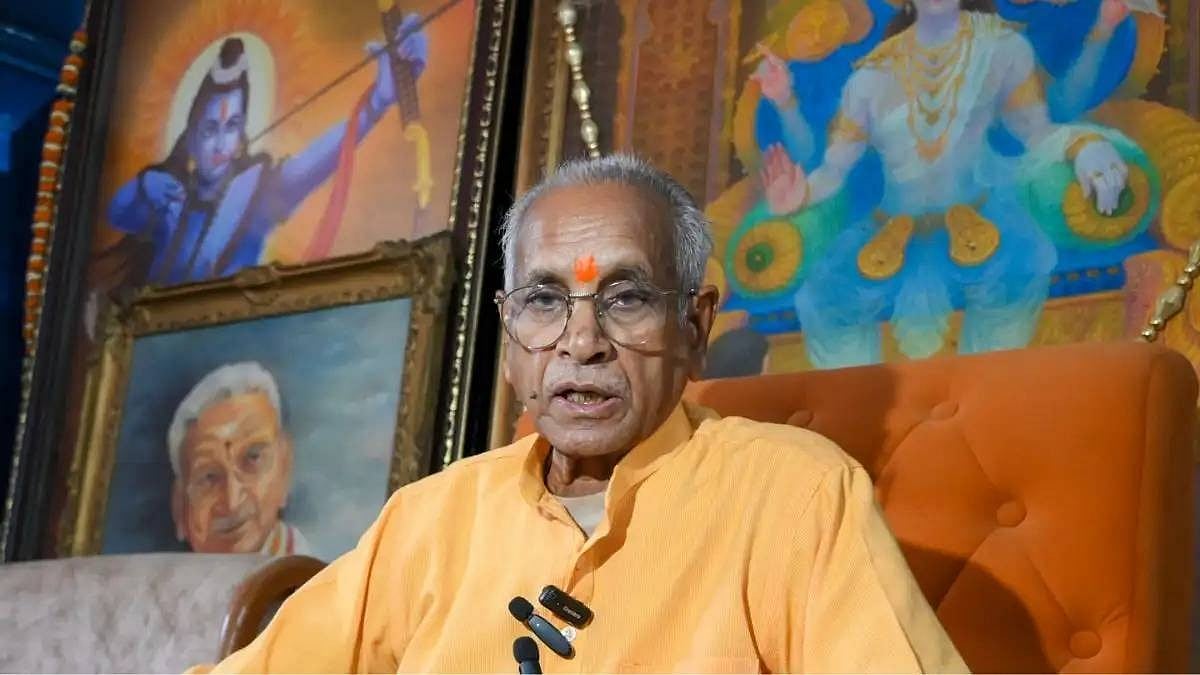
The alleged embezzlement of donations at the Ram temple in Ayodhya has raised as many questions as the investigation itself. While a Special Investigation Team (SIT) has been constituted, an FIR has been registered, eight people have been arrested and some office-bearers of the Shri Ram Janmabhoomi Teerth Kshetra Trust have offered to resign, several crucial questions remain unanswered.
The most pressing among them is how an alleged fraud involving donations could have taken place despite one of the country's most closely monitored religious complexes. If the allegations are borne out, was the temple's security and monitoring system inadequate, or did serious lapses occur in its implementation?
According to publicly available information and media reports, the Ram temple complex is under extensive electronic surveillance. The broader Ayodhya temple precinct and surrounding areas are monitored by more than 10,000 CCTV cameras. Of these, between 800 and 1,600 cameras are deployed within the temple complex, including around donation boxes, counting areas and other sensitive locations.
Many of these cameras are equipped with artificial intelligence-enabled features for crowd management and security. Their live feeds are monitored round the clock from dedicated police and security control rooms. High-definition cameras have also been installed in rooms where donations are counted to ensure transparency.
Against this backdrop, the alleged embezzlement has raised obvious questions about how the suspected irregularities went undetected.
The temple has around 40 donation boxes placed across the complex, where devotees deposit cash, coins, gold, silver and other offerings. During the initial months after the temple's inauguration, these boxes were reportedly opened at least twice a day because of the heavy inflow of devotees. It is not publicly known how frequently they are opened now.
A standard operating procedure (SOP) was put in place for opening the donation boxes. According to this procedure, representatives of the temple trust, designated staff and officials from the State Bank of India (SBI) were required to be present when the boxes were opened. Cash and valuables were then sealed in iron containers and transported to the counting room.
The donation counting room is located in the basement of the Yatri Suvidha Kendra, about 200 metres from the main temple, within the administrative and security jurisdiction of the Shri Ram Janmabhoomi Teerth Kshetra Trust.
All donations from the 40 collection boxes are brought to this facility. The counting operation is reportedly carried out in two shifts by a team of around 44 personnel, including an in-charge, a supervisor, cash handlers, trust officials, bank representatives and locally appointed volunteers.
An important safeguard in the SOP required personnel engaged in counting to wear pocketless clothing to prevent concealment of cash. According to media reports and findings cited from the SIT's preliminary investigation, this rule was never implemented despite having been approved by both the trust and SBI.
The movement of donation boxes, transportation routes and counting room are all covered by CCTV cameras. However, another alleged weakness has emerged during the investigation.
According to reports, CCTV recordings were retained for only 45 days before being automatically deleted, even though the SOP reportedly required footage to be preserved for 180 days. Sources have indicated that investigators are attempting to recover deleted footage as part of the probe.
The footage that has been examined has reportedly revealed additional irregularities. According to media reports, bundles of currency notes were allegedly handed directly to certain individuals instead of being placed in designated trays or bank containers. The identities of those individuals and the circumstances under which this occurred remain under investigation.
Another issue concerns the placement of personnel inside the counting room. Reports suggest that some staff members regularly sat in positions that blocked the cameras' view of parts of the room, leaving the lenses facing only their backs rather than capturing the entire counting process.
This raises another question. If the CCTV network was being monitored live from a dedicated control room, why were these blind spots or obstructions not flagged? Why were corrective measures not taken, and how did the trust remain unaware of such alleged lapses?
One name that has surfaced during the investigation is that of Arjun Dev, a government employee who had served as a radio maintenance officer in Ayodhya for nearly 17 years. According to reports, he was responsible for monitoring the temple's CCTV network. Media reports have also claimed that he was considered close to the trust's former general secretary, Champat Rai, who has offered to resign, though his resignation has reportedly not yet been accepted.
Arjun Dev's name is said to have figured during the SIT probe, but he was transferred to Gorakhpur before investigators questioned him. Reports also claim that earlier transfer orders had been repeatedly stalled following recommendations from influential quarters. These claims have not been officially confirmed.
Taken together, the developments have prompted questions about whether the extensive surveillance system functioned merely as a formality rather than an effective monitoring mechanism. Reports have also suggested that parts of the temple complex contain blind spots beyond the cameras' field of vision.
As the investigation progresses, these questions are likely to remain central to understanding not only how the alleged embezzlement occurred but also whether systemic failures allowed it to continue undetected.
Join our official telegram channel (@nationalherald) and stay updated with the latest headlines