Nation
India, Bangladesh try to break the ice after 2 years of diplomatic stalemate
Ganges treaty expires later this year, while Teesta pact remains unimplemented amid Bengal’s opposition and growing anti-India sentiment in Bangladesh
Amid hectic backchannel parleys and repeated visits by senior Indian officials to Dhaka over the past week, along with media reports that Tarique Rahman has demanded Sheikh Hasina’s extradition before visiting India, there are signs that both sides are seeking to move forward. New Delhi is keen for Bangladesh Prime Minister Tarique Rahman to visit the capital for a bilateral meeting with Prime Minister Narendra Modi ahead of the 18th BRICS Summit, scheduled in New Delhi on 12–13 September.
The past week saw officials and diplomats from both sides attempting to salvage bilateral ties, jolted by an aggressive press conference in New Delhi by exiled former prime minister Sheikh Hasina. On 9 August, RAW chief Parag Jain, along with senior RAW and IB officials, visited Dhaka for discussions with Bangladeshi security officials.
On 10 August, Indian High Commissioner Dinesh Trivedi called on Bangladesh home minister Salahuddin Ahmed to discuss border issues, security and bilateral cooperation. The same day, Trivedi met Prime Minister Tarique Rahman. Besides conveying a message to Modi, Rahman reportedly urged India to create a “supportive environment for improving relations.”
Trivedi dashed off to Delhi the very next day to brief the PM and the government. On 14 August, MEA spokesperson Randhir Jaiswal reconfirmed India's formal invitations to the Bangladeshi PM for an upcoming bilateral state visit as well as for the BRICS outreach session. Although either side is yet to announce the visit, indications that a “supportive environment” is indeed being put in place are clear.
"Whenever the heads of the two countries speak, there is an opportunity to resolve many problems,” Bangladesh State Minister for Foreign Affairs Shama Obaeed Islam said on 13 August in Dhaka, echoing Trivedi’s remarks. Bangladesh watcher Sreeradha Datta is optimistic. “We have no choice but to engage with each other” and that “there is no issue that cannot be sorted out through dialogue,” Datta told the National Herald.
Along with the growing anti-India sentiment in Bangladesh, the official bilateral relation was put under severe stress when political turmoil erupted in 2024. A period of rapid disengagement from India, along with a rapid engagement with forces inimical to Indian interests, took place under the interim government headed by Professor Mohammad Yunus. There were sporadic signs of progress after the BNP swept to power at the February 2026 general election which was largely regarded fair and participative even though BNP’s arch rival Awami League, facing a ban, had to sit out.
On the Indian side, there is a growing concern over the Awami League legacy, with the presence of Sheikh Hasina in Delhi turning out to be a drag on the forward movement of the bilateral relation. This became apparent after the exiled prime minister’s 5 August press conference in New Delhi where she reiterated, among other issues, her resolve to return home in by 2026 December. Bangladesh expressed its strong protest against India for allowing a person “convicted by its courts” to indulge in political activities while a formal extradition request was under consideration.
Although the Indian side was quick to wash its hands of Shiekh Hasina’s remarks, providing her a safe space continues to be an irritant. No doubt her return to Dhaka will remove a sticking point in the evolving bilateral negotiations; but neither can New Delhi abandon a long-standing ally with deep cultural, political and strategic nexus.
Intelligence watchers believe RAW chief Parag Jain’s visit was to restore the security cooperation and intelligence liaison groups which were disrupted during the 2024 upheaval as well as to work out a security cover for Sheikh Hasina after her return to Bangladesh.
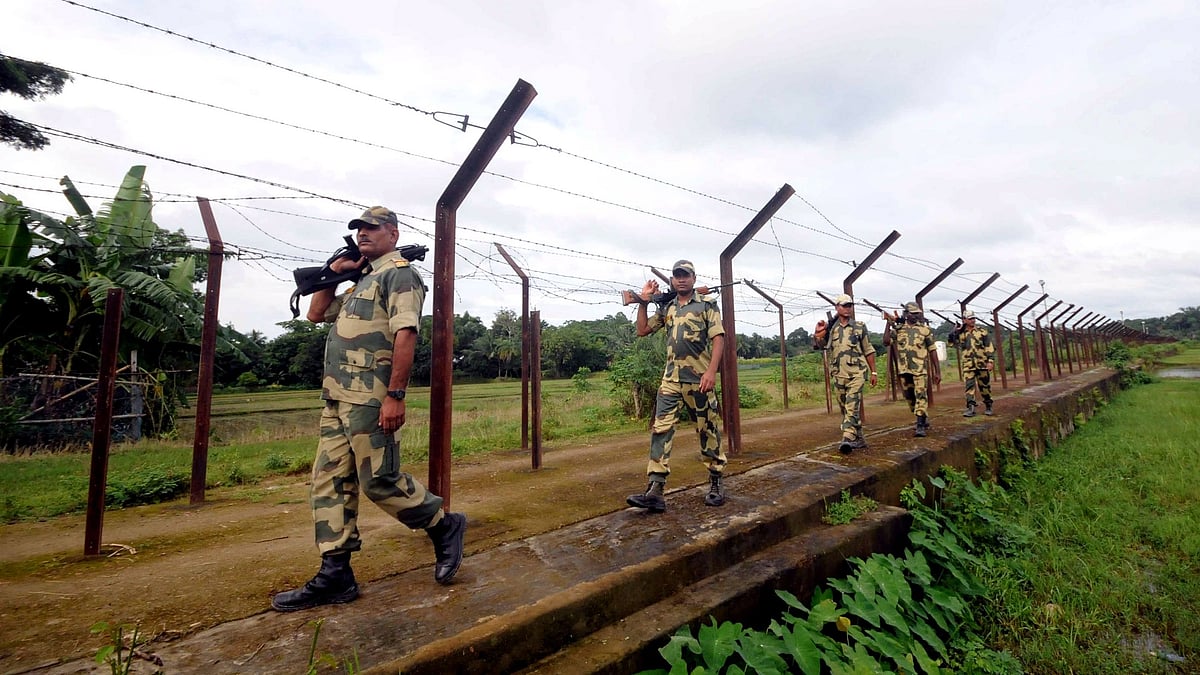
There are regional and geopolitical issues that need urgent bilateral resolution and clarity. The two neighbours share 54 rivers for which Bangladesh is the lower riparian country. Despite an agreement reached in 2011, operationalisation of Teesta river water sharing agreement remains stuck due to opposition from West Bengal, then under TMC’s rule. The river enters Bangladesh after flowing through areas of north Bengal that are now BJP’s strongholds. It remains unclear whether the BJP can convince its constituents to soften its attitude and risk political capital. In the middle of this controversy, the 30-year Ganges Water Sharing Treaty, signed in 1996, approaches its expiry in 2026, making renewal negotiations and Farakka Barrage management sensitive topics.
Then there are issues involving cross-border crime (illegal border migration, human trafficking, smuggling of drugs, gold and arms) as well as migration and citizenship policies. Each of these bleed into the politics in India and Bangladesh, making and unmaking narratives that impinge on bilateral relations.
Indians are not the only ones doing the rounds of Dhaka. A slew of senior US officials (in addition to Chinese and Pakistanis) have visited Bangladesh in the past six months. Since March this year, Paul Kapur (Assistant Secretary of State for South and Central Asia), Brendan Lynch (Assistant U.S. Trade Representative for South and Central Asia) and Sergio Gor (US Special Envoy for South and Central Asia and U.S. Ambassador to India) have engaged with Dhaka. Diplomatic sources point to the key role that Gor played in convincing Delhi and Dhaka to agree to a bilateral summit.
While India and US try to bring Bangladesh on the same page on the geopolitical aspect of bilateral ties, opinion in Bangladesh remains divided. A vocal section of Bangladesh’s civil society and parties like NCP openly question the wisdom behind any strategic alignment that involve US and India. The arguments clearly resonate with young Bangladeshis.
Saner voices, however, advocate engagement at the highest level, emphasising that Bangladesh will eventually be guided by its own interests. “Statecraft is run not by politics but by policies. You cannot resolve a complex logjam like India-Bangladesh relation without political engagement at the highest level,” former diplomat Ambassador M. Humayun Kabir told the National Herald.
(Sourabh Sen is a Kolkata-based independent writer and commentator on politics, human rights and foreign affairs)
Join our official telegram channel (@nationalherald) and stay updated with the latest headlines