Nation
E20 fuel debate heats up as owners raise red flags
Motorists say they cannot switch to flex-fuel vehicles and remain unsure about E20's long-term impact
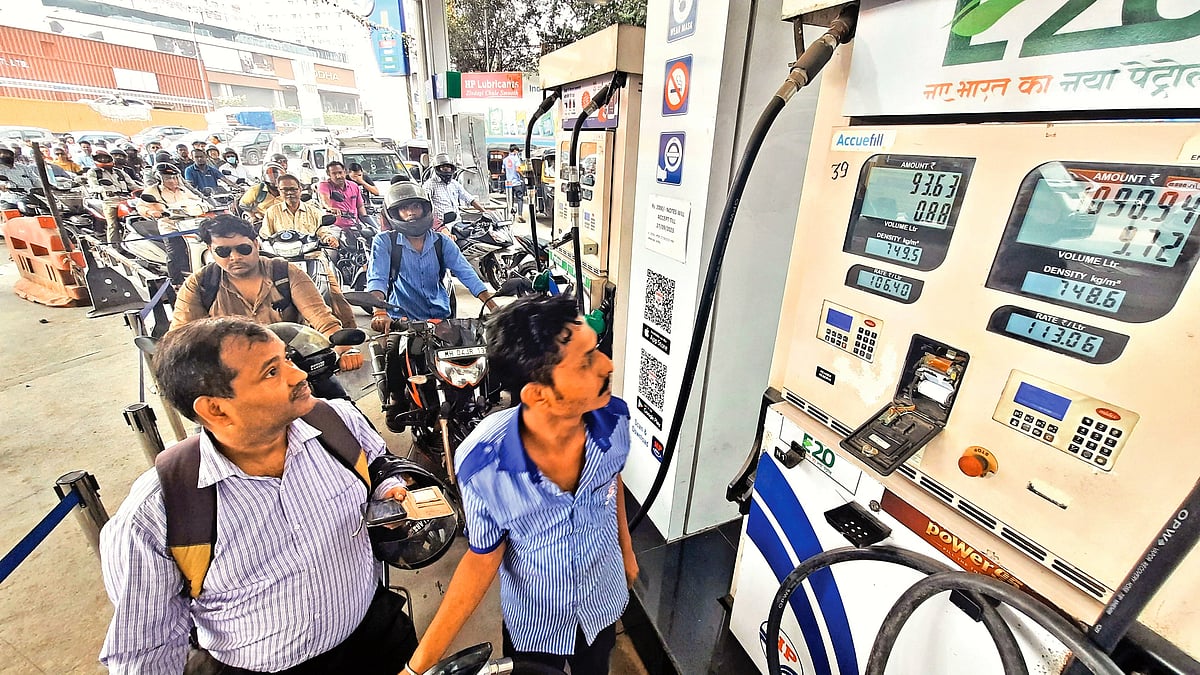
As the Centre vigorously defends India's ethanol-blending programme, a growing number of vehicle owners — particularly those driving older and vintage vehicles — say key concerns about engine safety, maintenance costs and long-term reliability remain unanswered.
In the march from E20 to E85 and even E100 being bandied about, many also point out that they have had little choice but to adapt to the transition. While the government is promoting flex-fuel vehicles capable of running on higher ethanol blends, such models remain scarce and are available only as new purchases.
Millions of owners of existing cars and two-wheelers, particularly those manufactured before 2023, cannot simply switch to flex-fuel vehicles and must continue using E20 petrol in vehicles that were not originally designed for it.
The government's latest clarification comes amid mounting debate over E20 petrol, a fuel blend containing 20 per cent ethanol. While the ministry of petroleum and natural gas has dismissed claims linking E20 fuel to insurance complications or widespread engine failures, many motorists argue that the absence of reported problems does not necessarily mean the absence of risks.
'Since the introduction of E20 petrol, no widespread issues of engine failure or vehicle breakdown attributable to ethanol blending have been reported,' the Press Information Bureau (PIB) said in a statement. The government has also highlighted the successful adoption of ethanol-blended fuels in countries such as Brazil, the United States and Japan.
However, vehicle owners say India's circumstances are different, particularly because millions of cars and two-wheelers currently on the road were manufactured long before E20 became the national standard.
One of the most frequently raised questions concerns pre-2023 vehicles, many of which were not originally designed for E20 fuel. Owners fear that prolonged exposure to higher ethanol content could accelerate wear and tear in fuel systems, damage rubber seals and plastic components, and increase maintenance costs over time.
Vintage car owners are especially worried. Replacement parts for older vehicles are often scarce and expensive, making even minor damage a serious concern. One vintage vehicle enthusiast, who requested anonymity, said he routinely performs a phase-separation test before refuelling. The process involves adding water to ethanol-blended petrol, causing the ethanol to separate from the fuel and form a distinct lower layer with water.
Fuel experts describe this as a form of liquid-liquid extraction commonly used to test ethanol content. They caution, however, that the process is not intended to produce usable petrol and may leave fuel that no longer meets required specifications.
The debate has also shifted beyond technical compatibility to questions of transparency and oversight.
Several social media users have asked how the government is monitoring the real-world impact of ethanol-blended fuel. Critics want to know whether any official mechanism exists for motorists to report mileage loss, corrosion, fuel-system damage or engine problems potentially linked to ethanol use.
"Is there any official portal where citizens can report engine failures, mileage drops, corrosion, or vehicle malfunctions potentially linked to ethanol-blended fuel?" asked one user on X, questioning the basis on which authorities have concluded that E20 has not caused significant issues.
Another recurring demand is for the public release of scientific studies and field data supporting the government's assurances regarding vehicle compatibility and long-term performance.
These concerns have gained fresh urgency following the Centre's announcement that it plans a major expansion of higher-ethanol fuels. According to the ministry of petroleum and natural gas, E85 fuel has already been introduced at 48 public-sector fuel stations, with the network expected to grow to 500 outlets by the end of 2026 and around 5,000 outlets by December 2027.
While officials have clarified that E85 can only be used in specially designed flex-fuel vehicles, some motorists worry that confusion over fuel grades could lead to accidental misuse and costly damage.
For many existing vehicle owners, however, the transition offers no immediate alternative. Automobile manufacturers are gradually adapting to the transition. Maruti Suzuki, for instance, is preparing to launch the Wagon R Flex Fuel, a vehicle capable of operating on ethanol-petrol blends ranging from E20 to E85. Yet such vehicles remain the exception rather than the norm, while millions of existing vehicles continue to shoulder the burden of the transition.
Indranil Guha, Training and Development Manager at Bhandari Automobiles Pvt Ltd in Kolkata, said the company plans to launch the Wagon R Flex Fuel, touted as India's first mass-market flex-fuel vehicle. Equipped with a 1.2-litre engine, the model will be capable of running on ethanol-petrol blends ranging from E20 to E85.
For many motorists, the issue is not opposition to cleaner fuels but confidence in the rollout. They argue that before ethanol blending is expanded further, authorities should publish comprehensive performance data, establish transparent grievance-redress mechanisms and provide clear guidance for owners of older vehicles.
The government maintains that ethanol blending is essential for reducing oil imports, cutting emissions and strengthening India's energy security. Yet as the programme enters a new phase with plans for wider adoption of E85 and flex-fuel technologies, vehicle owners are demanding stronger assurances that the push for energy independence will not come at the expense of engine reliability and consumer confidence.
Until those questions are addressed, the debate over E20 is likely to remain as much about trust as it is about technology.
Join our official telegram channel (@nationalherald) and stay updated with the latest headlines