Nation
India, Ethiopia share 100th spot on Global Hunger Index
India fares worse than Bangladesh, Nepal and Sri Lanka; one in five children suffers wasting
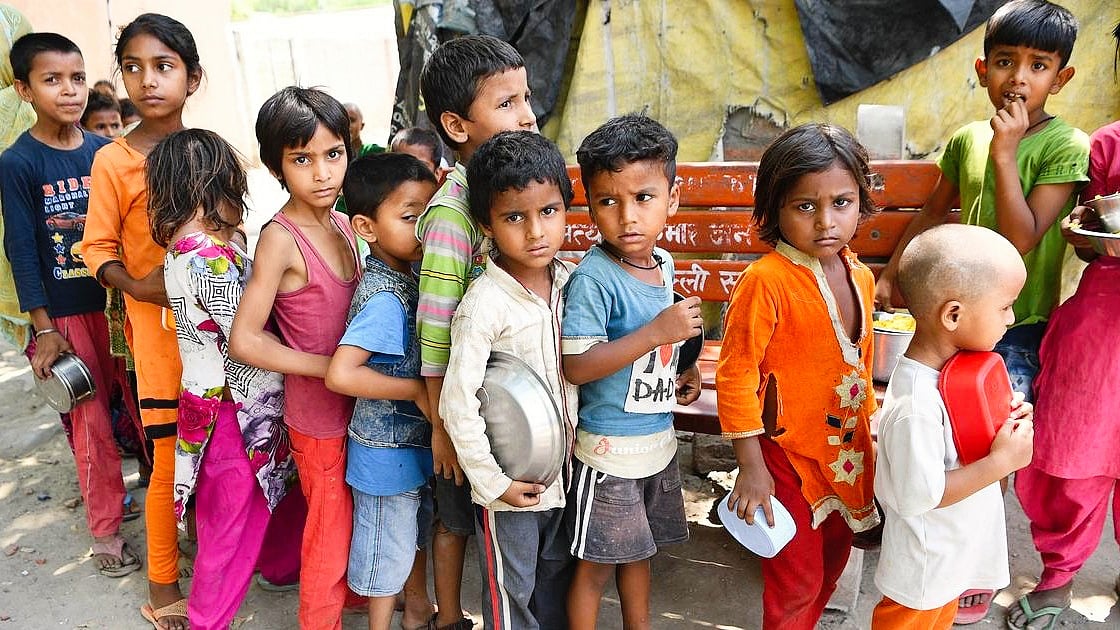
India shares 100th place with Ethiopia, scoring 24.1 in the 2026 Global Hunger Index.
Child wasting affects 19 per cent of children under five, while stunting stands at 29.3 per cent.
Bangladesh, Nepal and Sri Lanka record lower hunger scores than India; Pakistan and Afghanistan score higher.
India ranks 100th among 122 countries in the 2026 Global Hunger Index (GHI), with nearly one in five children under five affected by wasting, or low weight for their height. The country shares its position with Ethiopia, with both recording a score of 24.1, placing them in the ‘serious’ hunger category.
The findings highlight India's continuing nutritional challenges, particularly among children, even as some indicators have improved over the long term. According to the index, 9.8 per cent of India's population is undernourished, 29.3 per cent of children under five are stunted and 19 per cent suffer from wasting. The under-five mortality rate stands at 2.7 per cent.
India's score is higher than the global average of 18.1 and the South Asian regional score of 23.5, according to the index's India profile. A higher score indicates a more severe hunger situation.
How India's neighbours fare
India records a higher hunger score than Bangladesh, Nepal and Sri Lanka, but a lower score than Pakistan and Afghanistan.
Afghanistan records a score of 28.6, followed by Pakistan at 25.5. India and Ethiopia share a score of 24.1, while Bangladesh scores 19.2, Nepal 14.5 and Sri Lanka 10.2, placing them in the ‘moderate’ category. Bhutan and the Maldives are not designated in the index because of insufficient data to calculate their scores.
What the Global Hunger Index measures
The GHI assesses hunger using four indicators: undernourishment, child stunting, child wasting and under-five mortality.
Undernourishment measures the proportion of the population whose calorie intake is insufficient. Stunting refers to low height for age and reflects chronic undernutrition, while wasting — low weight for height — is associated with acute undernutrition. Under-five mortality measures the proportion of children who die before reaching their fifth birthday.
The composite score assigns one-third weight each to undernourishment and child mortality, and one-sixth each to child stunting and wasting.
The index is published by German aid organisation Welthungerhilfe (WHH), Irish organisation Concern Worldwide and the Institute for International Law of Peace and Armed Conflict (IFHV), with Helvetas also involved in the initiative. It aims to track hunger at global, regional and national levels and draw attention to the causes and consequences of food insecurity and undernutrition.
The 2026 report notes that global hunger has worsened compared with 2018, interrupting the longer-term decline recorded since 2000. It also cautions that scores and rankings from earlier editions should not be compared directly with those in the latest report unless the comparison uses the revised historical data provided in the 2026 edition.
With media inputs
Join our official telegram channel (@nationalherald) and stay updated with the latest headlines