Nation
Indian, Chinese commanders hold talks to ease tensions along Arunachal border
Second round of Corps Commander-level talks comes amid reports of continuing face-offs at multiple locations
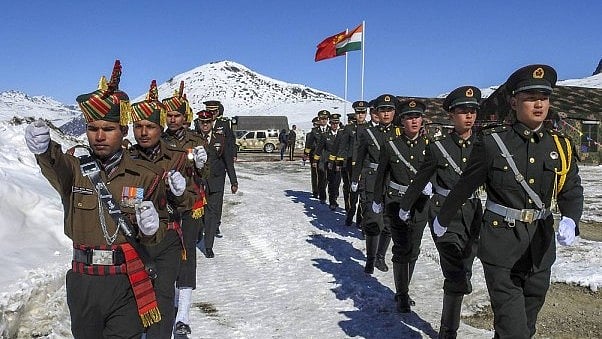
India and China have held a fresh round of high-level military talks along their disputed frontier in Arunachal Pradesh, seeking to prevent confrontations between troops on the ground and ease tensions ahead of the harsh winter months.
Lieutenant General Girish Kalia, General Officer Commanding of the Indian Army's III Corps, headquartered at Dimapur in Nagaland, led the Indian delegation during the talks with his Chinese counterpart and other military officers. An official of the Ministry of External Affairs (MEA) was also present at the meeting.
The discussions focused on setting out clear engagement protocols between the two militaries, avoiding friction between patrol parties, keeping lines of communication open and preventing local confrontations from escalating into a larger military standoff.
The latest engagement comes amid continued tensions along parts of the Line of Actual Control (LAC) in Arunachal Pradesh, where Indian and Chinese troops have been facing off at multiple locations.
Significant numbers of troops have been deployed by both sides in the region, while the mountainous terrain is expected to pose further operational challenges during the coming winter.
Second round of talks
The latest meeting follows the first Corps Commander-level meeting in the eastern sector on September 6 and 7. The talks were held at the Wacha-Damai Border Personnel Meeting Points.
Wacha, in Arunachal Pradesh's Kibithoo sector, is India's easternmost designated Border Personnel Meeting Point.
The September meeting took place against the backdrop of reports of heightened tensions in the Taksing area of Arunachal Pradesh's Upper Subansiri district.
The two countries have increasingly relied on military and diplomatic communication mechanisms to prevent localised confrontations from escalating, particularly in areas where their perceptions of the LAC differ.
The military formations operating in this strategically important eastern sector are part of the Indian Army's III Corps, headquartered at Rangapahar near Dimapur in Nagaland.
Face-offs reported at multiple locations
The latest military confrontations came to light after Shatrujeet Kapur, who retired as ITBP Director General, acknowledged on October 31 that Indian and Chinese troops had faced off at multiple locations along the Arunachal Pradesh frontier.
Addressing ITBP personnel at an event in Alwar, Rajasthan, on October 22, Kapur said the confrontations had occurred at several locations and were continuing.
His remarks once again brought attention to the situation on the ground in the eastern sector, even as the two countries have been trying to stabilise relations following the military face-off in eastern Ladakh in 2020.
In response to Kapur's remarks, the Ministry of External Affairs said the situation along the LAC was periodically disturbed when Chinese forces moved away from established patrolling patterns.
The MEA said peace and tranquillity in the border areas were essential for the overall development of India-China bilateral relations.
India has consistently maintained that any unilateral attempt to change the status quo along the LAC is unacceptable.
Why Arunachal Pradesh is a flashpoint
The boundary dispute in Arunachal Pradesh stems from China's refusal to recognise the McMahon Line, which India regards as the boundary between the two countries in the eastern sector.
The Simla Convention of 1914 demarcated the boundary between British India, Tibet and China. Representatives of British India and Tibet signed an agreement that China later repudiated.
Beijing claims Arunachal Pradesh as part of what it calls Zangnan, or South Tibet. New Delhi has rejected the claim, maintaining that Arunachal Pradesh is an integral and inalienable part of India.
Repeated confrontations between patrol parties have occurred because the two sides have differing perceptions of the LAC in certain areas.
Arunachal Pradesh Chief Minister Pema Khandu recently acknowledged that transgressions along the frontier had taken place.
“Transgression has definitely happened. It continues to happen. Such behaviour is not new, as the border is not defined,” Khandu said, describing the situation as normal and adding that Indian armed forces were effectively guarding the frontier.
He also cited China's refusal to accept the McMahon Line as a key reason for the continuing confrontations between patrol parties.
The latest military engagement follows diplomatic efforts to stabilise bilateral relations. In August, National Security Adviser Ajit Doval and his Chinese counterpart, Foreign Minister Wang Yi, met in Beijing as special representatives for the two countries' boundary negotiations.
The meeting was part of broader efforts to resolve the pending boundary issue and maintain peace along the border.
India-China relations have remained strained since the deadly clash in the Galwan Valley in June 2020, one of the most serious military crises between the two countries in decades.
Further military and diplomatic talks have helped ease tensions in parts of the western sector, but the eastern frontier remains sensitive.
Former Chief of Defence Staff General Anil Chauhan had earlier pointed to the unsettled boundary, differing perceptions of the LAC, infrastructure development and the deployment of force multipliers as factors that could lead to friction.
He stressed the need for vigilance, credible military capabilities, clear agreements and consistent adherence to existing understandings.
The latest military talks are part of an ongoing effort by India and China to prevent localised face-offs from escalating into larger confrontations. However, in the absence of a mutually agreed boundary, the potential for friction along the Arunachal Pradesh frontier remains.