Nation
RG Kar lift death: Probe flags lapses; 30-min delay for key as family sought help
Despite suffering severe injuries, including fractured ribs and internal organ damage, Arup Banerjee remained alive for nearly an hour
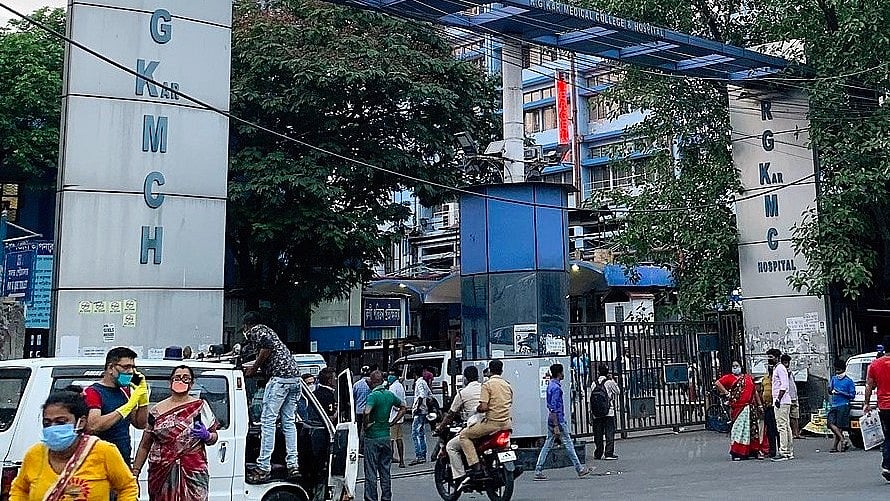
Investigations into the fatal elevator incident at RG Kar Medical College and Hospital have uncovered a series of glaring lapses that may have cost a man his life, turning what could have been a swift rescue into a tragic delay.
According to police findings, security personnel were unaware that the key to the basement — where the victim lay trapped — was kept in the superintendent’s office. What should have taken barely three minutes stretched into a chaotic 33-minute search, as desperate family members pleaded for help.
Despite suffering severe injuries, including fractured ribs and internal organ damage, Arup Banerjee remained alive for nearly an hour. Investigators believe his life could have been saved had access to the basement been secured in time and medical treatment begun earlier.
Police said Banerjee succumbed to his injuries around 5:30 am last Friday. Detectives from Kolkata Police are now compiling a list of all those potentially responsible in what is being treated as a case of involuntary homicide. So far, three lift operators and two security guards have been arrested.
The tragedy unfolded when the trauma care unit elevator malfunctioned, trapping Banerjee along with his wife and child inside the shaft. Forensic teams revisited the scene on Monday, inspecting the lift in the presence of Public Works Department officials.
Investigators have recorded statements from Banerjee’s wife Sonali, his father Amal Banerjee, and several relatives and friends who were present during the ordeal. Notices are also being issued to the elevator manufacturer and the maintenance company, while personnel from the Central Industrial Security Force (CISF), who were on duty at the time, are set to be questioned.
Testimonies paint a harrowing picture. Banerjee’s father told police that cries for help echoed from the basement as frantic attempts were made to reach them. However, access was blocked by locked gates. Appeals to security guards, lift operators, hospital staff, and CISF personnel yielded little immediate relief, with some claiming the keys were with the PWD.
It later emerged that the keys were in fact kept in the Superintendent’s office—a fact unknown to many on duty. The attendant stationed there overnight was asleep and had to be located and awakened before he could retrieve the keys. By then, precious time had slipped away. Even after obtaining them, not all locks could be opened, forcing rescuers to find an alternative route to the basement.
Banerjee and his family were eventually pulled out of the shaft. He was rushed for treatment on a stretcher but died minutes later.
During questioning, the arrested lift operators claimed they were bound by protocol and could not access the basement key themselves. One operator said he descended via another lift and saw a protective grille blocking the elevator door, while another checked the machine room on the upper floor. Investigators are also probing why one operator, reportedly unaware of the emergency, attempted to operate the lift.
As the inquiry deepens, the case has laid bare systemic failures—of communication, preparedness, and accountability—within a critical healthcare facility, raising troubling questions about emergency response mechanisms where every second can mean the difference between life and death.
With IANS inputs
Join our official telegram channel (@nationalherald) and stay updated with the latest headlines