Nation
RTI under strain, yet again: TMC MP says government hollowing out transparency law
Mohammed Nadimul Haque flags CIC vacancies, dysfunctional RTI portal and stalled appeals
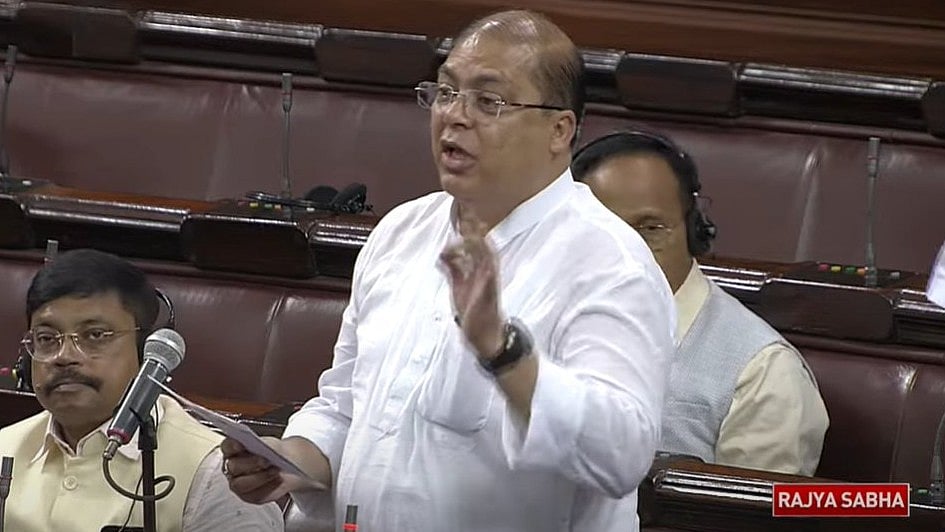
Trinamool Congress MP Mohammed Nadimul Haque on Wednesday accused the Union government of weakening India’s transparency regime through persistent neglect and deliberate administrative dilution of the Right to Information (RTI) Act, 2005.
Speaking during Zero Hour in the Rajya Sabha, Haque claimed the Centre appeared “reluctant and scared” to disclose information, and warned that the law’s spirit was being hollowed out despite remaining intact on paper.
Haque said the RTI Act was rooted in Article 19 of the Constitution, which guarantees the Fundamental Right to freedom of speech and expression, including the right to seek information. When enacted in 2005, India’s transparency law was widely regarded as one of the most robust in the world. “We were the only country with a mandatory 30-day limit to give information. It transformed governance,” he said.
However, he alleged that over the last decade, the transparency law had been “systematically demolished”.
Taking a swipe at the BJP-led National Democratic Alliance , he argued that the government had effectively become the “No Data Available” administration, routinely pleading lack of information on issues of public importance.
This, he claimed, reflected a broader pattern of weakening independent oversight and reducing the public’s ability to question the executive.
A major chunk of Haque’s criticism centred on the current state of the CIC (Central Information Commission). As of November 2025, eight out of ten posts at the CIC were vacant, he said. India has also been without a Chief Information Commissioner since 5 September.
The result, he argued, was a near-collapse in the appeals mechanism. “Second appeals now take two to three years. By then, the information has lost all relevance. This is institutional sabotage,” he told the House.
Haque also questioned the government’s claims of digital governance. He described the RTI online portal as “a nightmare”, saying activists had reported months of website crashes and delayed one-time passwords, making it difficult for citizens to even file applications.
“By not fixing the issue, the government is showing how reluctant and scared it is about disclosing information,” he said. He also cited similar problems with the Waqf Umeed portal, alleging that despite persistent glitches, deadlines were not extended and the system remained non-functional for long periods.
Linking the transparency issue to governance and federalism, Haque said people had the right to know why Rs 52,000 crore in pending MGNREGA dues for West Bengal had not been released “despite court order”. He further sought clarity on when Rs 2 lakh crore in pending dues under various central schemes would be paid. “We have seen how this government runs away from accountability in this Parliament,” he said.
The TMC MP argued that a slow weakening of the RTI system was underway through multiple routes — from prolonged vacancies and administrative delays, to tightening exemptions and undermining the CIC’s autonomy, to making the digital filing process increasingly difficult.
The cumulative effect, he suggested, was that “the RTI Act appears intact, but its enforcement capacity is being drained”.
Broader pattern of RTI dilution
Haque’s fresh accusations come amid a wave of similar concerns expressed by Opposition parties over the past two years, all pointing to what they describe as the Modi government’s attempts to “dilute”, “cripple” or “destroy” the RTI regime.
On October 12, senior Congress leader Jairam Ramesh had alleged that amendments to the RTI Act under the present government were not aimed at administrative efficiency but were driven by “fear of public accountability”. He argued that RTI disclosures had repeatedly exposed inconvenient truths for the government — and listed several examples he said triggered tightening of the law.
Among them, he cited an order by the Central Information Commission directing the disclosure of the prime minister’s educational qualifications; an RTI response that contradicted government claims about the number of fake ration cards; another that revealed the Reserve Bank of India’s board had warned that demonetisation would have limited impact on black money; a request that revealed the scale of loan write-offs; and a reply that said “none” when asked how much black money had returned to India. “These revelations shook the foundations of the government’s narrative,” Ramesh had said.
Data protection law a major blow to RTI
In April this year, the Opposition’s INDIA bloc targeted the Centre, alleging that the Digital Personal Data Protection (DPDP) Act significantly undermined citizens’ right to information.
At a joint press conference, leaders from the Congress, DMK, CPI(M), Shiv Sena (UBT) and Samajwadi Party warned that Section 44(3) of the DPDP Act effectively overrides Section 8(1)(j) of the RTI Act — the very clause that governs access to personal information when it serves larger public interest.
Congress MP Gaurav Gogoi called the change “dangerous and deliberate”, arguing that it would prevent the public from accessing information about officials or contractors in cases involving corruption or structural failures. “If you want to know who was responsible for the Bihar bridge collapse, this Act makes it impossible,” he said. Gogoi also claimed that Opposition recommendations to protect the RTI framework were excluded during drafting.
The concerns persisted.
Earlier this year, on 23 March, in a letter sent to IT Minister Ashwini Vaishnaw, Ramesh urged the government to “pause, review and repeal” Section 44(3) of the DPDP Act, arguing that it “destroys” the RTI Act by deleting the proviso that ensures citizens cannot be denied information that cannot be denied to Parliament.
Ramesh said the original clause already had clear privacy safeguards and that its deletion was “entirely unwarranted”. The minister had responded that public-interest disclosures would continue, but Ramesh issued a counter-letter calling the amendment a serious blow to citizens’ rights.
Taken together, these earlier interventions form the backdrop to Haque’s latest allegations in Parliament. Opposition parties argue that the cumulative effect of legislative changes, administrative delays, institutional vacancies and technical hurdles is a progressive shrinking of the public’s right to know — a right central to India’s democratic framework.
As Haque told the House: “The RTI Act may survive on paper. But if transparency collapses in practice, that collapse — and its consequences — will be this government’s responsibility.”
The government did not immediately respond in the Rajya Sabha to the specific points raised by the TMC MP.
With inputs from PTI
Join our official telegram channel (@nationalherald) and stay updated with the latest headlines