Nation
Saliha Abid Husain’s Partition stories reach English readers after nearly 80 years
Translated by Syeda S Hameed, the 1948 Urdu collection blends fiction and oral history to capture the upheaval of Partition through the lives of ordinary people
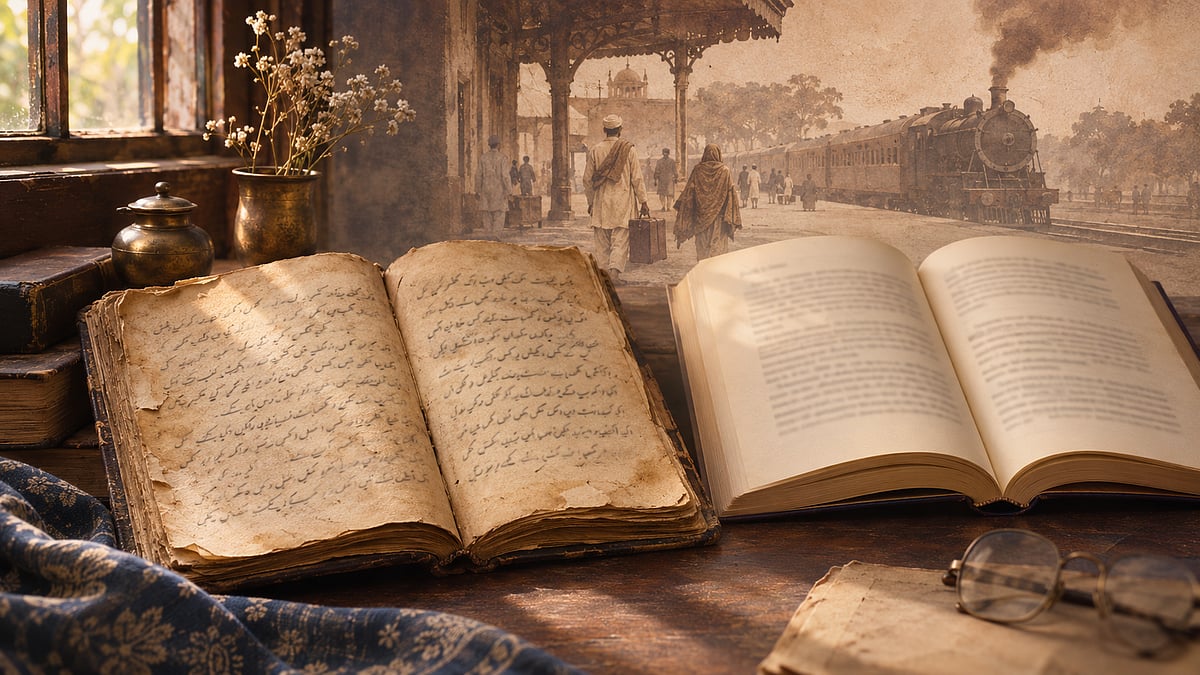
Saliha Abid Husain’s Niras Mein Aas, first published in Bombay in 1948 and dedicated to Mahatma Gandhi, has been translated into English.
Women Unlimited has published Syeda S Hameed’s translation as 7 from 1947: First-hand stories.
The collection draws on family experiences and oral accounts to explore communal violence, displacement and the lives of women during Partition.
Nearly eight decades after Urdu writer Saliha Abid Husain published Niras Mein Aas, her collection of short stories about Partition has appeared in English. Translated by Syeda S Hameed, a former member of the Planning Commission and the National Commission for Women, the book has been published by Women Unlimited as 7 from 1947: First-hand stories.
Husain wrote in response to the violence unfolding around her in 1947. Recalling the period, she wrote, “The hungama began. I wrote and wrote.” Her husband regarded writing about the turmoil as journalism and worried about her, she recalled. For Husain, writing was a way to reckon with what she had witnessed and lost, including treasured books destroyed in communal fires. When the collection appeared in Bombay in 1948, she dedicated it to Mahatma Gandhi.
Hameed describes the collection as a tribute to voices silenced during Partition. Its stories move between documented events, oral accounts and fiction, tracing how violence and displacement upended lives across Hindu, Sikh and Muslim communities. The opening story, ‘Loot’, draws on an incident involving Husain’s nieces. Elsewhere, unnamed characters carry experiences shared by families across communities.
In ‘Panipat’, the collection’s longest story, Husain gives her birthplace a voice of its own. The town takes pride in its shared culture, watches it fracture in 1947 and longs for the people it has lost to return. The other stories explore anxieties within families, private grief and the possibility of redemption.
Women’s experiences run through the collection. Each story opens with a couplet by one of Husain’s nieces, Sajida Zaidi, Zahida Zaidi and Shehla Naqvi, that echoes its themes.
Born in Panipat in 1913, Husain published more than 50 volumes of fiction, essays and translations. A Padma Shri recipient, she was known at Jamia as Khatoon-e-Awwal, or ‘Jamia’s Woman Number One’. She died in 1988. Hameed writes that despite Husain’s prolific output and presence in Urdu literary circles, she remains relatively marginalised in the canon of women’s writing. Sughra Mehdi, a professor of Urdu at Jamia and a niece of Husain’s husband, completed several of her unfinished works and wrote her biography.
With PTI inputs
Join our official telegram channel (@nationalherald) and stay updated with the latest headlines