Nation
Supreme Court awaits Centre’s stand on marital rape petitions
Bench to consider fixing a hearing date after government responds in cases challenging the marital rape exception
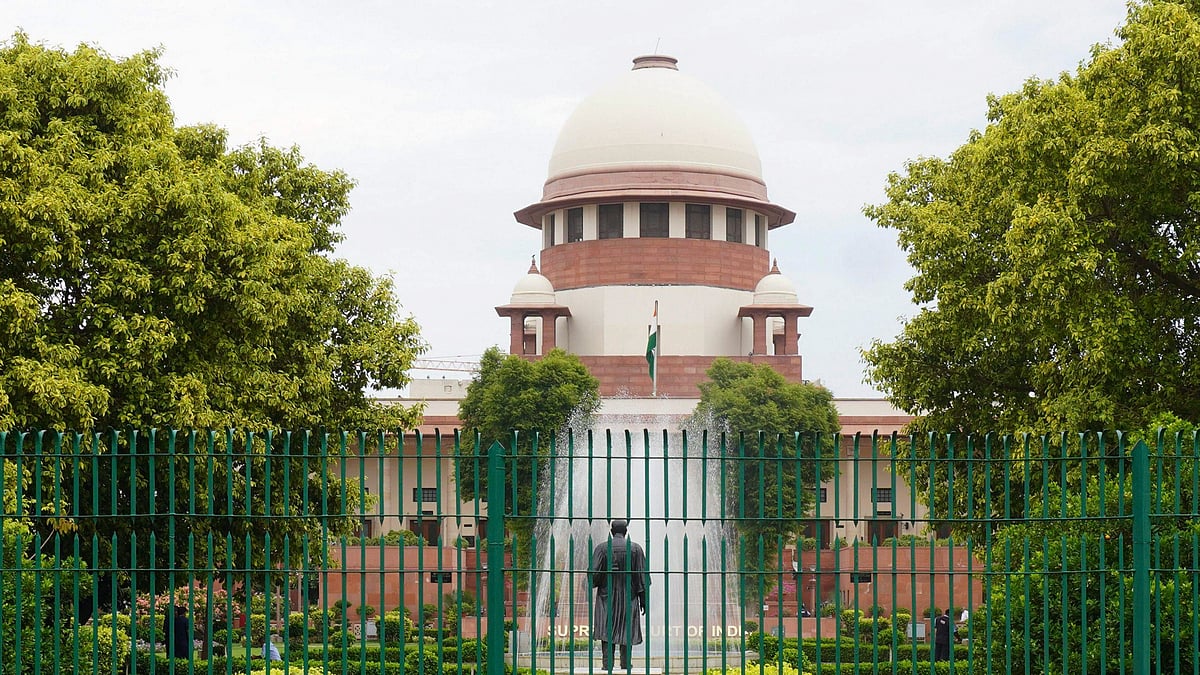
The Supreme Court on Monday said it would wait for the Union government to clarify its position on a batch of petitions concerning the criminalisation of marital rape before assigning a suitable date for a detailed hearing.
Senior advocate Indira Jaising mentioned one of the petitions before a three-judge Bench headed by Chief Justice Surya Kant and requested that the cases be listed for hearing on a fixed date in November.
Appearing for the wife in a case concerning the prosecution of a husband for alleged marital rape, Jaising said the Centre had filed only a preliminary objection and was yet to submit a substantive response. She added that the parties had not exchanged their petitions and were consequently unaware of the similarities and differences among the cases.
The Bench, also comprising Justices Joymalya Bagchi and V Mohana, noted that the matters were already scheduled to come up on Wednesday. It said the Centre’s position would be considered before an appropriate hearing date was fixed.
Senior advocate Karuna Nundy, representing another petitioner, also sought a definite date so that the parties could complete their pleadings.
The petitions raise questions about the constitutional validity and interpretation of provisions that exempt husbands from prosecution for raping their adult wives.
Exception 2 to Section 375 of the now-repealed Indian Penal Code provided that sexual intercourse or sexual acts by a man with his wife did not constitute rape if she was not a minor.
The exemption has been retained under the Bharatiya Nyaya Sanhita. Exception 2 to Section 63, which defines rape, states that sexual intercourse or sexual acts by a man with his wife do not amount to rape if she is at least 18 years old.
The Supreme Court sought the Centre’s response in January 2023 to several petitions challenging the protection granted to husbands under the IPC. It later issued notice on a similar challenge to the corresponding provision of the BNS.
The BNS, Bharatiya Nagarik Suraksha Sanhita and Bharatiya Sakshya Adhiniyam came into force on July 1, 2024, replacing the IPC, Code of Criminal Procedure and Indian Evidence Act, respectively.
One of the appeals arises from the Delhi High Court’s split verdict delivered on May 11, 2022. It was filed by a woman who had been among the petitioners before the High Court.
Justice Rajiv Shakdher had favoured striking down the marital rape exception as unconstitutional. Justice C Hari Shankar, however, held that the provision was constitutionally valid and based on an intelligible differentia.
Both judges agreed to grant the petitioners permission to approach the Supreme Court, acknowledging that the dispute involved substantial questions of law requiring an authoritative ruling.
The Karnataka High Court had separately held that shielding a husband from allegations of rape and unnatural sex involving his wife was contrary to Article 14 of the Constitution, which guarantees equality before the law.
The public interest petitions before the Supreme Court contend that the marital rape exception is unconstitutional because it discriminates against married women subjected to sexual assault by their husbands.
With PTI inputs
Join our official telegram channel (@nationalherald) and stay updated with the latest headlines