Nation
SC rejects PIL against NEET-UG 2026 retest, says issue no longer survives
Surya Kant declines an urgent hearing, saying all NEET-UG 2026 matters are already before the justice P.S. Narasimha-led Bench
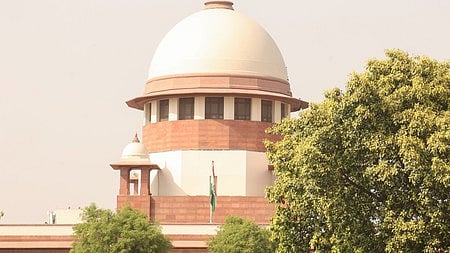
The Supreme Court on Wednesday dismissed a public interest litigation (PIL) challenging the National Testing Agency's (NTA) decision to cancel the original NEET-UG 2026 examination and conduct a nationwide retest, observing that the matter had become infructuous as the fresh examination had already been held.
A Bench of justices P.S. Narasimha and Alok Aradhe noted that there was little purpose in adjudicating the challenge since the re-examination had already taken place.
When counsel for the petitioner argued that the plea also sought institutional and structural reforms in the functioning of the NTA and requested that it be tagged with similar pending petitions, the Bench orally observed that the petitioner was free to intervene in the batch of cases already pending before the court on examination reforms.
The PIL was filed by former assistant director general of health services Dr Mangala Kohli through advocate-on-record Abhishek Chandra Mishra. It challenged the NTA's decision to scrap the NEET-UG 2026 examination conducted on 3 May and order a fresh nationwide test following allegations of paper leaks and examination malpractice.
The petition contended that while those responsible for the alleged irregularities must face strict action, lakhs of genuine candidates should not have been made to bear the consequences of administrative failures.
It argued that investigations by the Central Bureau of Investigation (CBI) pointed to a "localised operational compromise through specific organised networks" rather than evidence suggesting that the integrity of the examination had been compromised nationwide.
According to the plea, cancelling the examination forced nearly 22 lakh medical aspirants — including those with no connection to the alleged malpractice — to undergo another high-stakes national examination, resulting in significant academic disruption, mental stress and financial hardship while delaying the medical admissions process.
Apart from seeking to set aside the decision to hold a retest, the petition also called for wide-ranging reforms in the conduct of national-level entrance examinations. It proposed independent oversight mechanisms, stronger security protocols and technology-driven safeguards such as encrypted digital question delivery, Aadhaar-based biometric verification, AI-assisted monitoring and enhanced surveillance systems to prevent future irregularities.
Earlier, on 17 June, Chief Justice of India Surya Kant had declined an urgent hearing on the petition after observing that all matters relating to NEET-UG 2026 were already being heard by the Bench led by justice Narasimha.
Meanwhile, the NTA successfully conducted the nationwide NEET-UG 2026 re-examination on 21 June under unprecedented security arrangements after the original test was cancelled amid allegations of widespread irregularities.
More than 20 lakh candidates appeared for the re-examination at 5,440 centres across India and 14 centres overseas. Nearly seven lakh personnel, including examination staff, police, observers and administrative officials, were deployed to oversee the exercise. Authorities monitored over 95,000 examination rooms through more than 1.38 lakh CCTV cameras and installed over 51,000 signal jammers to prevent electronic malpractice.
The examination was also conducted with Aadhaar-based biometric verification, facial authentication, two-layer frisking, real-time surveillance and centralised command-and-control monitoring in an effort to restore confidence in one of India's largest and most competitive entrance examinations.
With IANS inputs
Join our official telegram channel (@nationalherald) and stay updated with the latest headlines