Nation
Unnao survivor welcomes SC decision, ‘not sitting in ivory towers’, court says
Court also makes strong remarks on charged public discourse surrounding the case
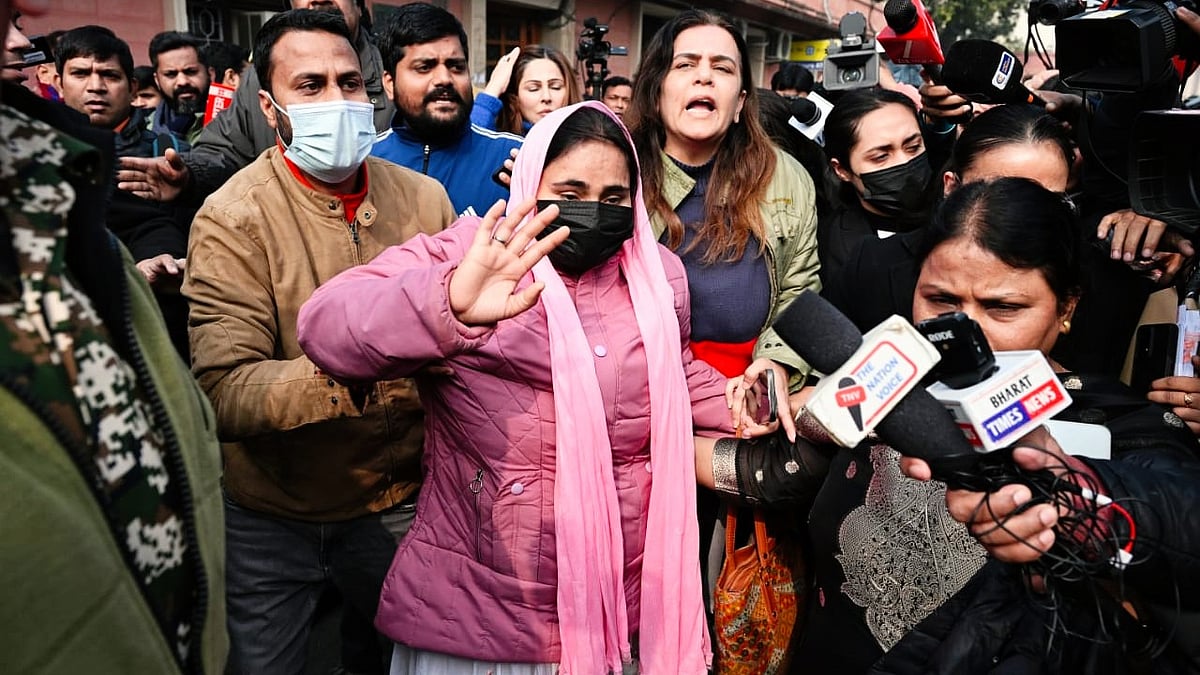
“We are not sitting in ivory towers.” With this pointed observation, the Supreme Court of India on Monday sought to assert judicial awareness of both public outrage and political overtones as it stayed a Delhi High Court order that had suspended the life sentence of former BJP MLA Kuldeep Singh Sengar in the 2017 Unnao rape case involving a minor.
A three-judge vacation bench comprising Chief Justice of India Surya Kant and Justices J.K. Maheshwari and Augustine George Masih was hearing a plea filed by the Central Bureau of Investigation challenging the high court’s December 23 order. The apex court stayed the operation of that order and directed that Sengar should not be released from custody, even as it issued notice to him to file a counter-affidavit within four weeks.
The survivor welcomed the Supreme Court’s decision to stay the order, expressing relief and renewed faith in the justice system. “I am very happy with this decision. I have got justice from the Supreme Court. I have been raising my voice for justice from the very beginning,” she told PTI over the phone from Delhi. “I do not make any allegations against any court. I have faith in all courts, but the Supreme Court has given me justice and will continue to do so.”
“We are conscious of the fact that when a convict or an undertrial has been released, such orders are not ordinarily stayed by this court without hearing such persons,” the bench said. “But in view of peculiar facts, where the convict is also convicted for a separate offence, we stay the operation of the Delhi High Court.”
The court also made strong remarks on the charged public discourse surrounding the case after Sengar’s counsel complained that photographs of Delhi High Court judges were being circulated on social media with captions urging people to “identify these judges”.
Responding to this, CJI Surya Kant said the court was not functioning in isolation from ground realities. “We are not sitting in ivory towers,” the CJI said, adding that the bench was conscious that attempts were being made to take “political advantage” of the situation.
At the same time, the court cautioned against social media trials and underscored that judicial scrutiny was an essential part of the system. The bench observed that “even the finest judges are prone to errors” and that correction through appellate processes was intrinsic to constitutional adjudication.
The Delhi High Court had suspended Sengar’s life imprisonment and granted him conditional bail pending the disposal of his appeal against conviction, citing the fact that he had already spent seven years and five months in jail. Sengar, a four-time MLA from the Unnao region, was convicted in December 2019 and sentenced to life imprisonment for raping the then 17-year-old victim.
Though the high court granted him bail in the rape case, Sengar has continued to remain in jail as he is also serving a 10-year sentence in the custodial death case of the survivor’s father and has not been granted bail in that matter.
Challenging the high court’s reasoning, solicitor-general Tushar Mehta, appearing for the CBI, described the case as “very horrific” and reminded the court of the centrality of the survivor’s rights. “We are answerable to the girl,” Mehta told the bench.
Mehta strongly opposed the suspension of Sengar’s sentence, countering the high court’s view that the convict had already served the maximum punishment applicable at the time. He argued that after amendments to rape laws, the minimum punishment for such an offence is now 20 years’ imprisonment. However, the bench clarified that those amendments came into effect after the commission of the offence in the present case.
The CBI also took exception to the Delhi High Court’s observation that Sengar, who was an MLA when the offence was committed, could not be treated as a public servant for the purpose of prosecution under the Protection of Children from Sexual Offences (POCSO) Act. Mehta opposed this finding, stressing that the victim was a minor and that the stringent POCSO framework was central to the prosecution.
The POCSO angle has been a key aspect of the Unnao case, which triggered nationwide outrage not only because of the sexual assault of a minor but also due to the subsequent custodial death of the survivor’s father, the suspicious deaths of two more relatives in an apparent road accident, and allegations of sustained intimidation and abuse of power.
The case became a symbol of seeming political impunity after the survivor accused Sengar, then a powerful legislator. Public outrage intensified after her father died in police custody in 2018 and again in 2019, when the survivor and her lawyer were grievously injured in the road accident that killed two of her aunts.
Amid mounting protests and criticism of the state administration, Sengar was expelled from the BJP. The Supreme Court later transferred the rape case and related proceedings from Uttar Pradesh to Delhi, citing concerns over the survivor’s safety and the fairness of the trial.
With PTI & media inputs
Join our official telegram channel (@nationalherald) and stay updated with the latest headlines