Nation
US-Israel-Iran war: Congress presses Centre to use its leverage as BRICS+ chair
Why is the self-styled Vishwaguru not advancing the Summit asked Congress
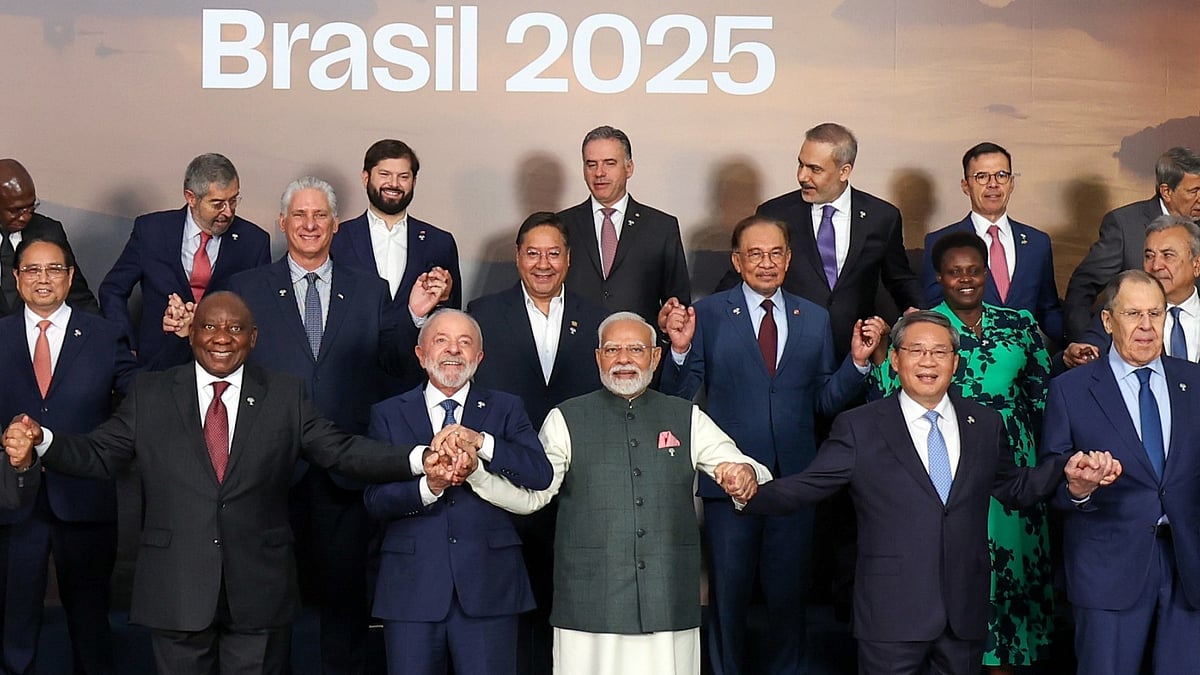
Two days after Iran’s President Masoud Pezeshkian urged India to use its independent influence as the BRICS+ chair, to help halt the US-Israel offensive, the Congress on Monday criticised the Centre for failing to leverage itself.
Taking a swipe at Prime Minister Narendra Modi’s claims of global leadership, Congress general secretary (communications) Jairam Ramesh questioned why New Delhi has not advanced the timeline of the BRICS+ Summit, scheduled to be held in the capital later this year, to address the escalating conflict and its wider geopolitical and economic implications.
“Why is the self-styled Vishwaguru not advancing the Summit to put together a diplomatic initiative to deal with the crisis in West Asia and its impacts? Clearly, he does not want to antagonise President Donald Trump and Prime Minister Benjamin Netanyahu,” Ramesh said in a post on X.
India is set to host the 18th BRICS+ Summit in New Delhi under its presidency later this year. The expanded grouping includes Brazil, Russia, India, China, South Africa, Argentina, Egypt, Ethiopia, Saudi Arabia, Iran and the United Arab Emirates.
Ramesh noted that while Modi has reportedly been speaking with global leaders over the crisis, such outreach has its limitations. “This mode of communication has its constraints—no hugs, no finger-waving, no gyaan-giving photo-ops for our ‘El Supremo’.
Summits, however, can be more productive, enabling concrete outcomes alongside valuable face-to-face engagement,” he said.
The Congress had last week also criticised the government for not issuing a collective statement on the West Asia conflict as BRICS+ chair, alleging that Modi was “diminishing” the grouping’s standing in a bid to “appease” Trump and preserve his “cosy relationship” with Netanyahu.
Analysts however say that India, however, appears to be walking a tightrope. India has deep strategic ties with both the United States and Israel while also maintaining critical energy and connectivity interests with Iran and the wider Gulf region.
Any overt alignment risks upsetting this delicate balance, particularly at a time when millions of Indian expatriates live and work across West Asia and global oil markets remain volatile.
The conflict, now in its fourth week, shows no signs of easing. Israel has said Iran continued missile strikes early Saturday, while Saudi Arabia reported intercepting 20 drones within hours over its eastern region, home to key oil infrastructure.
Iran, in turn, has targeted energy facilities across the Gulf and issued warnings extending to recreational and tourist sites globally.
Meanwhile, Donald Trump’s deadline to reopen the Strait of Hormuz is nearing its end. He has warned that the United States could target Iran’s energy infrastructure if Tehran fails to comply. In response, Iran has issued a counter-threat, saying that any attack on its facilities would trigger retaliatory strikes on critical infrastructure—including desalination plants—across West Asia.
Join our official telegram channel (@nationalherald) and stay updated with the latest headlines