Nation
Illnesses mount as water contamination spreads across posh Delhi colony
Hundreds of households rely on tankers and bottled water as authorities struggle to trace source of contamination
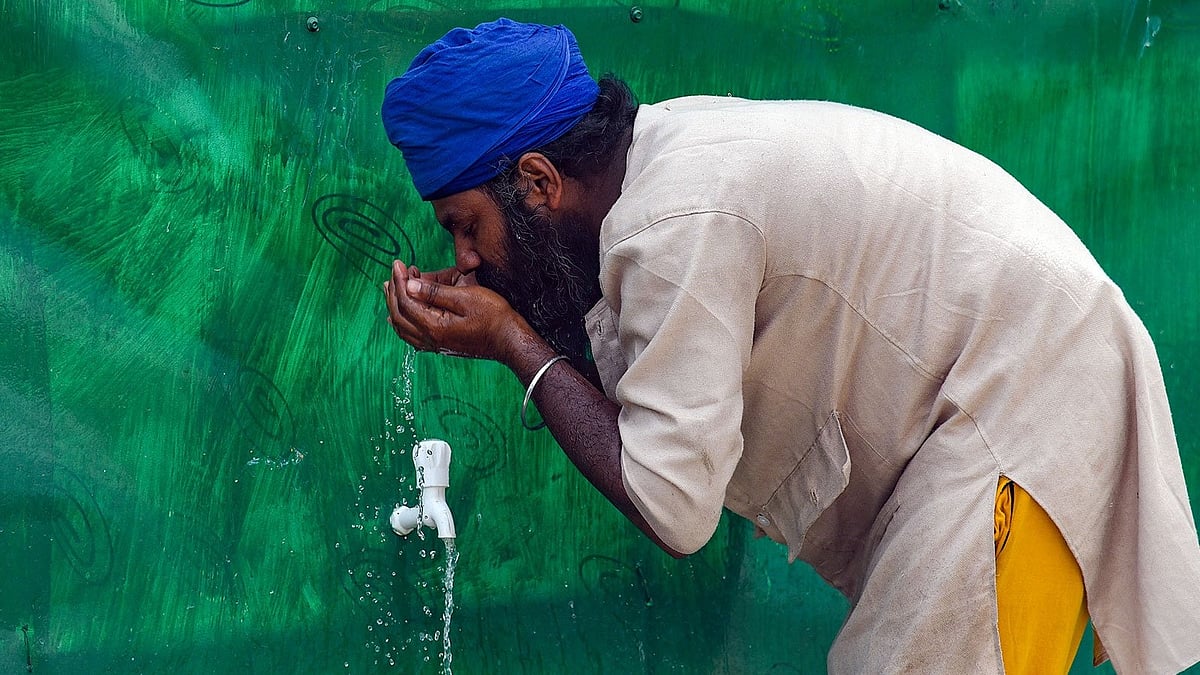
A water contamination crisis in South Delhi's Gulmohar Park has intensified, with residents reporting widespread illness, hospitalisation and an acute shortage of clean drinking water more than a week after complaints first emerged.
Residents said the problem, initially confined to parts of the colony, has now spread across several lanes despite ongoing repair and excavation work by the Delhi Jal Board (DJB).
Many households have stopped using piped water altogether and are relying on DJB tankers, private water suppliers and packaged drinking water.
The colony, developed in the early 1970s, has over 900 households.
Local MLA and DJB Vice-Chairman Satish Upadhyay had earlier said possible contamination sources included unauthorised temporary toilets set up near construction sites and an old pipeline near a drain close to Gate No. 2.
Officials said the focus of the investigation later shifted to one of the colony's main inlet points after initial corrective measures failed to resolve the issue.
Excavation near an earlier cave-in site reportedly revealed stagnant contaminated water that may have entered ageing pipelines through damaged joints and seepage points.
Residents report illnesses
Several residents said family members had fallen ill after using the contaminated water.
Eighty-five-year-old resident Premsingh Dhingra said he was hospitalised with diarrhoea while his wife was undergoing treatment for typhoid.
"The water was very dirty. We used RO water for drinking but continued using it for brushing and bathing. I developed diarrhoea and had to be hospitalised," he said.
Another resident, Nitin Mantri, said multiple members of his household, including his mother, sister and domestic help, had suffered health problems.
Residents claimed water-borne illnesses had become widespread across the colony.
Dr Savitri Singh, Vice-President of the Residents Welfare Association (RWA), alleged that between 30 and 40 per cent of residents had been affected.
"In every house, somebody is sick," she said.
Tanker shortages add to woes
The contamination has also triggered a severe water supply crisis.
Residents said many households had disconnected their water supply or emptied underground storage tanks, increasing dependence on water tankers.
According to the RWA, demand now far exceeds supply.
"A family is getting tanker supply only after a minimum wait of two days," Singh said.
While DJB tankers are being provided free of cost, residents said private suppliers were charging around Rs 5,000 per tanker.
The RWA said only around 40 to 50 households were receiving tanker water each day.
Some residents have reportedly begun sending children to relatives' homes, while bottled water has become scarce in nearby markets.
"Everybody is buying Bisleri. Earlier, we could order it online and get it the next day. Now nearby shops are running out of stock," Singh said.
Residents seek answers
Residents alleged that despite extensive digging and repair work over the past week, authorities had yet to identify the precise source of contamination.
They also said water quality reports were still awaited despite samples having been collected from multiple locations.
"The issue is shifting from one part of the colony to another. It is a total mess," Singh said.
Several residents claimed that homes which were previously receiving clean water had begun reporting foul-smelling supplies after recent repair work.
DJB officials have not yet announced a timeline for restoring normal water supply across the colony.
Recent contamination incidents
The Gulmohar Park crisis comes amid growing concerns over contamination of urban drinking water networks in several Indian cities.
Last month, at least 50 residents of Ahmedabad's Ghatlodia area fell ill with diarrhoea and vomiting after contaminated water from a drainage line allegedly entered a drinking water pipeline. Eleven people required hospitalisation while others were treated on an outpatient basis.
According to the Ahmedabad Municipal Corporation (AMC), the contamination affected nine residential societies and was traced to damage in water and drainage pipelines. Civic authorities deployed medical teams and mobile health units in the affected neighbourhoods while carrying out surveillance and repair work.
The incident also followed reports of hundreds of people falling ill in Jaipur earlier this year after suspected sewage contamination of drinking water supplies, highlighting persistent concerns over ageing civic infrastructure and the vulnerability of urban water distribution networks.
This background is cleaner than inserting Ahmedabad details into the main body because it broadens the story's significance without distracting from the Delhi-specific developments.
Join our official telegram channel (@nationalherald) and stay updated with the latest headlines