Nation
West Bengal has 4,133 schools with no students but 19,502 teachers: Report
State accounts for nearly 73% of India’s zero-enrolment schools, while 6,769 schools have a single teacher for 2.29 lakh students
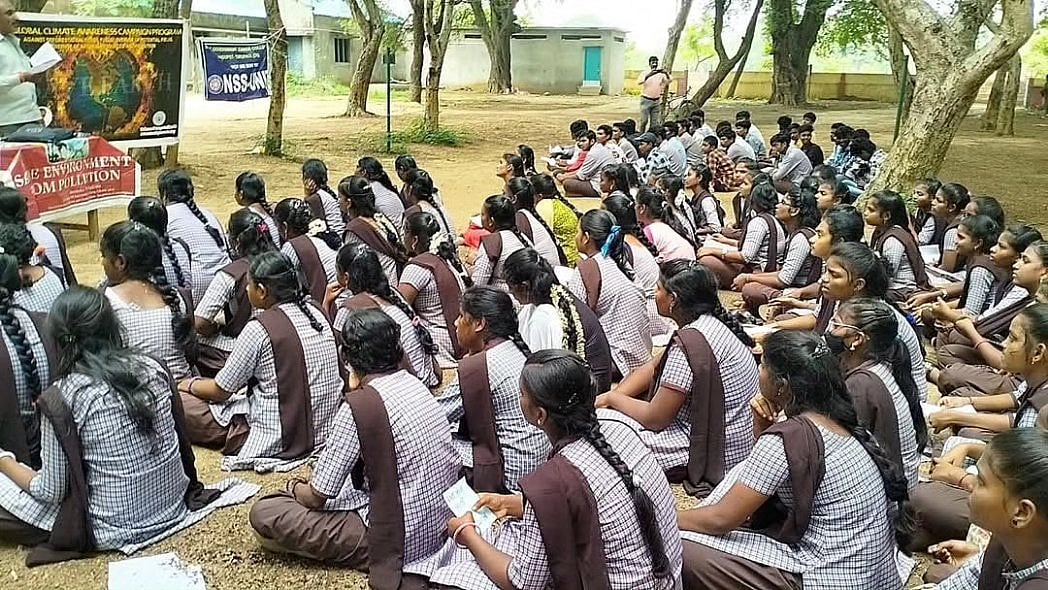
West Bengal has 4,133 government and private schools with no students enrolled but 19,502 teachers posted in them, according to data from the central government's Unified District Information System for Education Plus (UDISE+) for 2025-26.
The figures highlight a stark mismatch in the distribution of teachers and students across the state's school system. While thousands of teachers are posted at schools reporting zero enrolment, thousands of other schools are operating with just one teacher despite having large numbers of students.
The UDISE+ report, published in July and uploaded on the Union Education Ministry's website in August, shows that West Bengal accounts for nearly 73 per cent of the 5,663 schools with zero enrolment across India.
Uttar Pradesh has the second-highest number of such schools, with 313, where 177 teachers are posted.
Government blames data discrepancies
West Bengal School Education Minister Dipak Barman attributed some of the apparent disparities to errors in data uploaded by private schools on the UDISE+ portal.
“Private schools did not upload data properly. Some of these schools updated teachers’ information but not students’ details. So, those schools are showing zero students, but they have teachers. We are devising some mechanism to fix such problems,” he said.
Barman, however, also acknowledged broader problems in the state's teacher deployment.
“At the same time, almost no teachers were recruited in the last fifteen years because of huge corruption. We are correcting all the processes and hope to overcome such problems by the end of this calendar year,” he said.
“We have started rationalising teachers numbers. We are transferring teachers from schools with excess teachers to schools that have no teachers or only one teacher,” he added.
Thousands of schools have only one teacher
The UDISE+ data shows that the problem is not limited to schools with no students.
As many as 6,769 schools in West Bengal have only one teacher despite having a combined enrolment of 2,29,569 students.
This means a large number of schools are facing the opposite problem to zero-enrolment institutions, with single teachers responsible for educating hundreds of thousands of students across the state.
Of West Bengal's total 93,147 schools, around 8 per cent have 10 or fewer students, while 8.5 per cent have more than 500 students.
The state also has the second-highest pupil-teacher ratio among states, according to the UDISE+ data. West Bengal's pupil-teacher ratio stands at 1:30, compared with 1:36 in neighbouring Jharkhand.
CAG flags teacher shortages and dropouts
The latest UDISE+ figures come against the backdrop of a Comptroller and Auditor General (CAG) report that highlighted serious problems in West Bengal's school education system.
The CAG performance audit examined implementation of the Centre's Samagra Shiksha Abhiyan between 2019-20 and 2023-24.
It found high dropout and transition losses, particularly after the secondary level. The audit reported a 28-42 per cent transition loss between the upper-primary and higher-secondary stages.
Financial hardship, early marriage, unwillingness to continue studies and migration for work were among the main reasons cited for students dropping out.
Among surveyed students who discontinued their education, 53 per cent cited poverty or financial constraints. Another 14 per cent said they were unwilling to continue their studies, 13 per cent had migrated for work and 12 per cent cited marriage.
The CAG also found that 520 schools with a combined enrolment of 8,596 students had no teachers at all.
A further 5,152 schools, serving more than 1.76 lakh students, had only one teacher each.
The audit also found that 40,530 head teachers had been posted in schools with fewer than 150 students, which it said was contrary to norms under the Right to Education Act.
Shortages coexist with excess deployment
According to the CAG, 29 per cent of primary schools and 30 per cent of upper-primary schools failed to meet prescribed pupil-teacher ratios.
The shortages stood at 31,684 teachers at the primary level and 2,058 at the upper-primary level.
At the higher-secondary level, however, 79 per cent of schools had a teacher-student ratio exceeding the prescribed norm, highlighting significant disparities in teacher deployment.
The state government's proposed rationalisation process is intended to address some of these imbalances by shifting teachers from schools with excess staff to institutions facing shortages.
Infrastructure gaps remain
The UDISE+ data also highlights gaps in the digital infrastructure available to students.
Of West Bengal's 93,147 schools, only 403 have digital libraries. A total of 23,894 schools have computers, while 18,374 have internet connections.
The figures point to continuing disparities not only in teacher availability but also in access to digital learning infrastructure.
The data comes amid the fallout from a major teacher recruitment controversy in West Bengal. The CBI and Enforcement Directorate had investigated alleged irregularities in recruitment, leading to the arrest of former state education minister Partha Chatterjee and several TMC leaders and officials. They are currently out on bail.
The Supreme Court subsequently cancelled more than 25,000 School Service Commission appointments over corruption-related irregularities.
The latest school-level data therefore presents a contrasting picture: while some institutions have teachers but no enrolled students, others have thousands of students with inadequate teaching staff. The state government says it is working to correct data discrepancies and rationalise teacher deployment, while the CAG has separately flagged structural problems in staffing, student retention and implementation of education schemes.
Join our official telegram channel (@nationalherald) and stay updated with the latest headlines