Nation
Rajasthan panchayat polls: Congress surges ahead as BJP’s rural base erodes
Congress won 3,758 Panchayat Samiti seats and 794 Zila Parishad seats, against the BJP’s 2,213 and 357, respectively
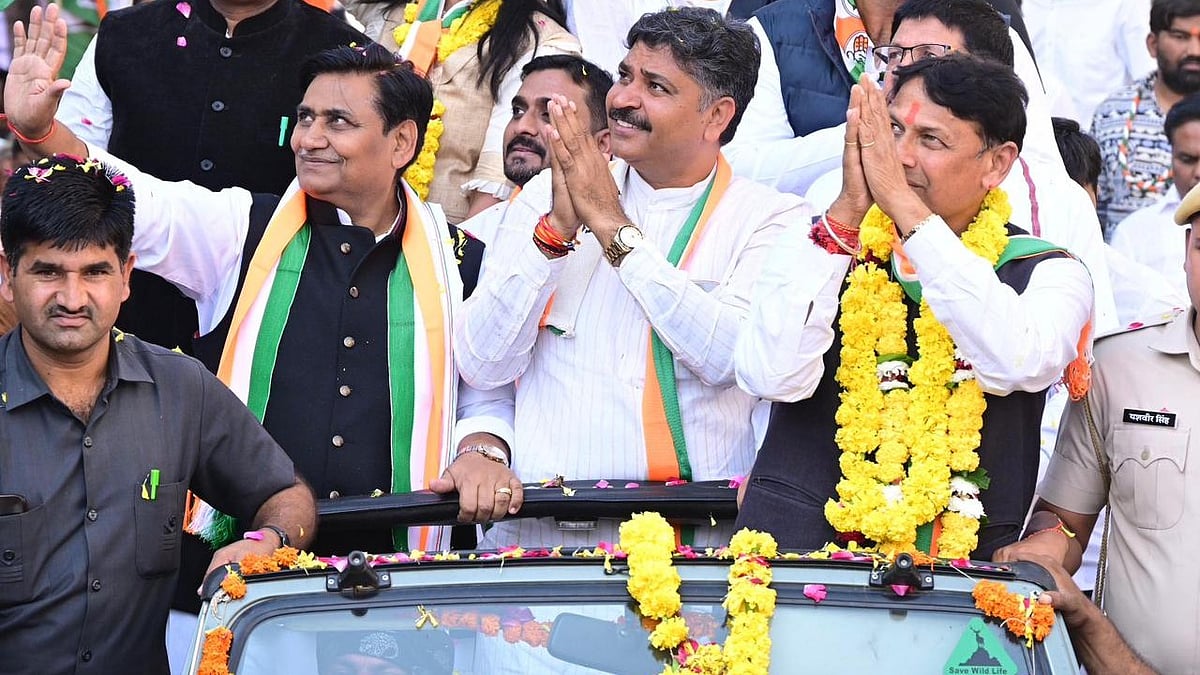
The Congress’s impressive performance in Rajasthan’s panchayat elections has unsettled the BJP, from Jaipur to Delhi, triggering a political stocktaking within the ruling party over what went wrong in its rural strongholds.
The question doing the rounds in the corridors of power is whether the BJP’s much-publicised ‘triple-engine’ government has failed to deliver the electoral dividends it had promised?
The results point to a significant shift in political sentiment in rural areas of BJP-ruled state. The Congress secured nearly 70 per cent more Panchayat Samiti seats than the BJP and more than twice as many Zila Parishad seats, dealing a major setback to the ruling party.
The Congress won 3,758 Panchayat Samiti seats, against the BJP’s 2,213. In the Zila Parishad elections, the Opposition party secured 794 seats, while the BJP managed just 357.
Elections were held for 7,543 Panchayat Samiti seats and 1,275 Zila Parishad seats across 37 districts where counting has been completed.
Counting in the remaining four districts is scheduled for next month.
The scale of the Congress victory points to a maasive erosion of the BJP’s rural support base, with Rajasthan political observers interpreting the verdict as a sign of growing disenchantment with the state government.
The setback was particularly embarrassing for the BJP given that several high-profile ministers and their family members failed to retain their political influence at the grassroots.
Overall, 17 state ministers and three Union ministers reportedly failed to secure the political ground they had sought to defend.
The BJP suffered defeats in Deputy Chief Minister Premchand Bairwa’s Dudu Assembly constituency, Health Minister Gajendra Singh Khinvsar’s Lohawat constituency and Agriculture Minister Kirodi Lal Meena’s Sawai Madhopur constituency.
The results suggest that the political influence of prominent BJP leaders did not translate into electoral support at the grassroots level.
Even Chief Minister Bhajanlal Sharma’s home turf was not insulated from the electoral setback, underlining the breadth of the erosion on BJP’s base .
The political reverberations of the verdict were felt in Delhi as well. Leader of Opposition Rahul Gandhi seized on the results to attack the BJP’s governance model, linking rural discontent to the weakening of local self-government institutions, the MGNREGA controversy and the agrarian crisis.
In a post on X, Gandhi said: “This response has come from a state where the BJP has its own government—a direct response to the ‘double engine’.”
He accused the BJP of attacking MGNREGA, pushing farmers into losses and stripping panchayats of their powers. Inflation, unemployment and migration, he argued, had emptied villages, while rural voters had been watching and enduring these developments.
“This is not just a mandate from Rajasthan—it is the voice of every village in the country,” he said.
Following the Congress’s sweeping victory, state Congress president Govind Singh Dotasra demanded Chief Minister Bhajanlal Sharma’s resignation, arguing that the results reflected a rejection of the BJP government’s performance.
The results are particularly significant against the backdrop of the prolonged delay in holding the panchayat elections. The polls were conducted only after repeated interventions by the Rajasthan High Court over delays, delimitation and reservation-related disputes.
In November 2025, the High Court directed the state government to complete the delimitation exercise by December 31, 2025, and hold simultaneous panchayat and municipal elections by April 15, 2026.
The court had observed that prolonged delays violated constitutional provisions and state laws. Despite the court's deadline, the Sharma government held the panchayat elections only in November.
Rajasthan political observers believe the verdict exposes the limitations of the BJP’s electoral strength in urban local bodies.
Issues affecting everyday life in villages including roads, drinking water, electricity, encroachments and delays in routine public works are believed to have influenced voting in several areas.
Dissatisfaction with local legislators and government officials, factionalism within the BJP may also have contributed to the ruling party’s setbacks, political observers said.
The results have given the Congress a significant political boost ahead of the Rajasthan Assembly elections scheduled for next year. Whether this rural momentum translates into an electoral advantage in the Assembly polls remains to be seen.
However, the verdict offers the Congress an opportunity to rebuild its grassroots organisation, revive its rural support base and turn growing discontent with the BJP government into a broader political challenge.
For the BJP, it is an early warning that control of the state government and the promise of a ‘triple-engine’ administration may not be enough to retain the confidence of rural voters.
Join our official telegram channel (@nationalherald) and stay updated with the latest headlines